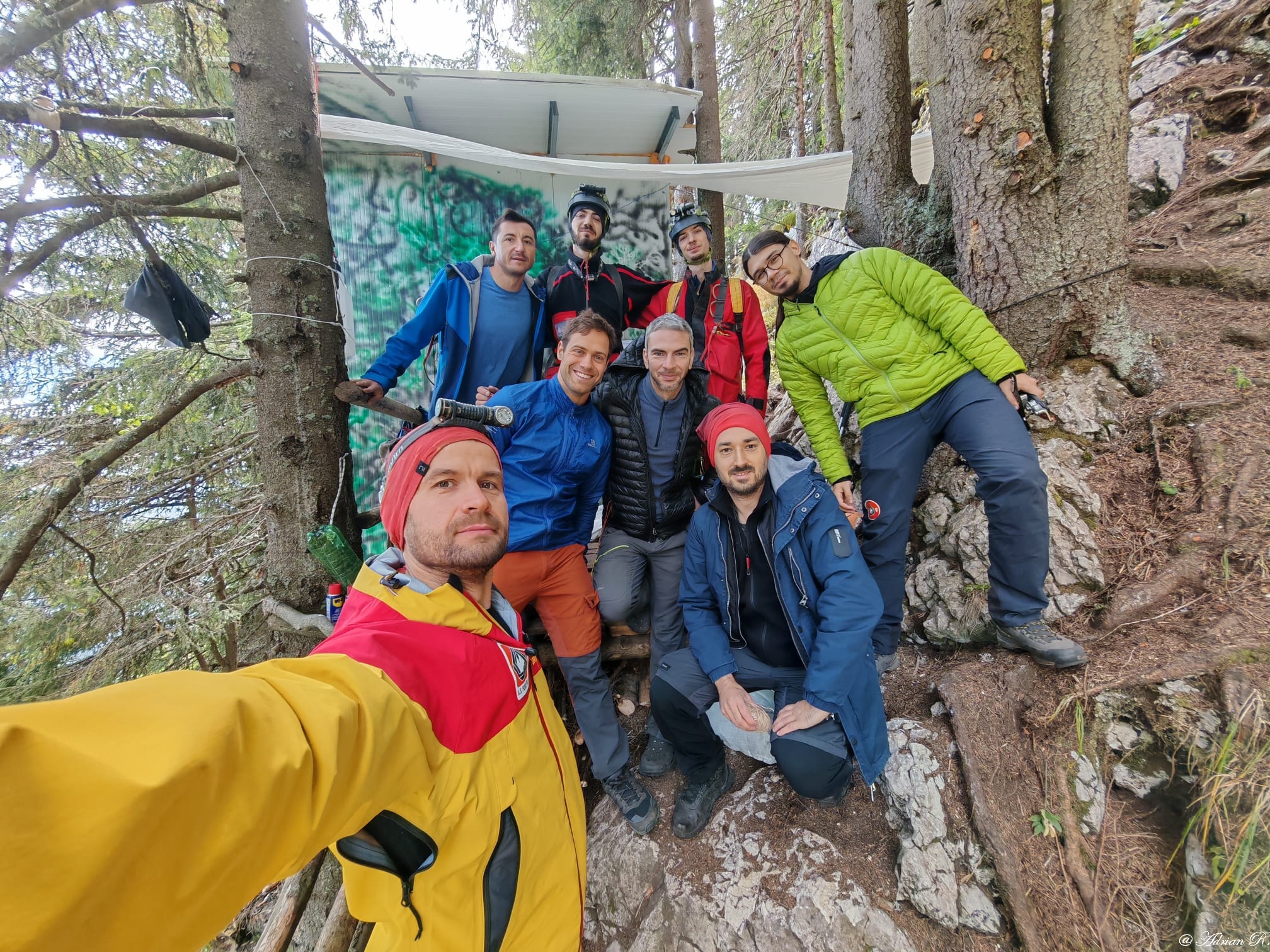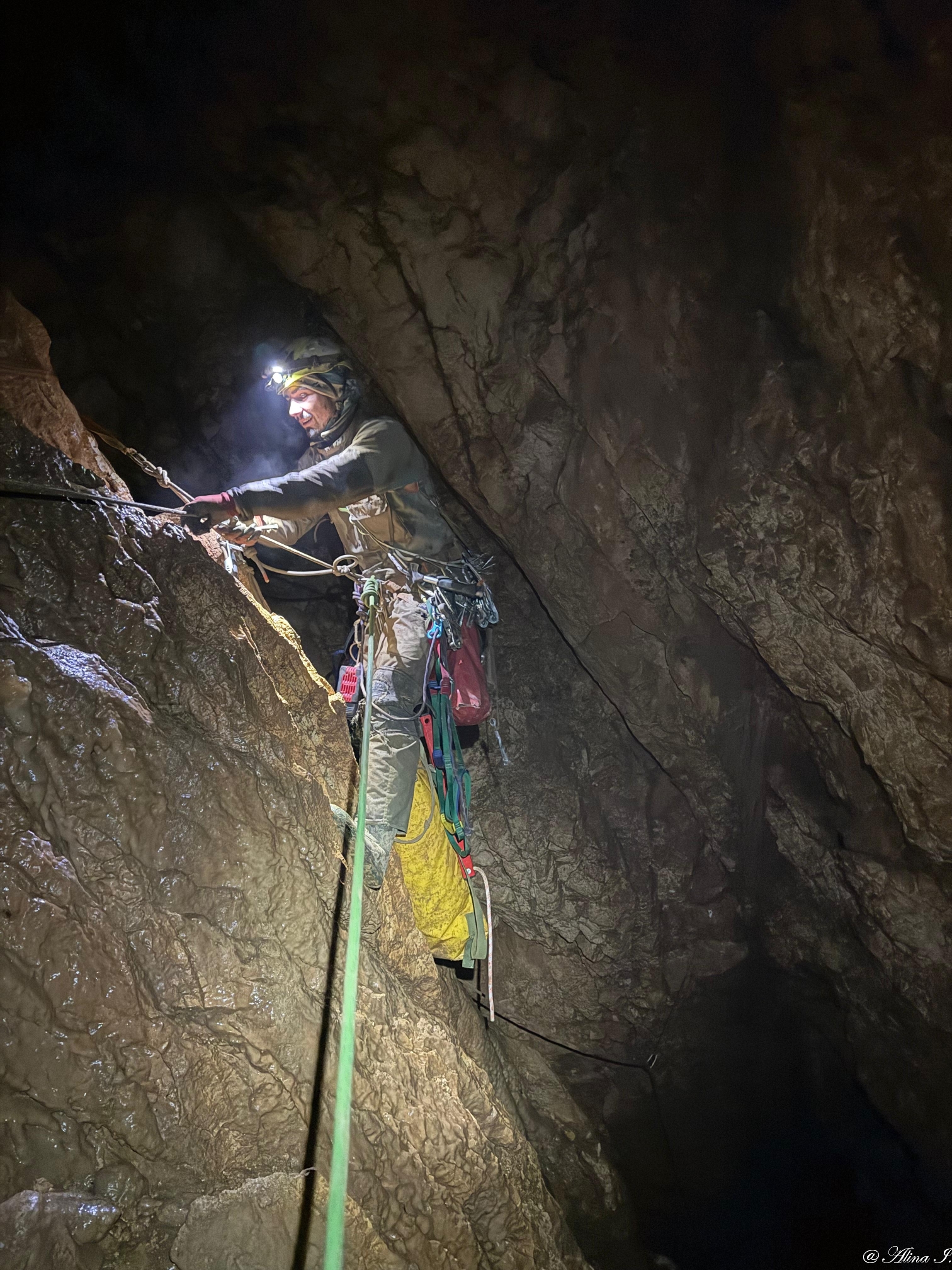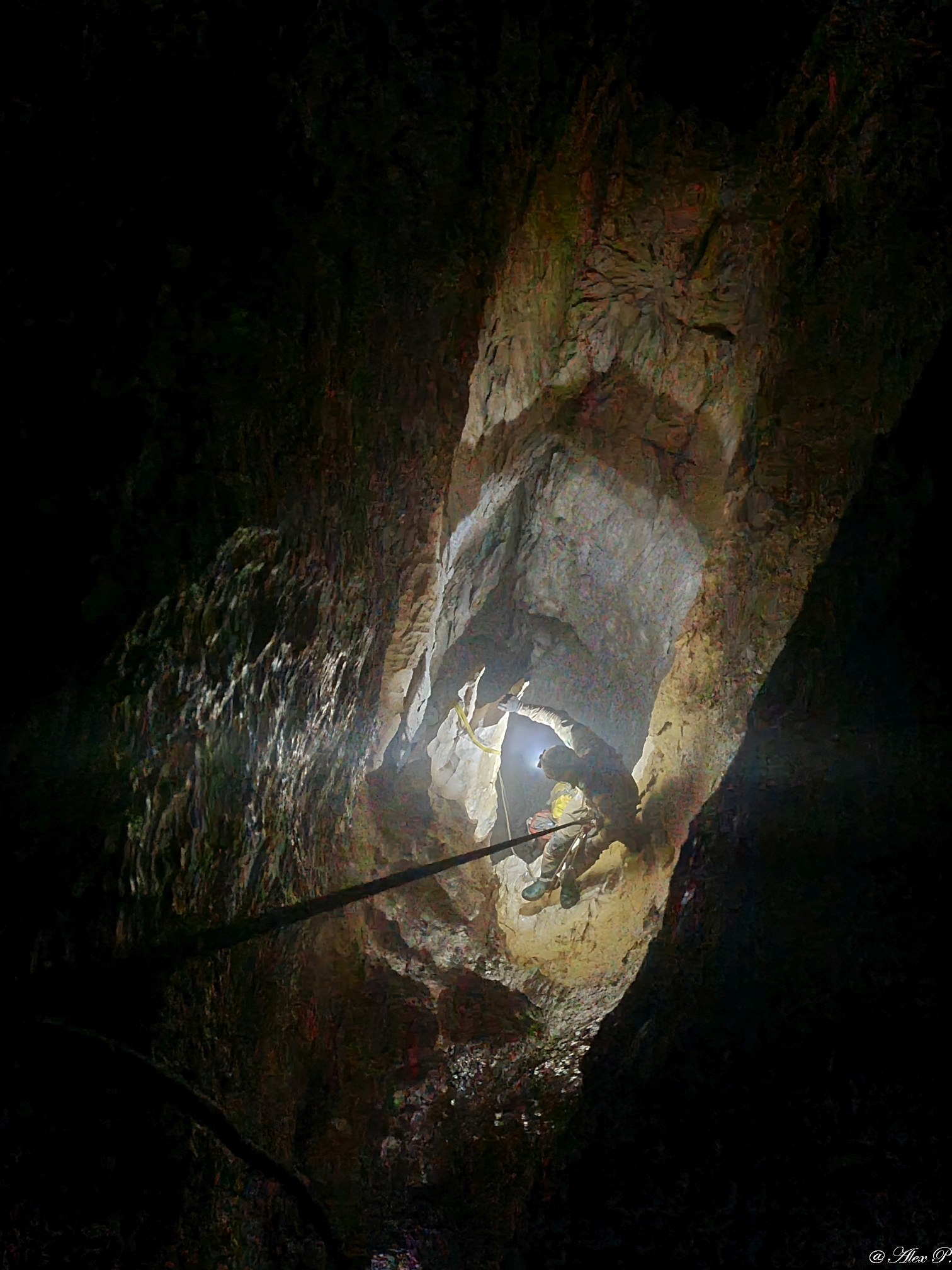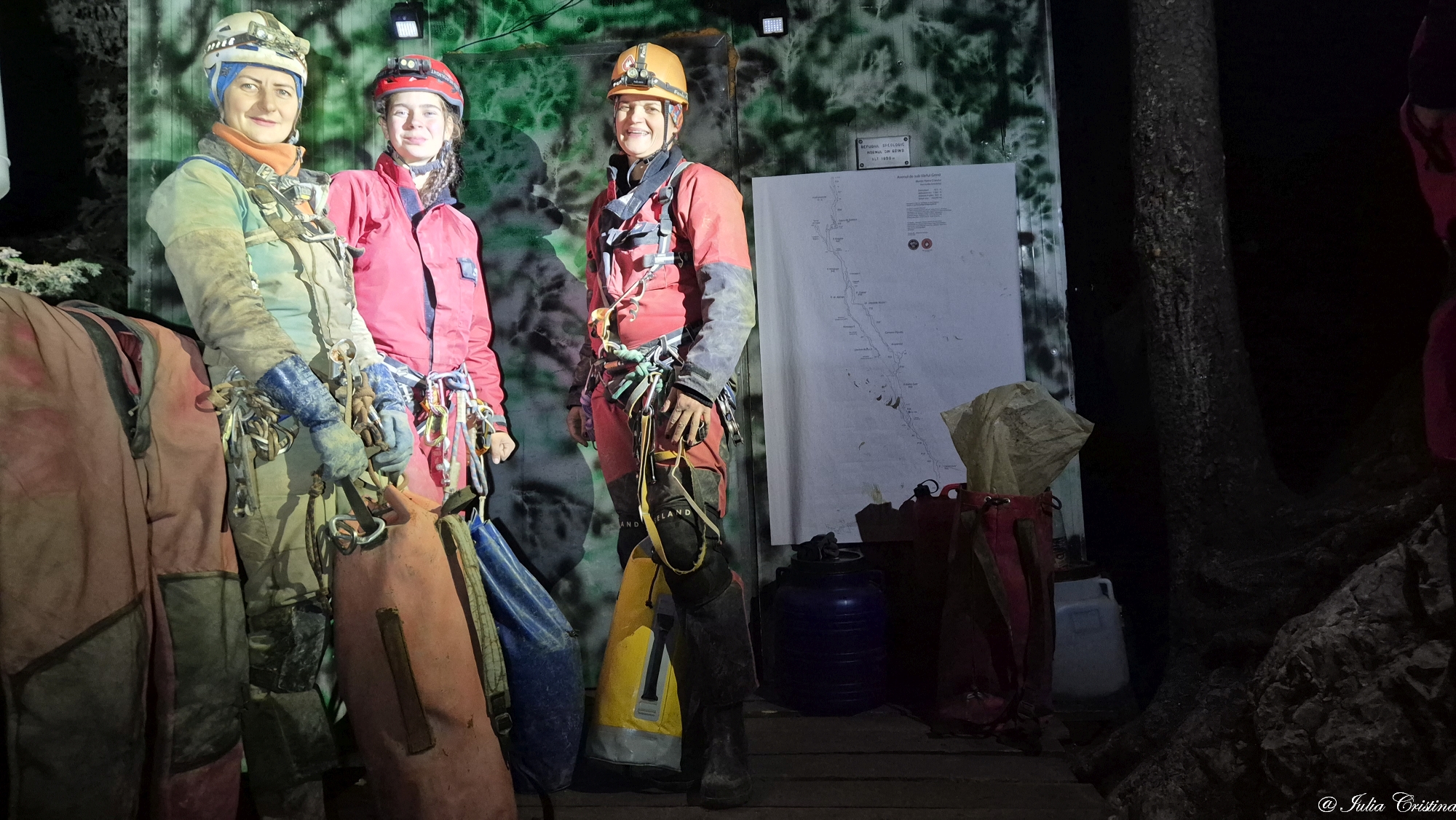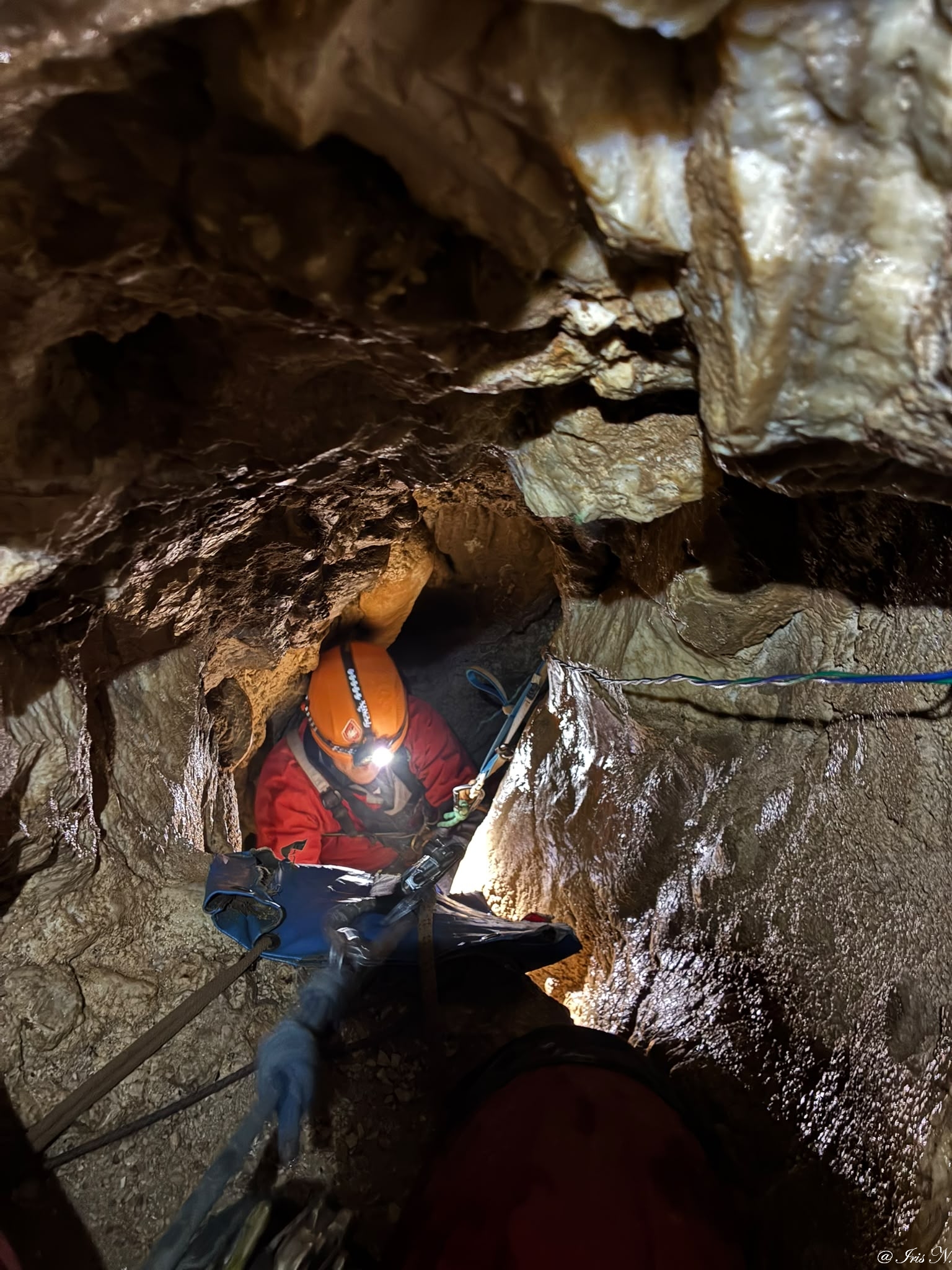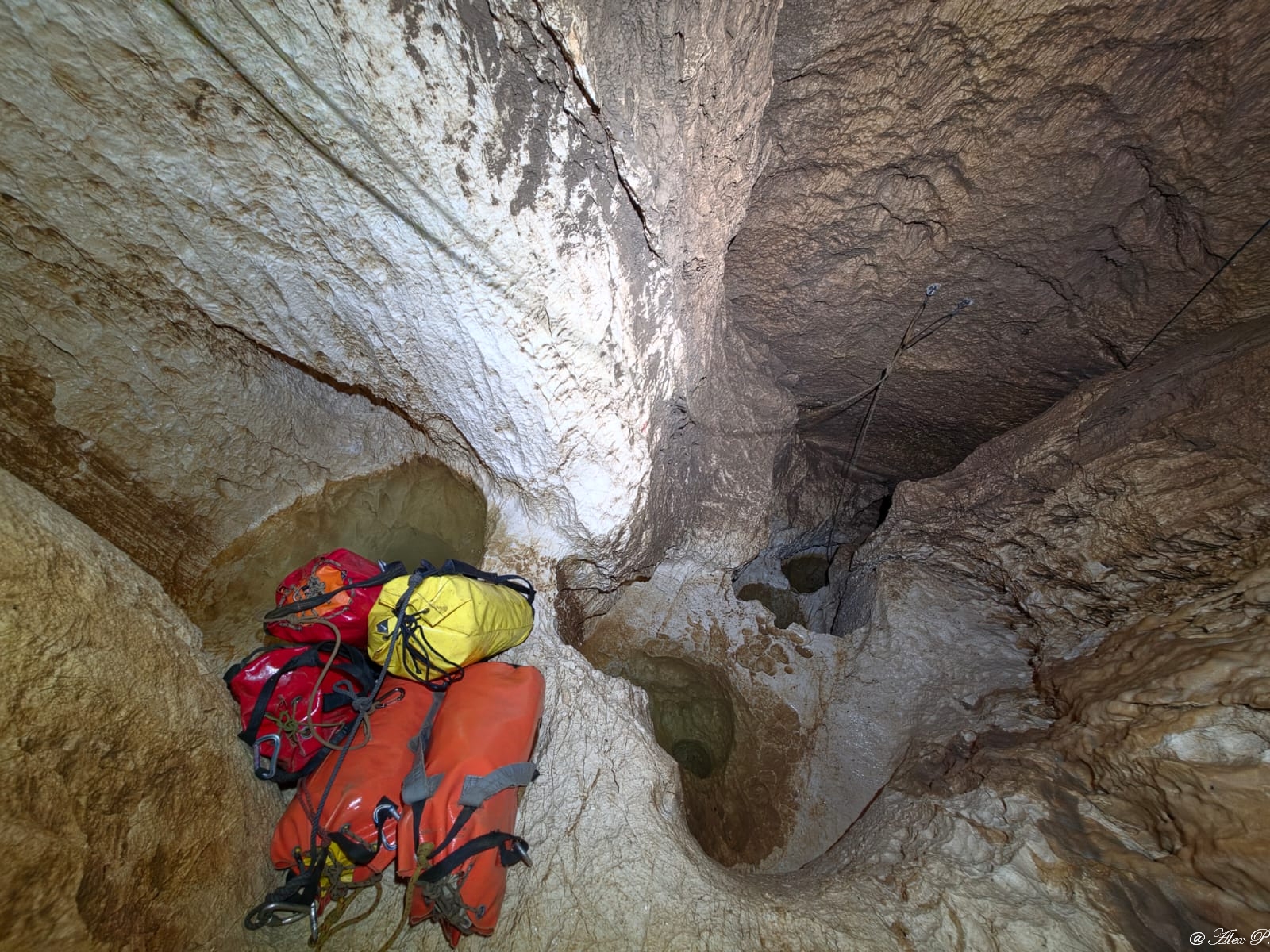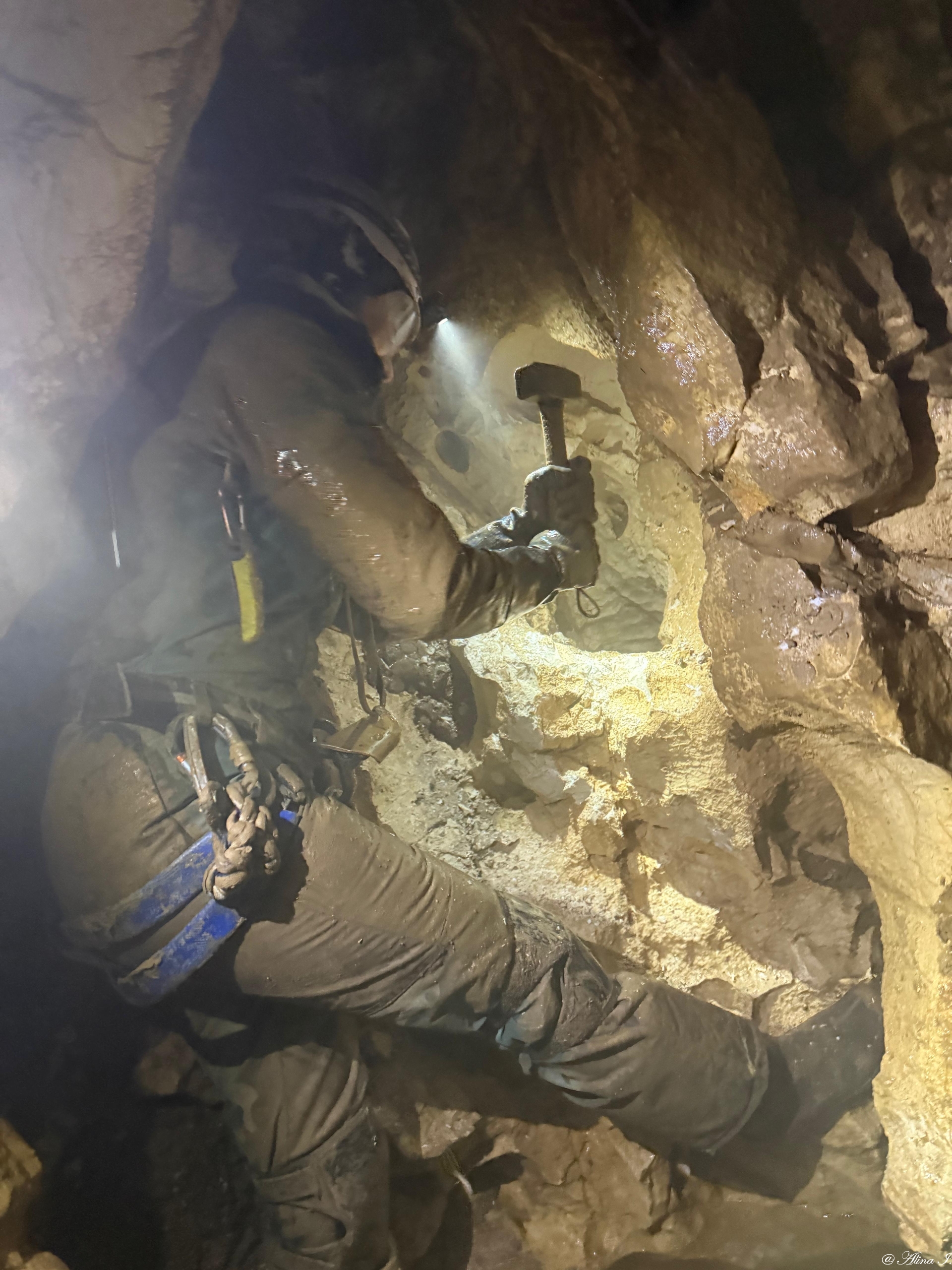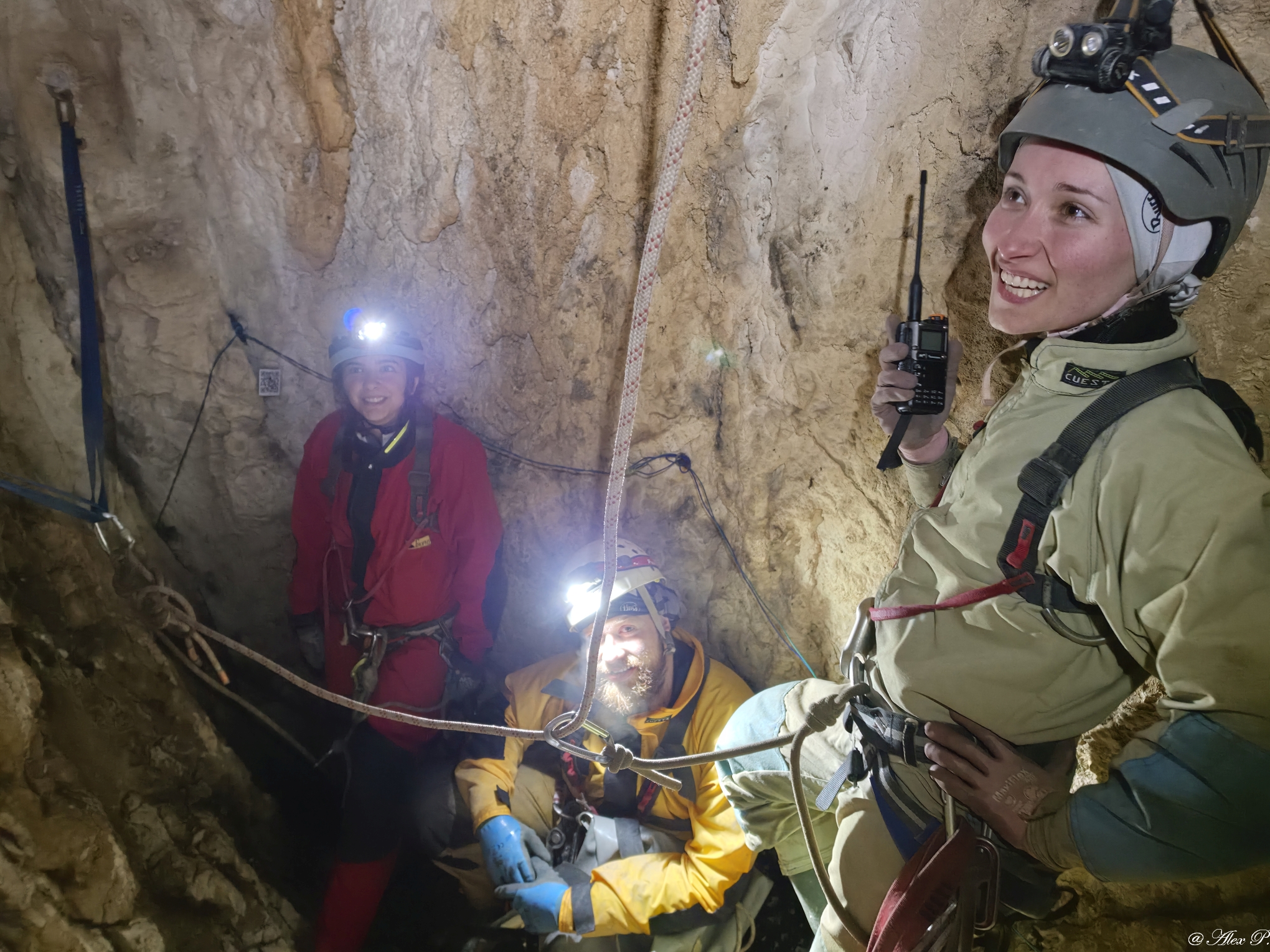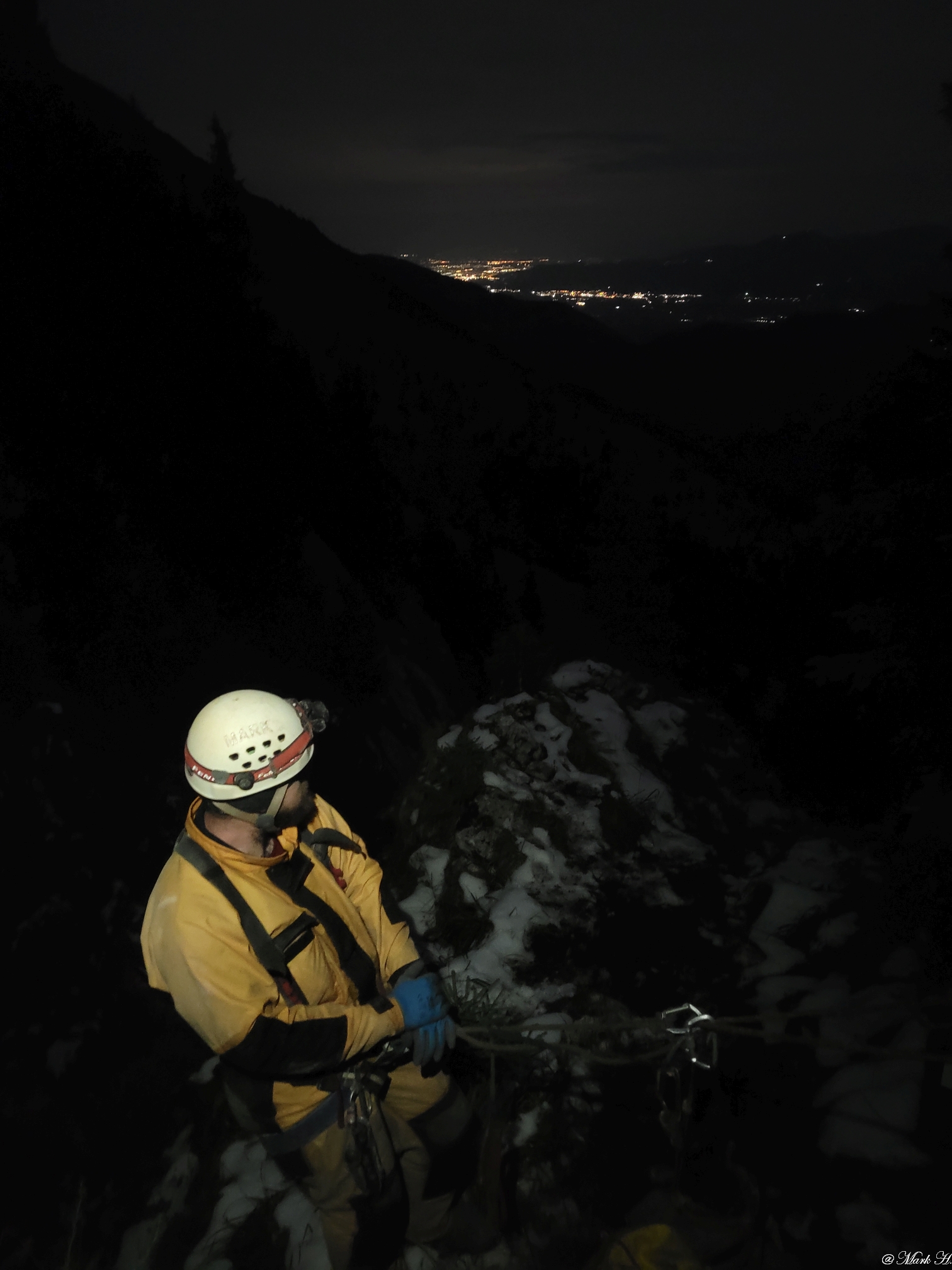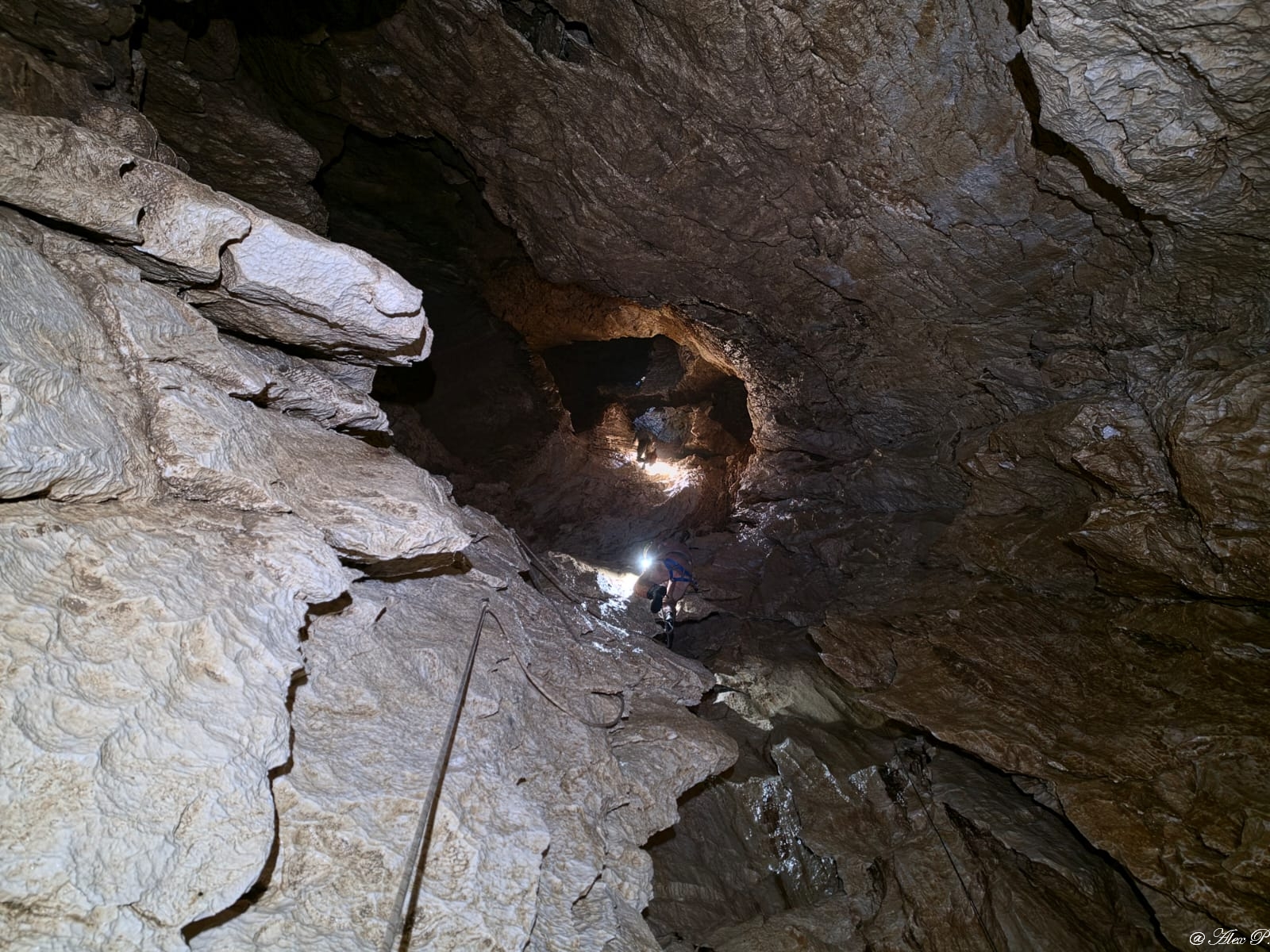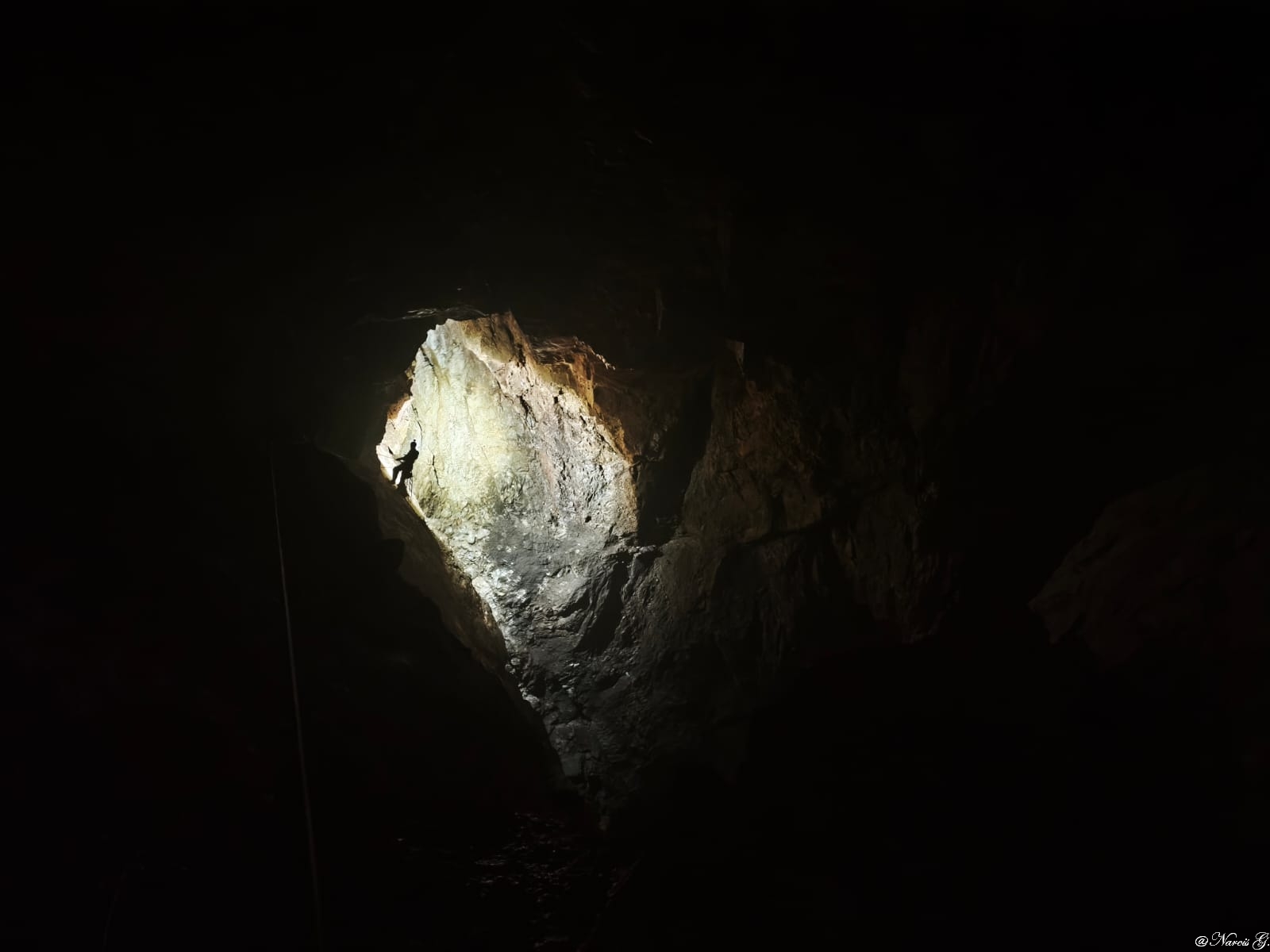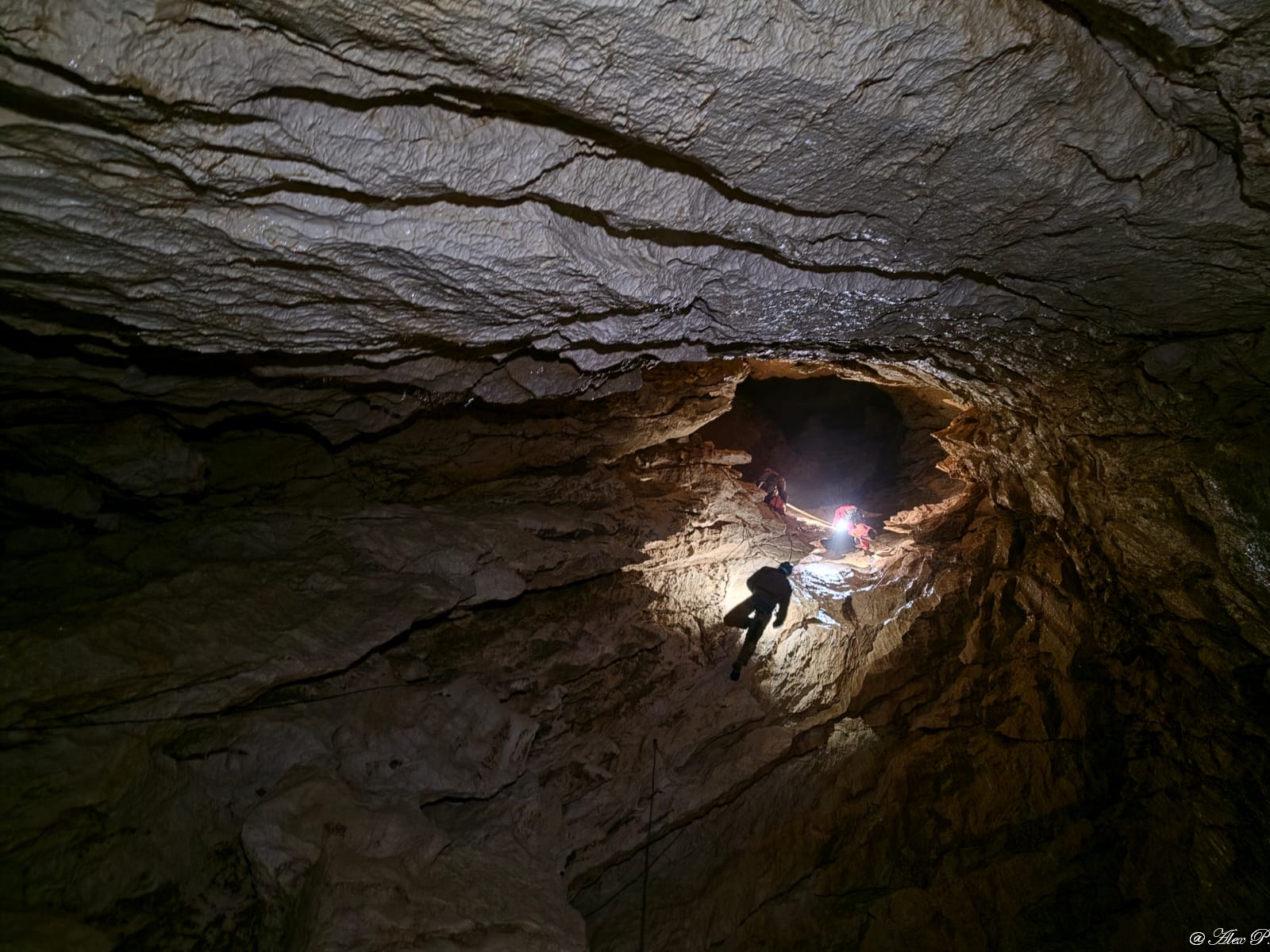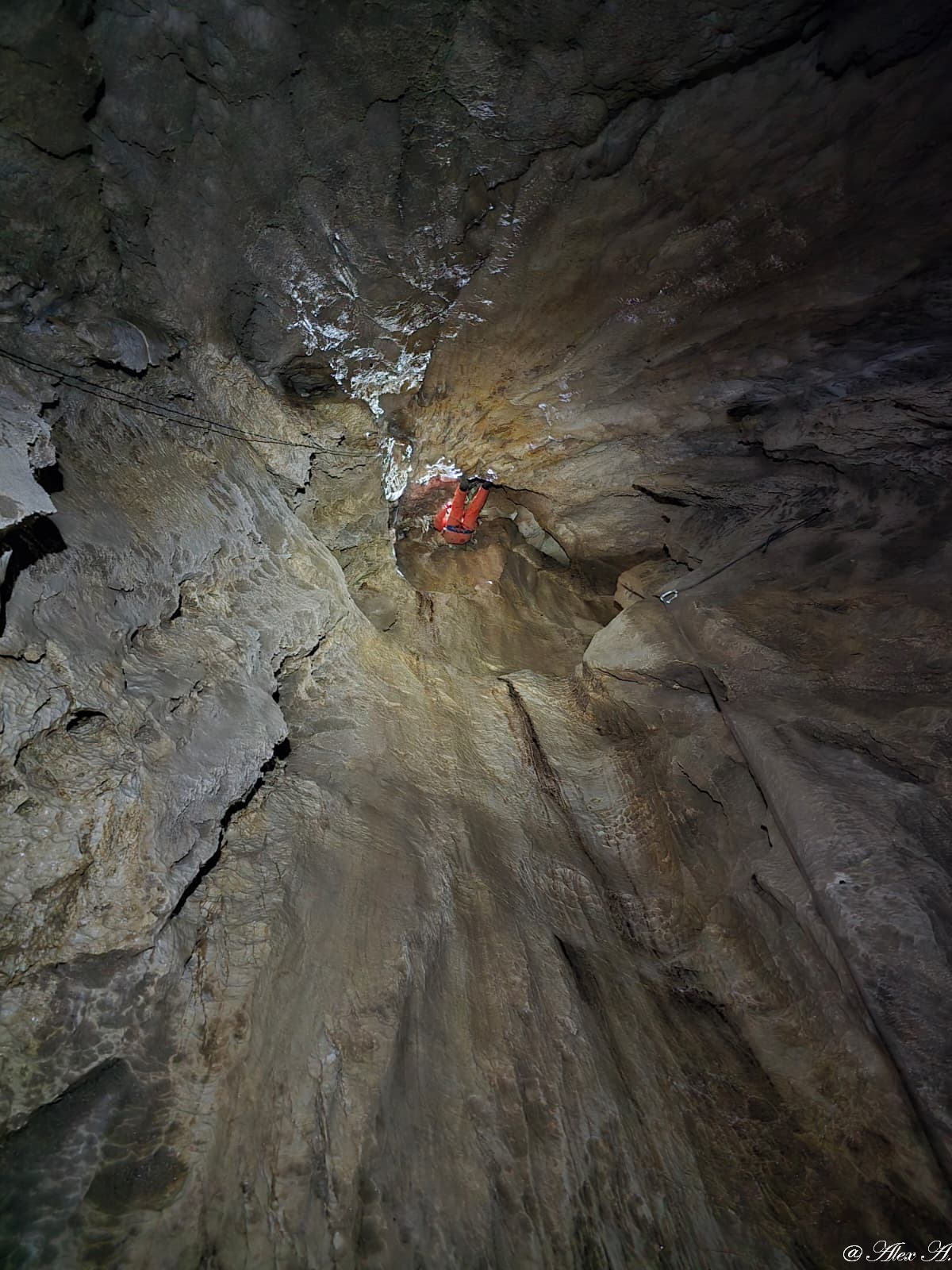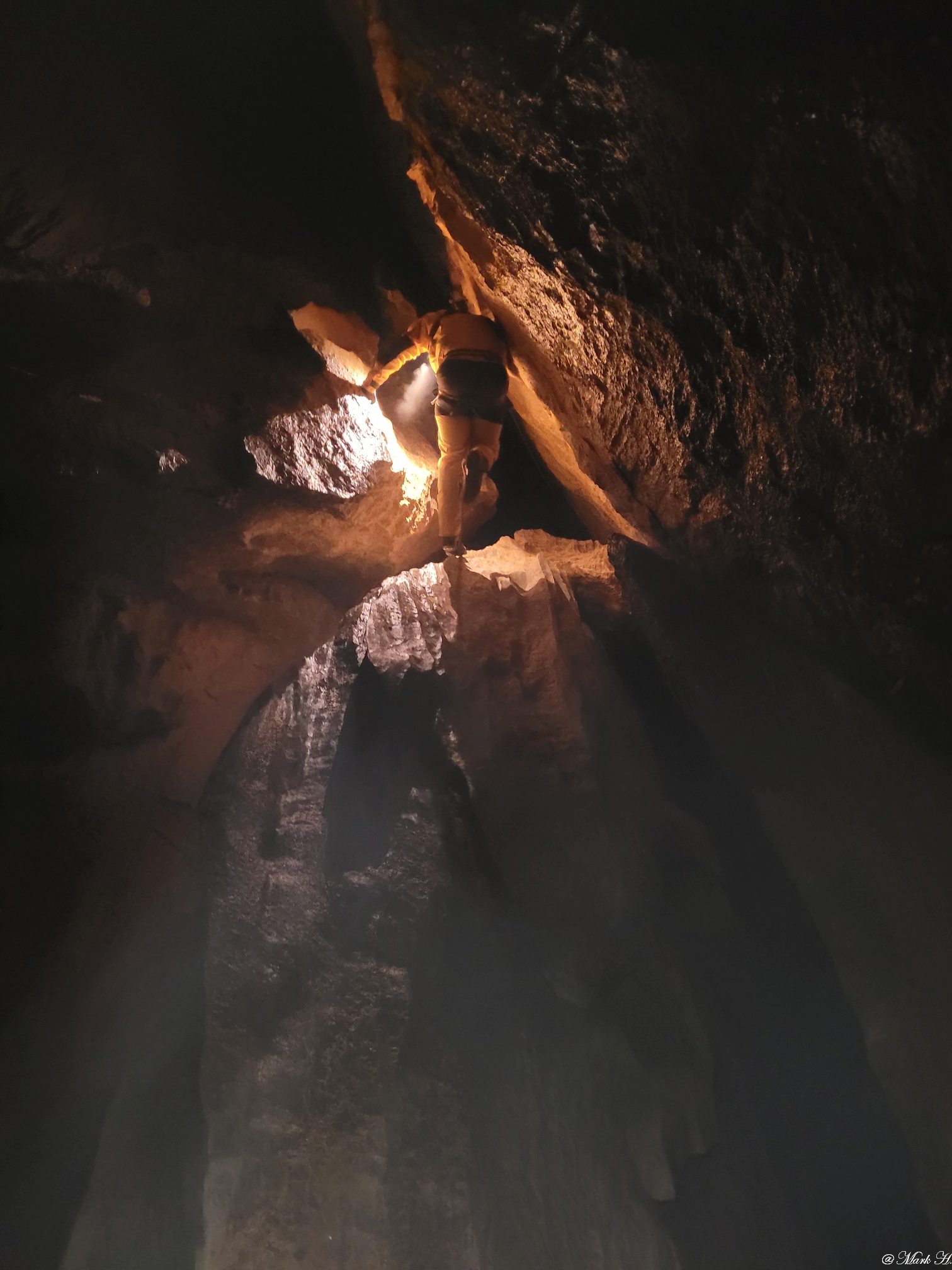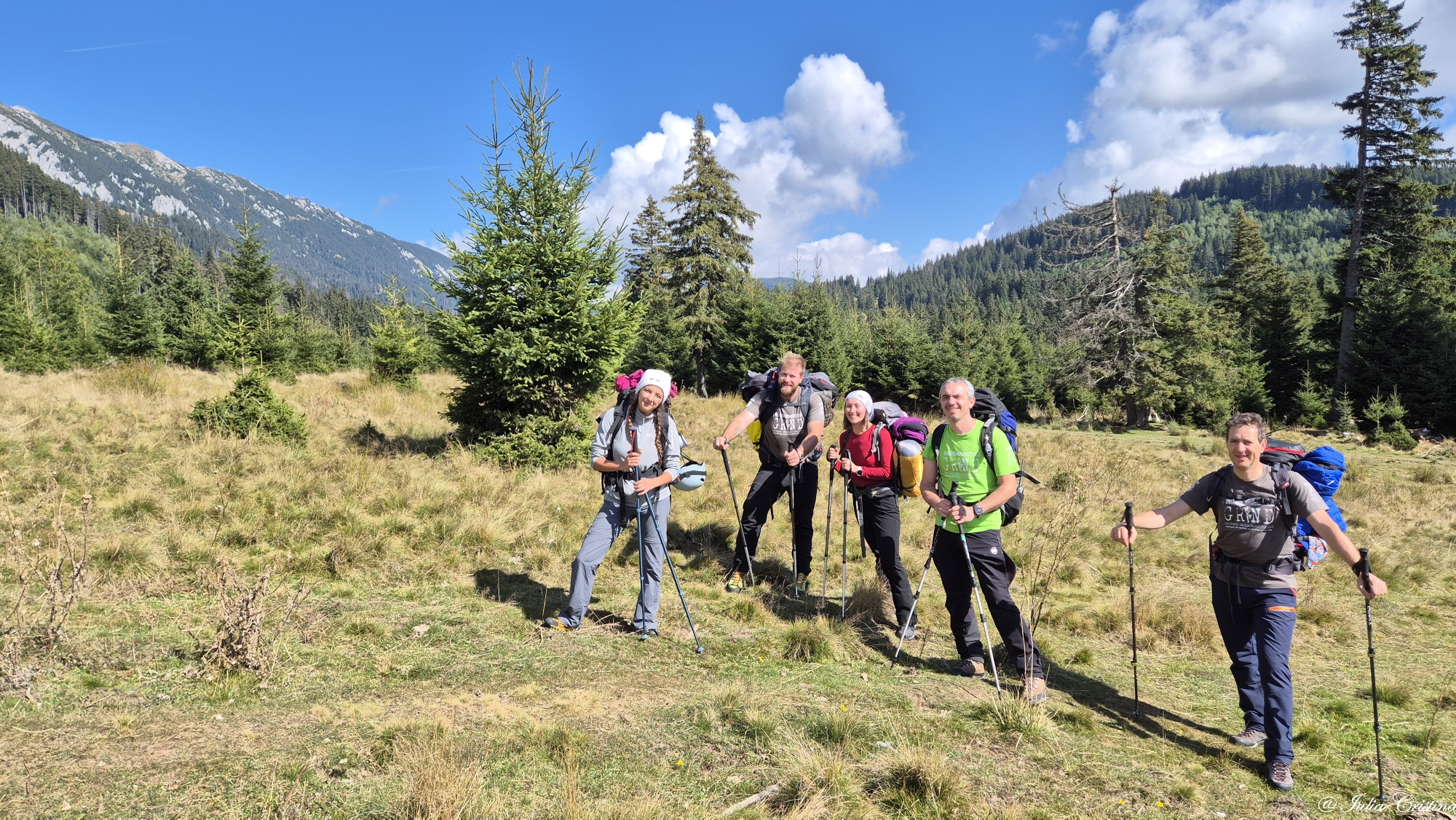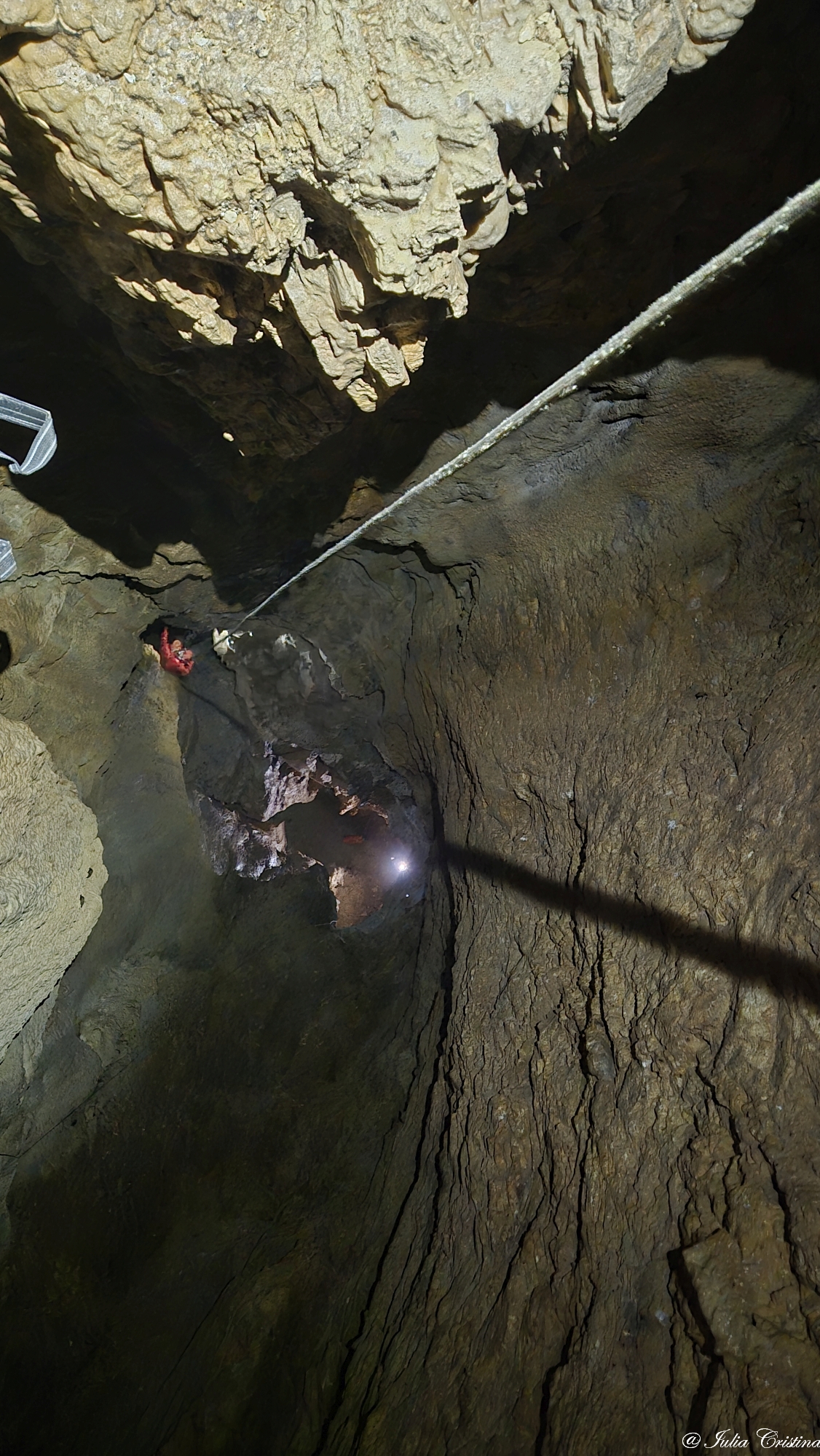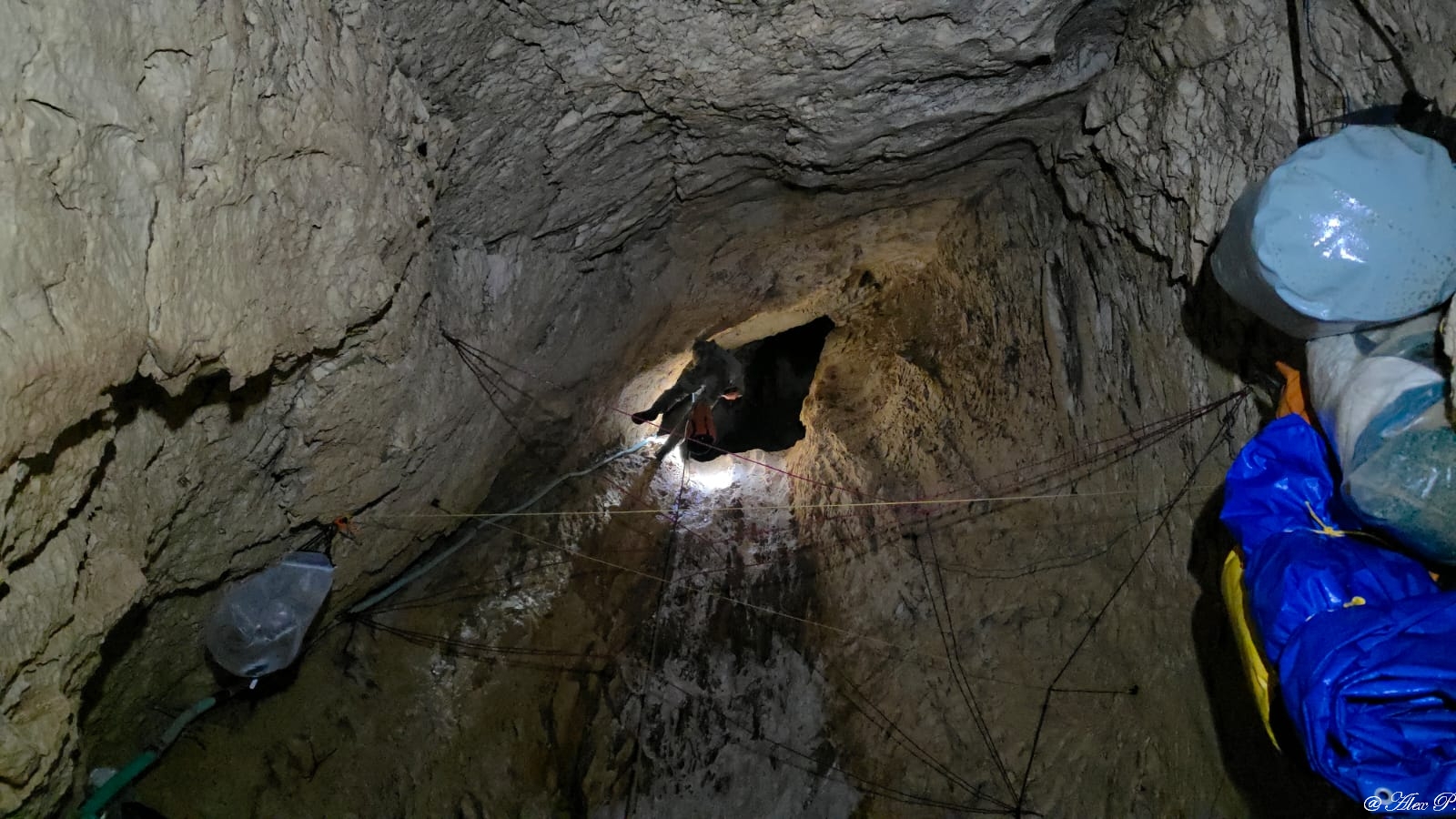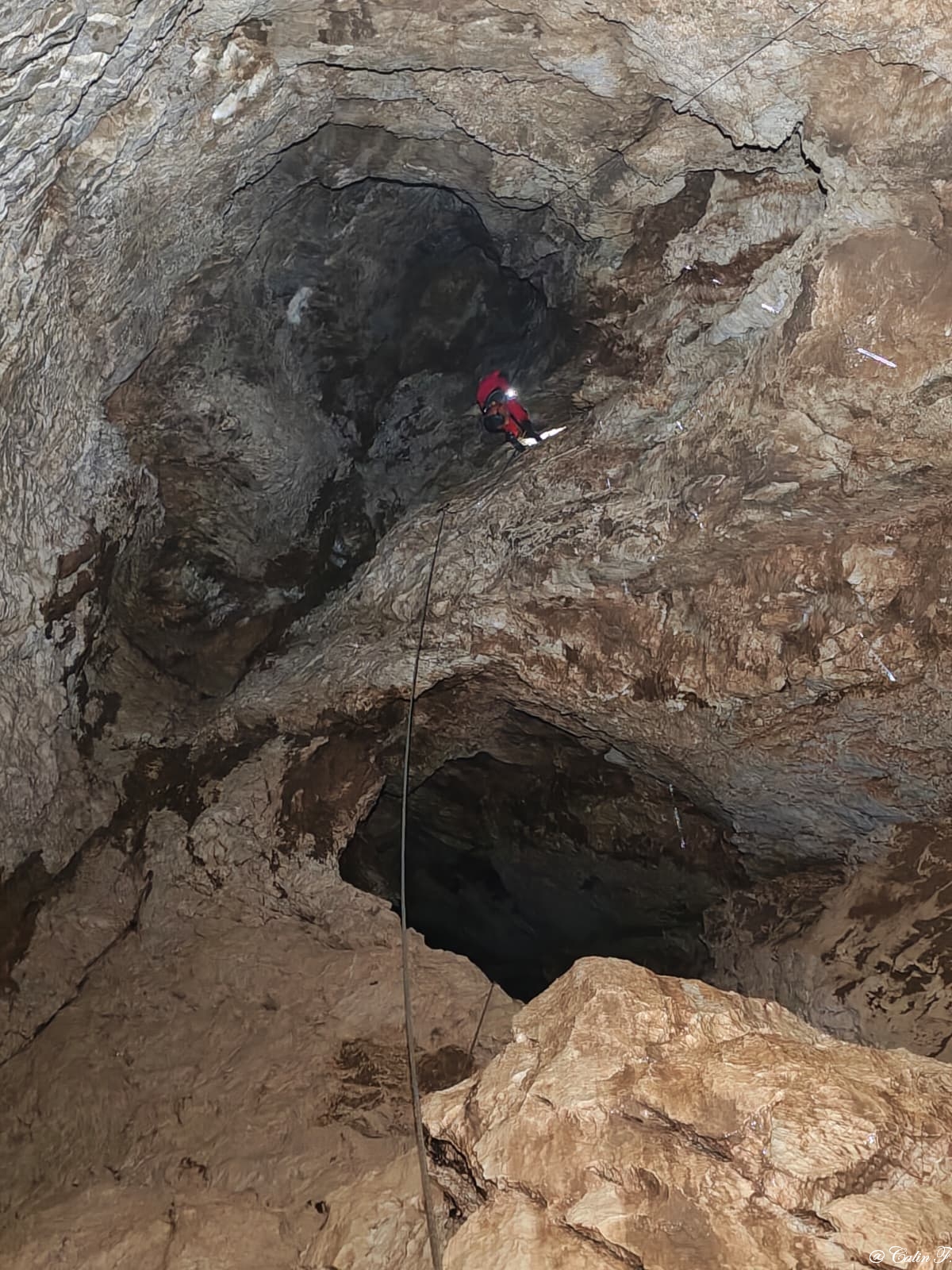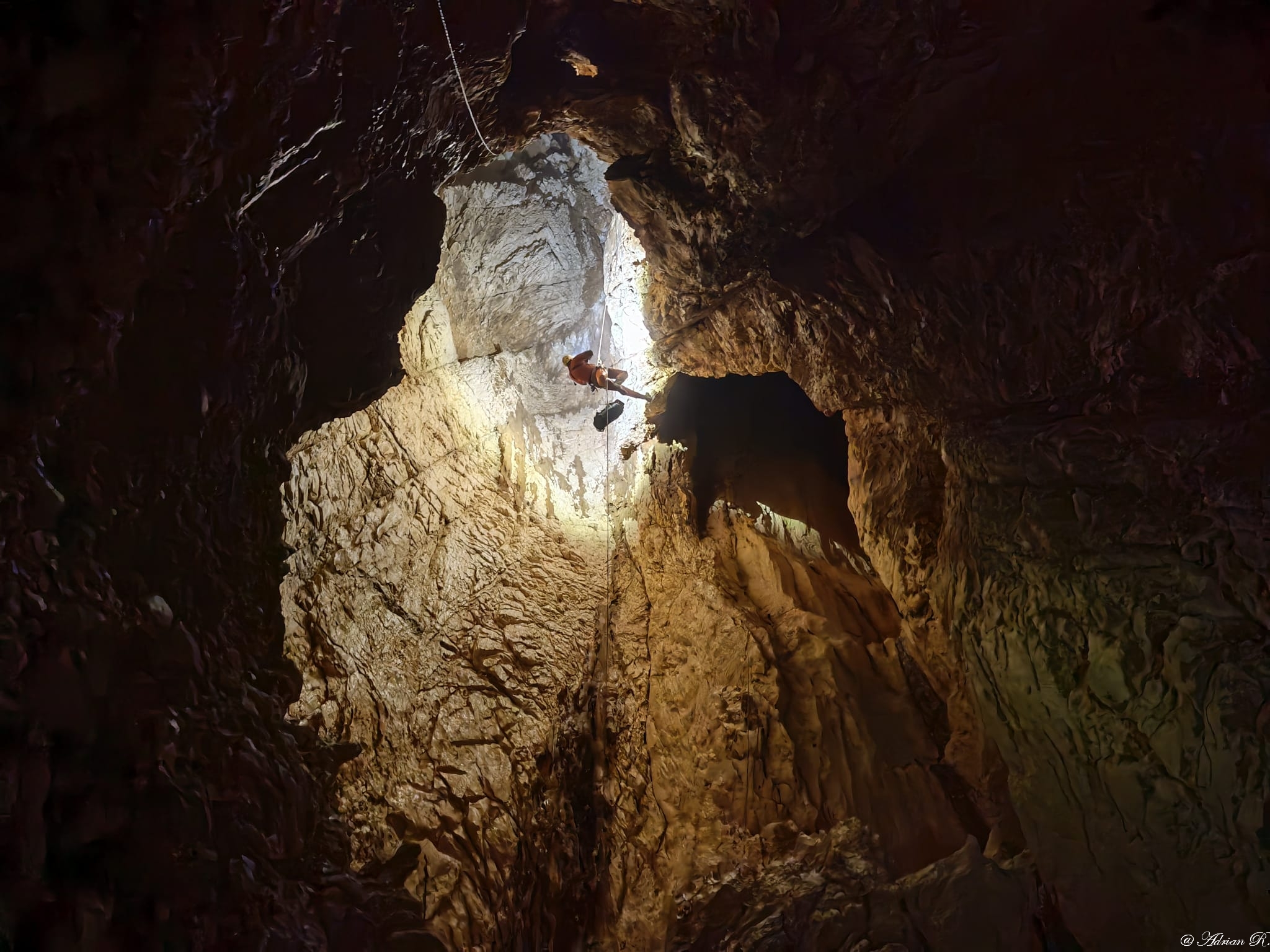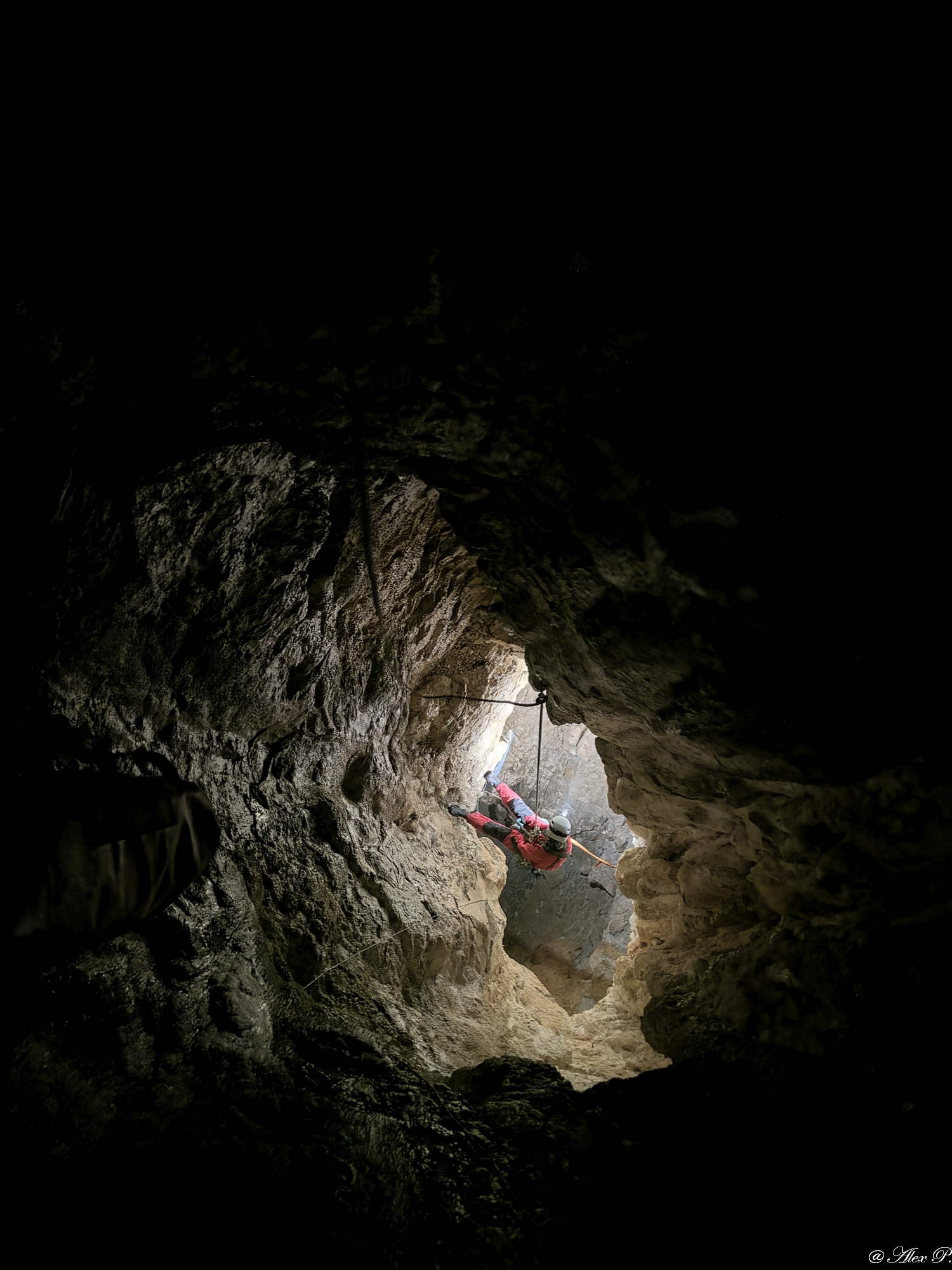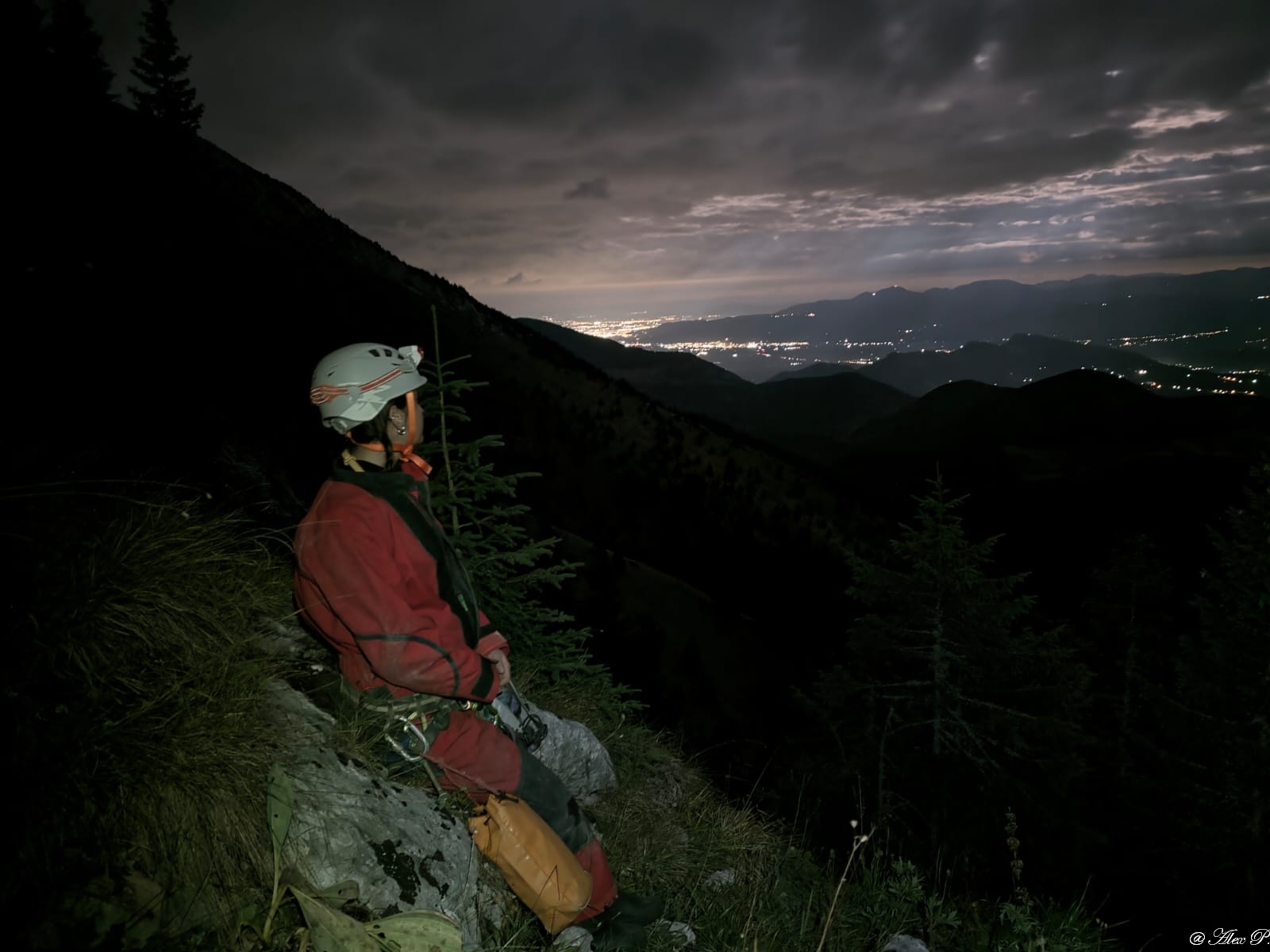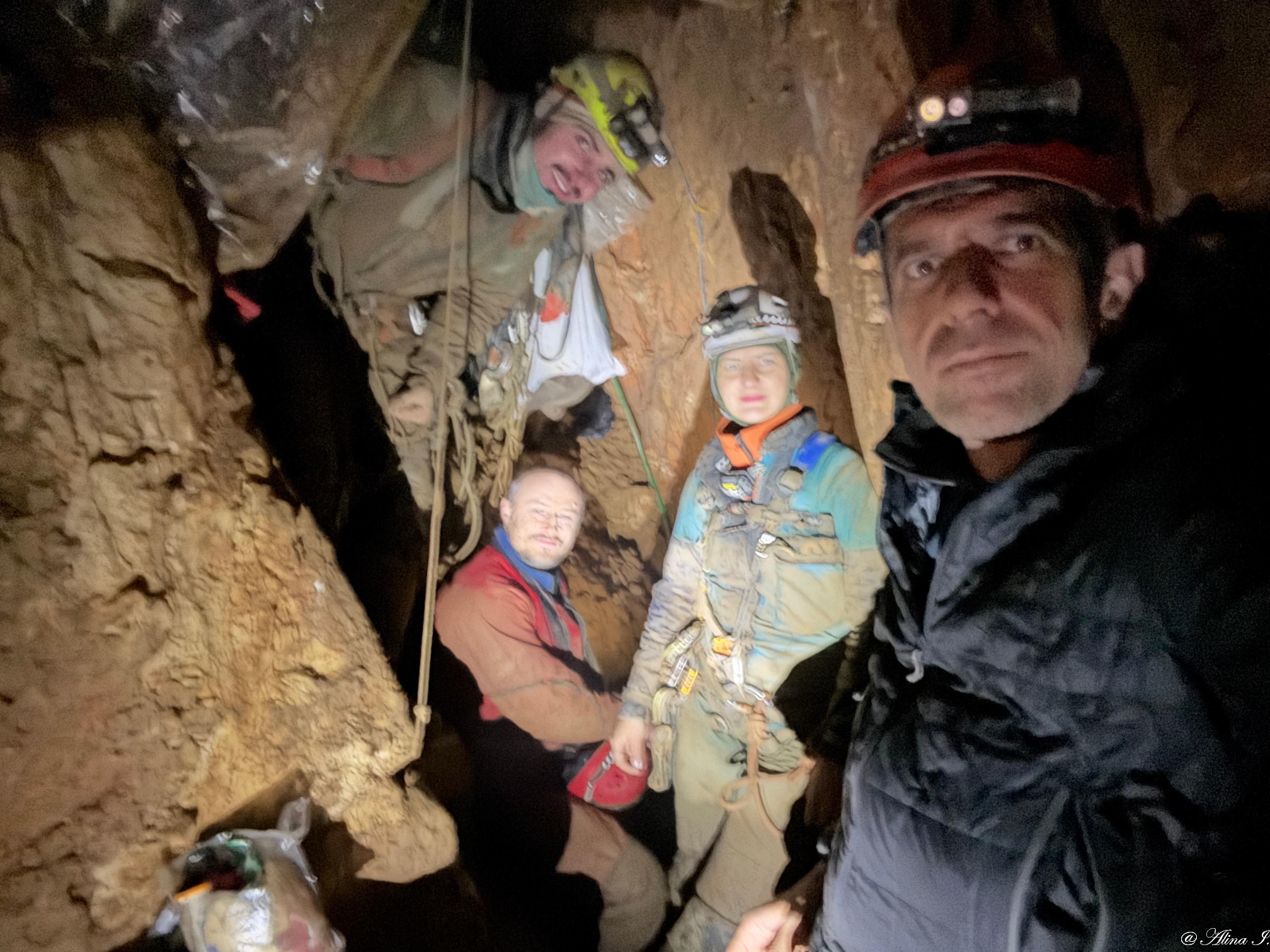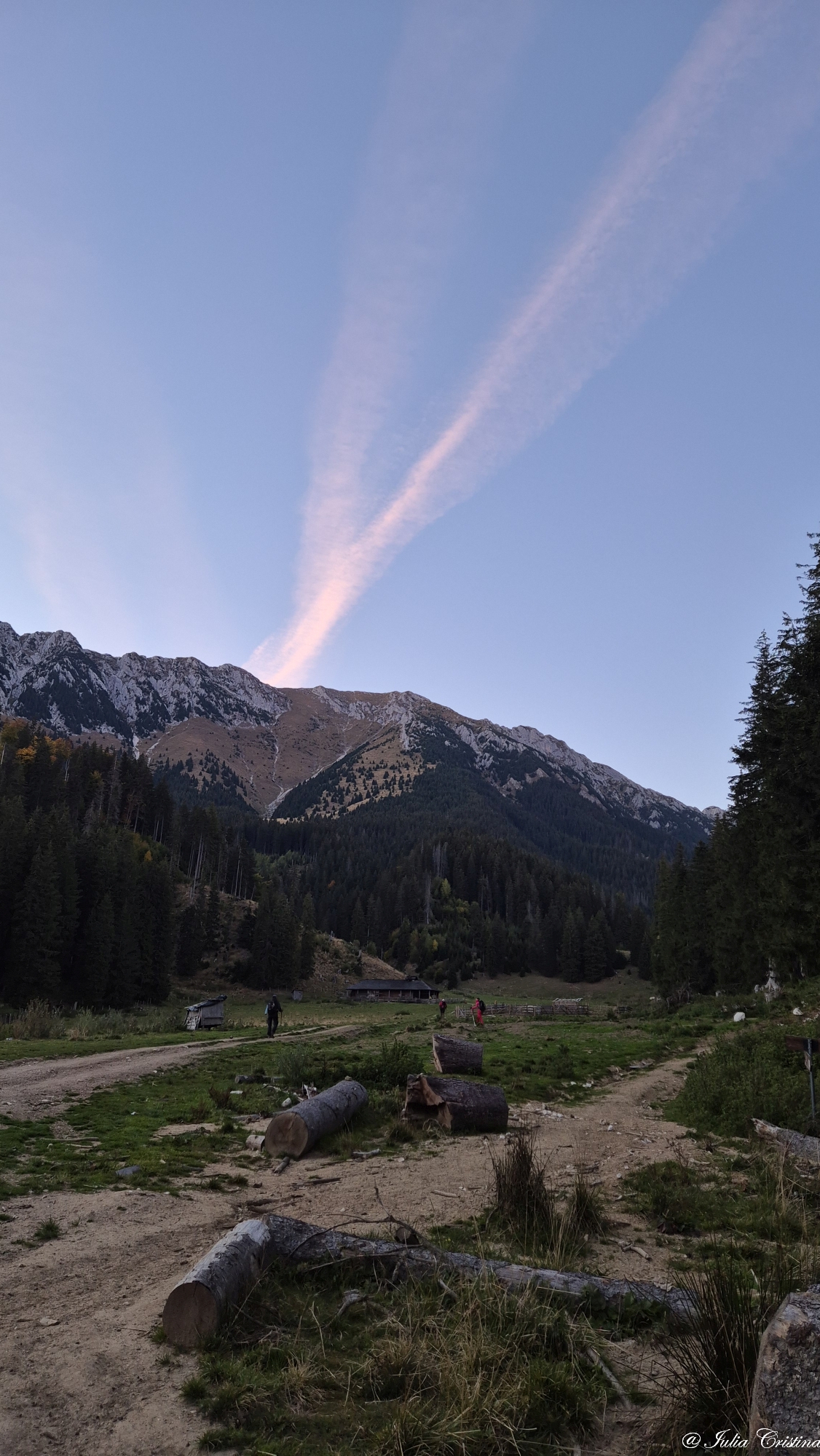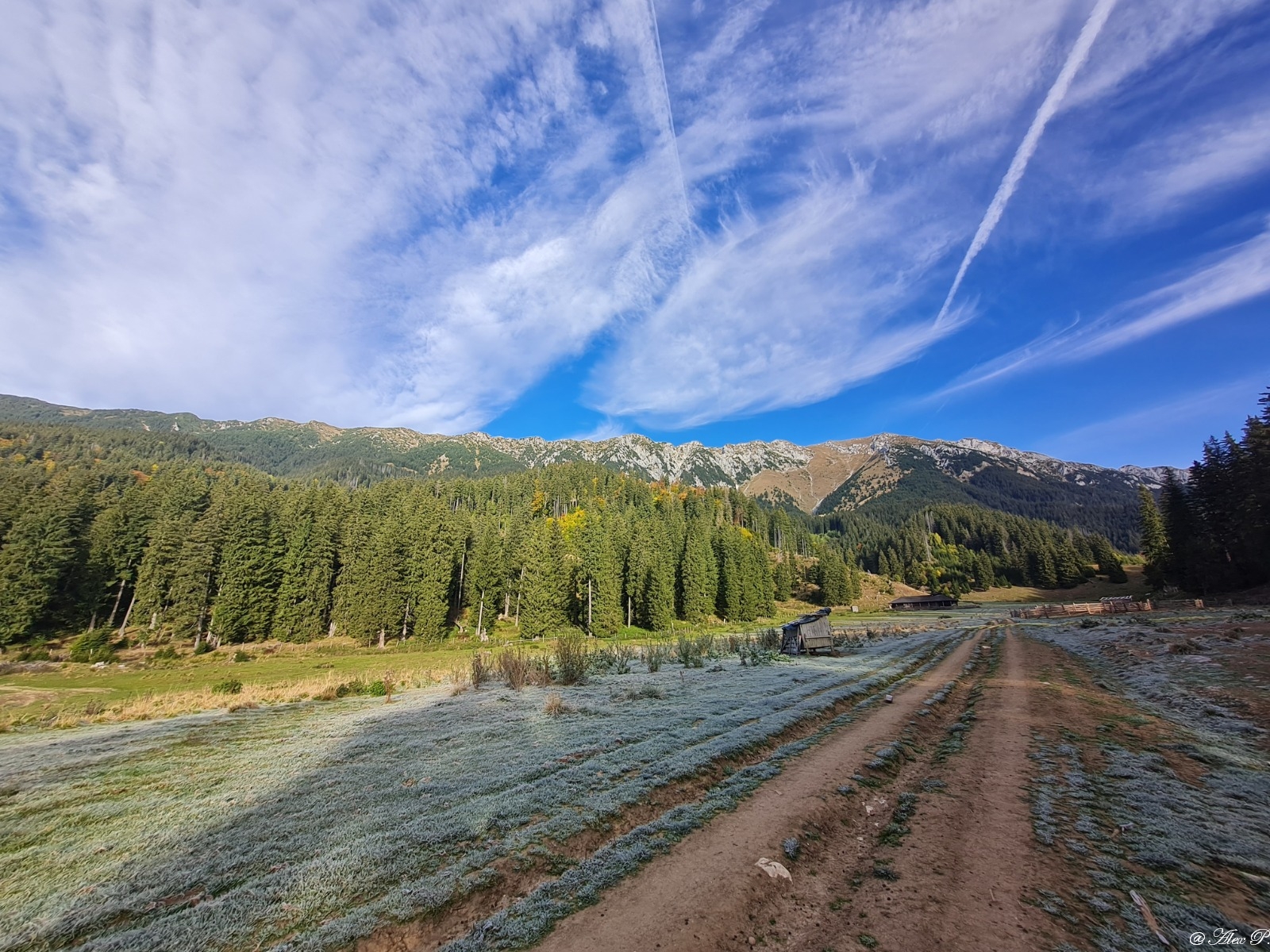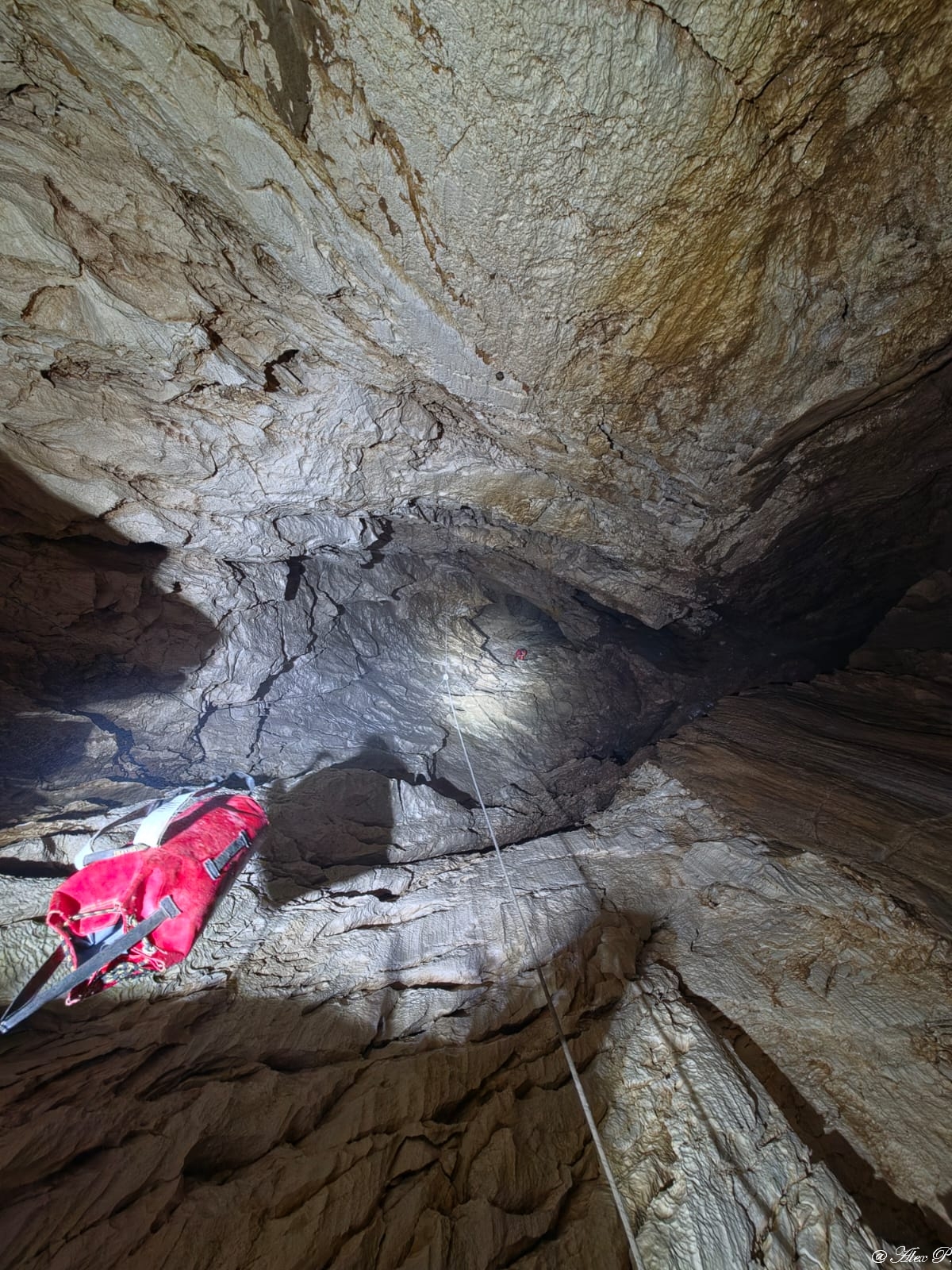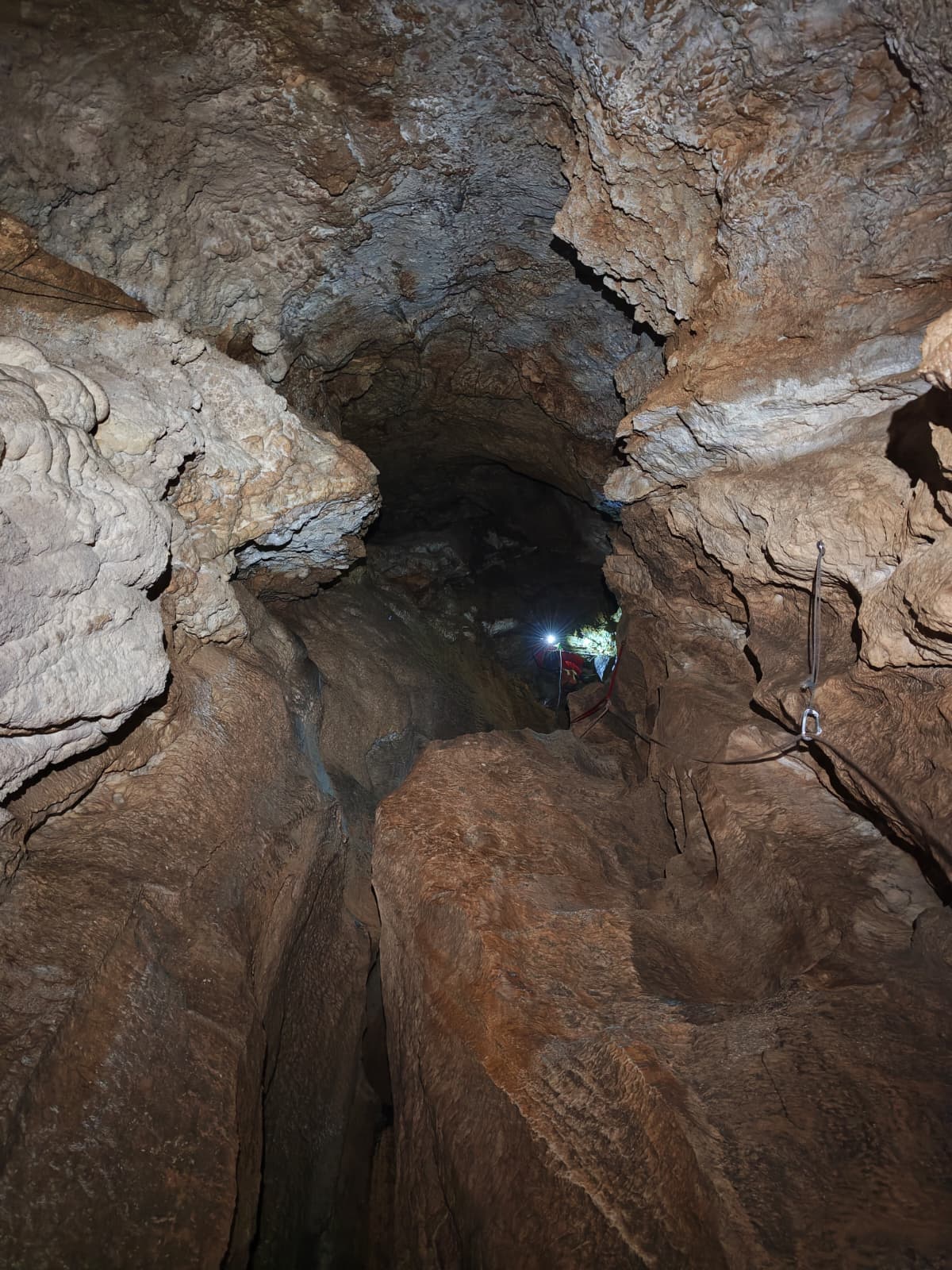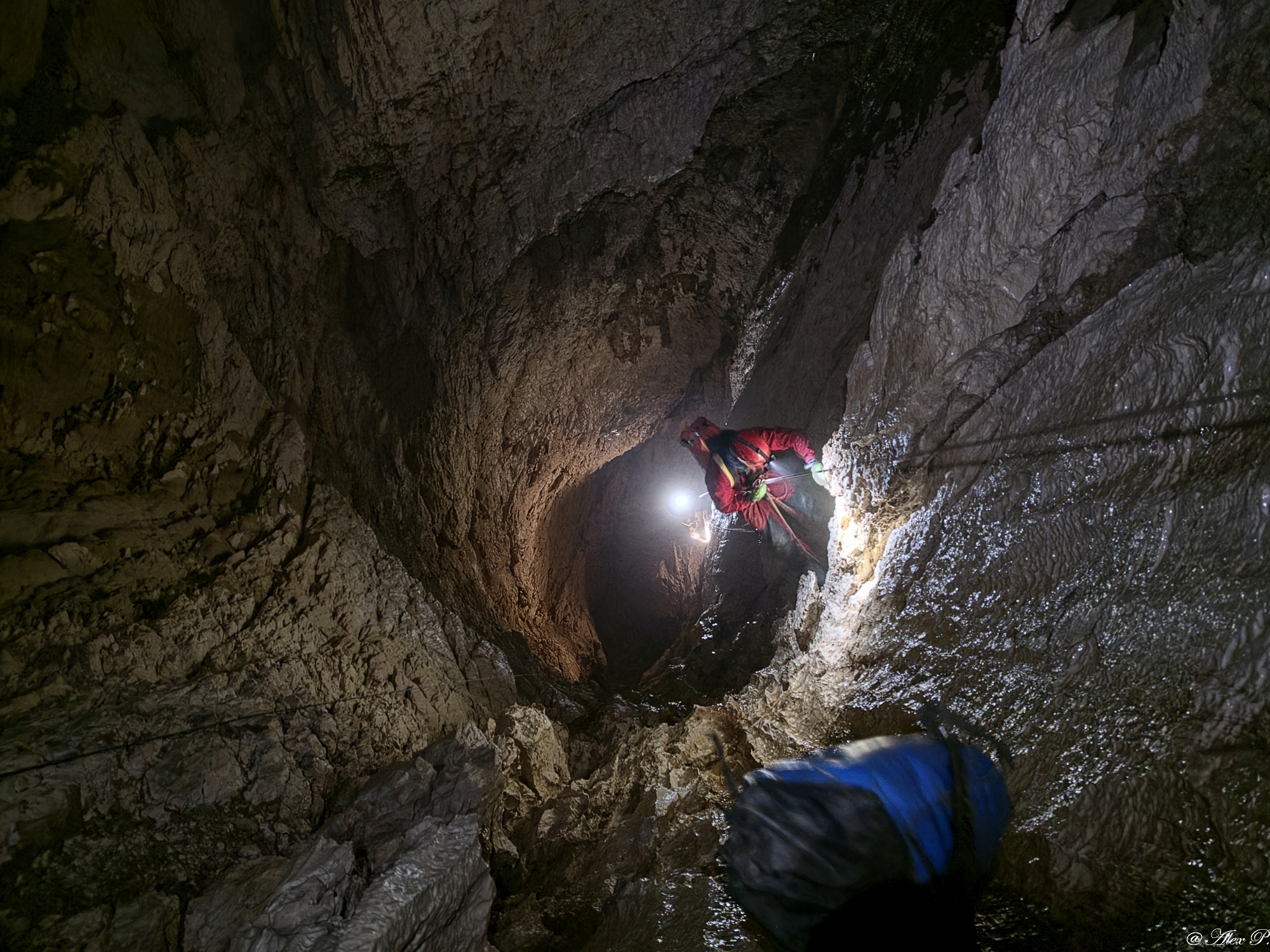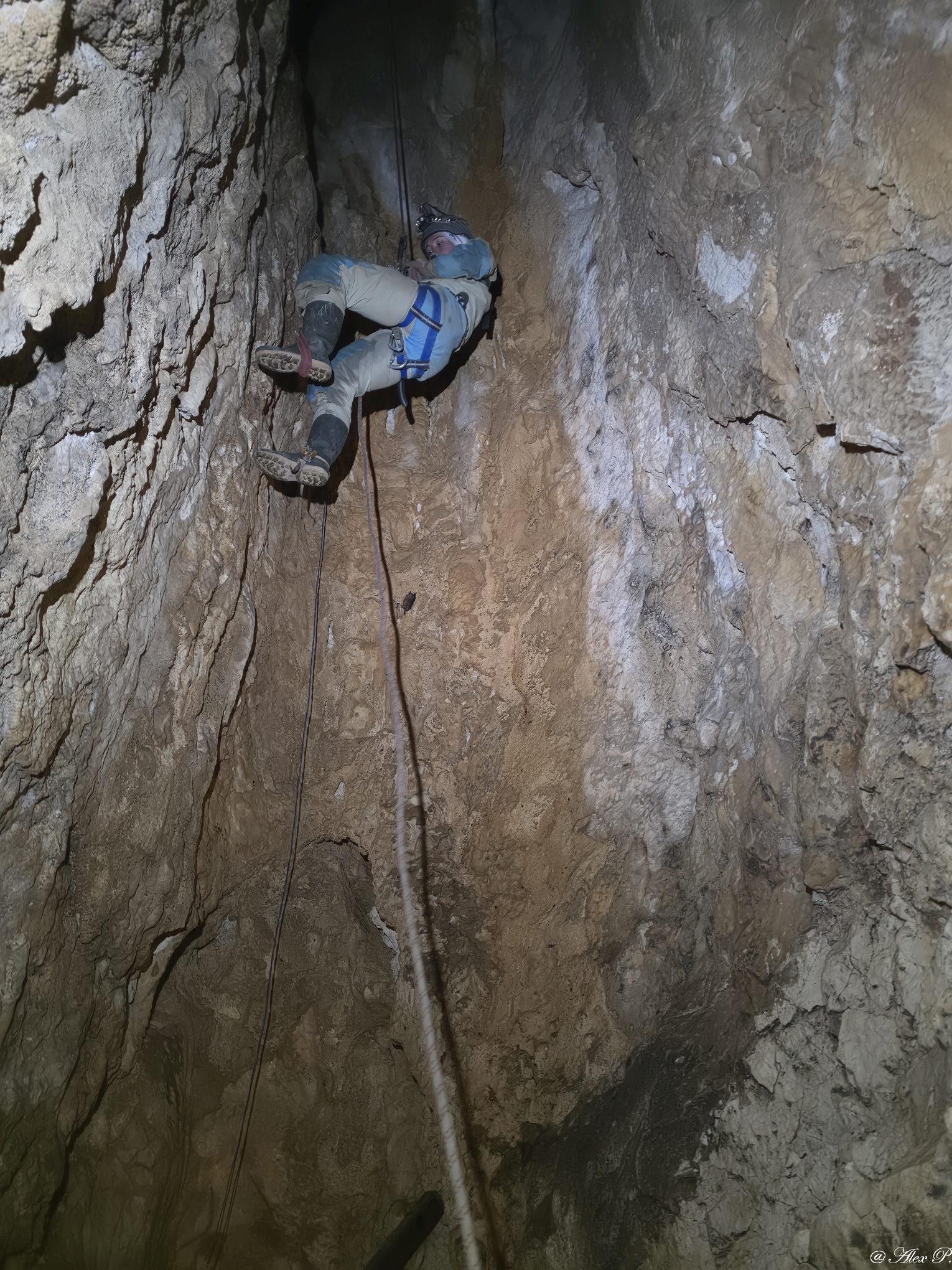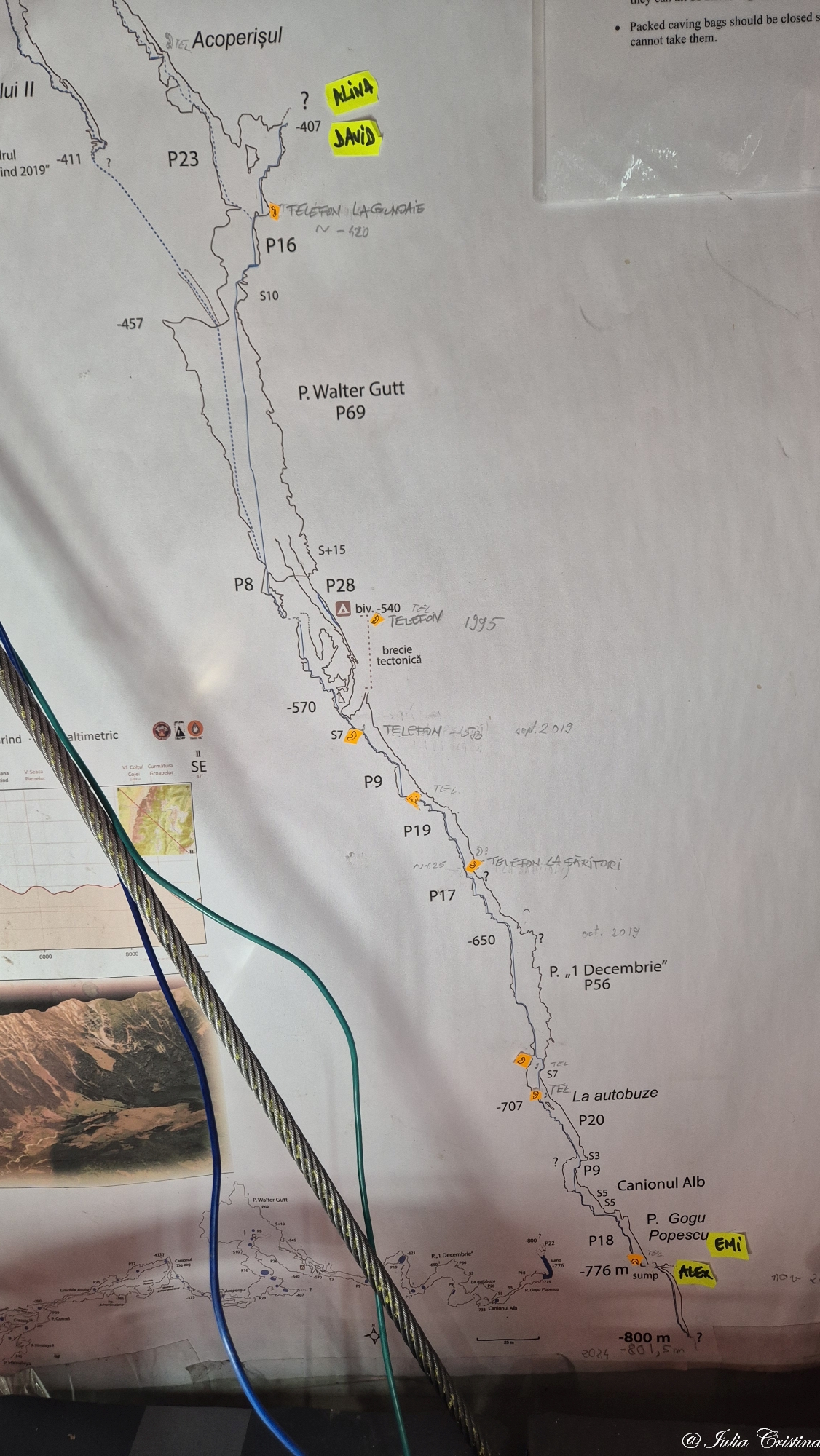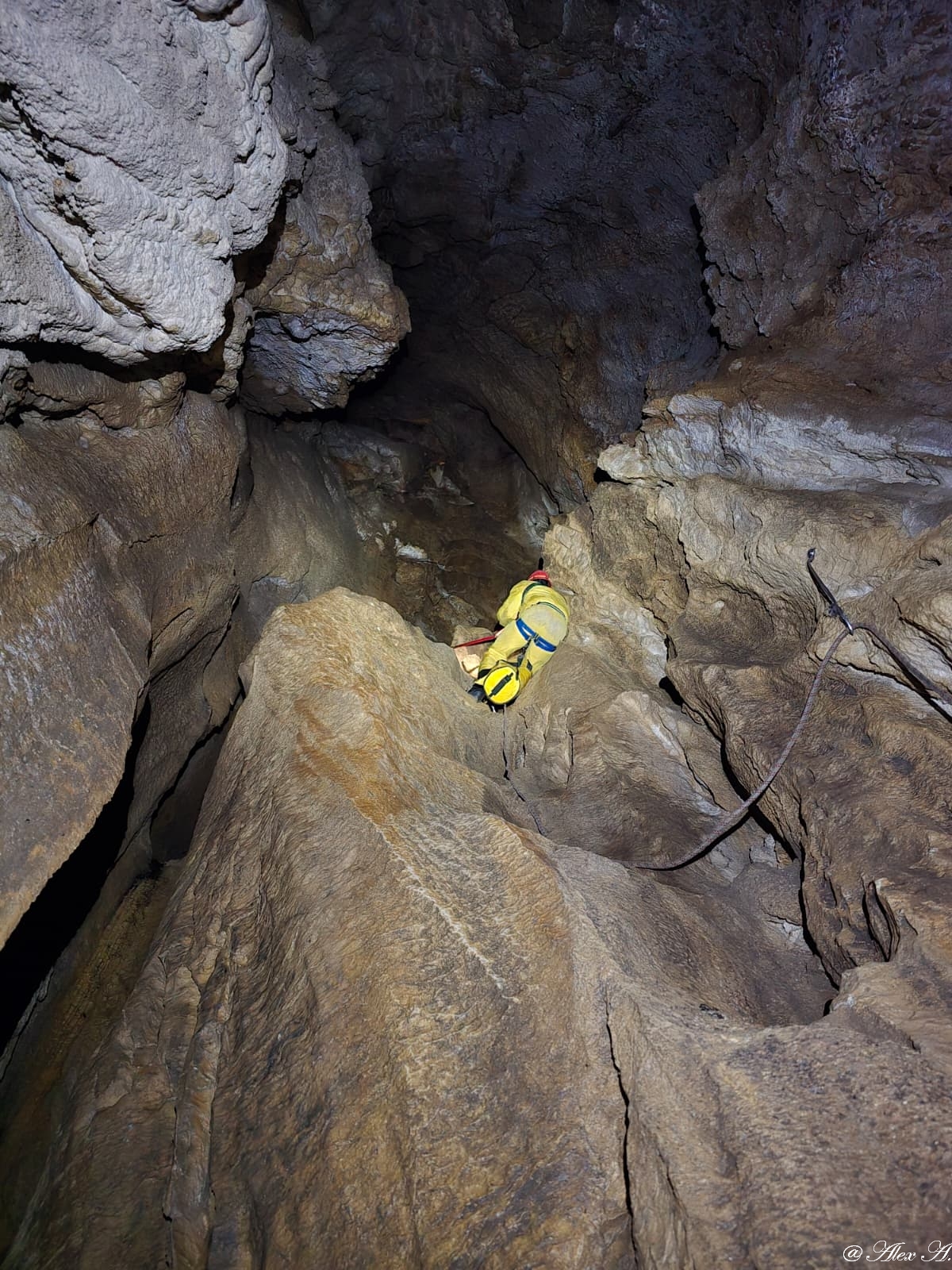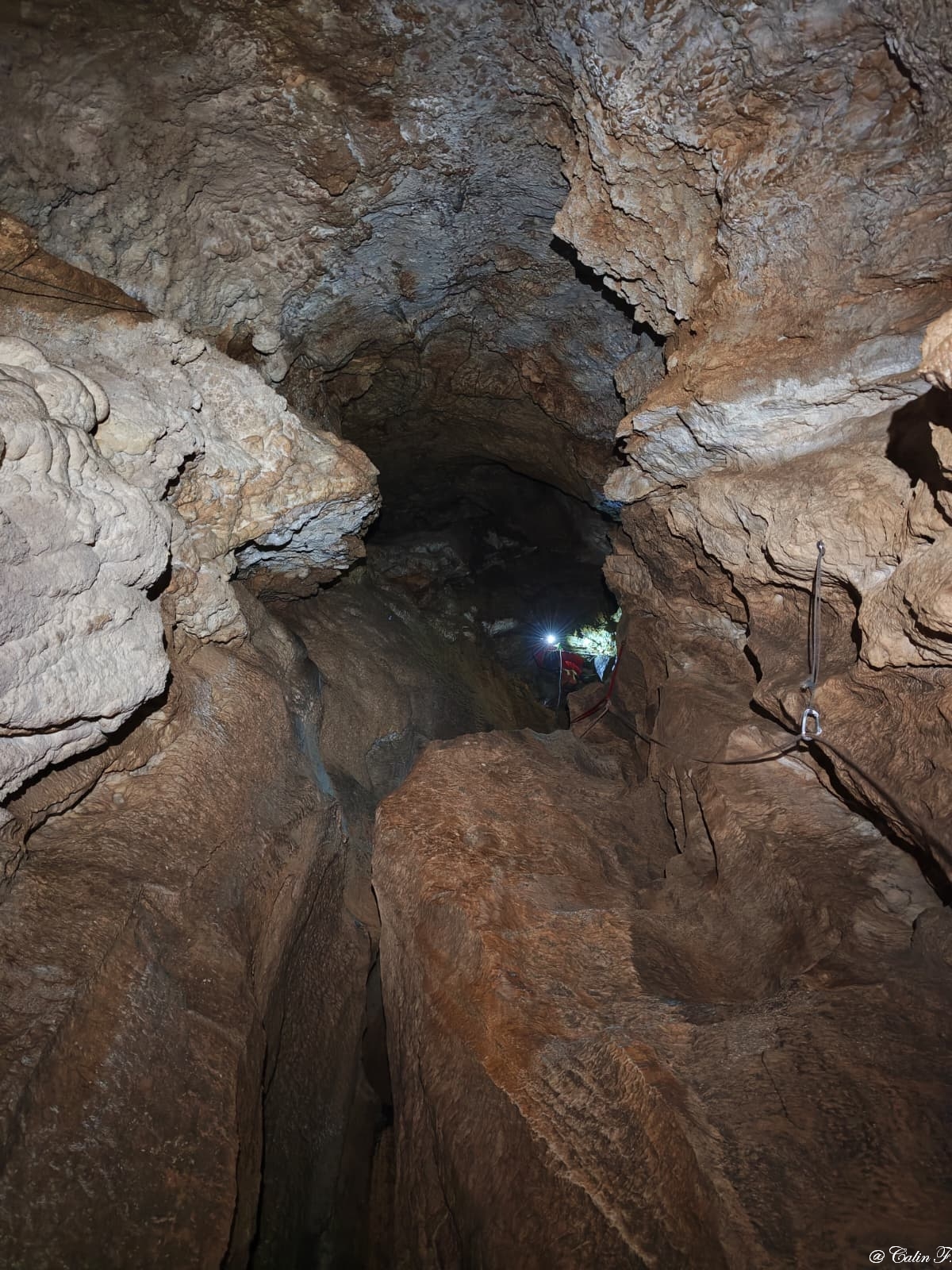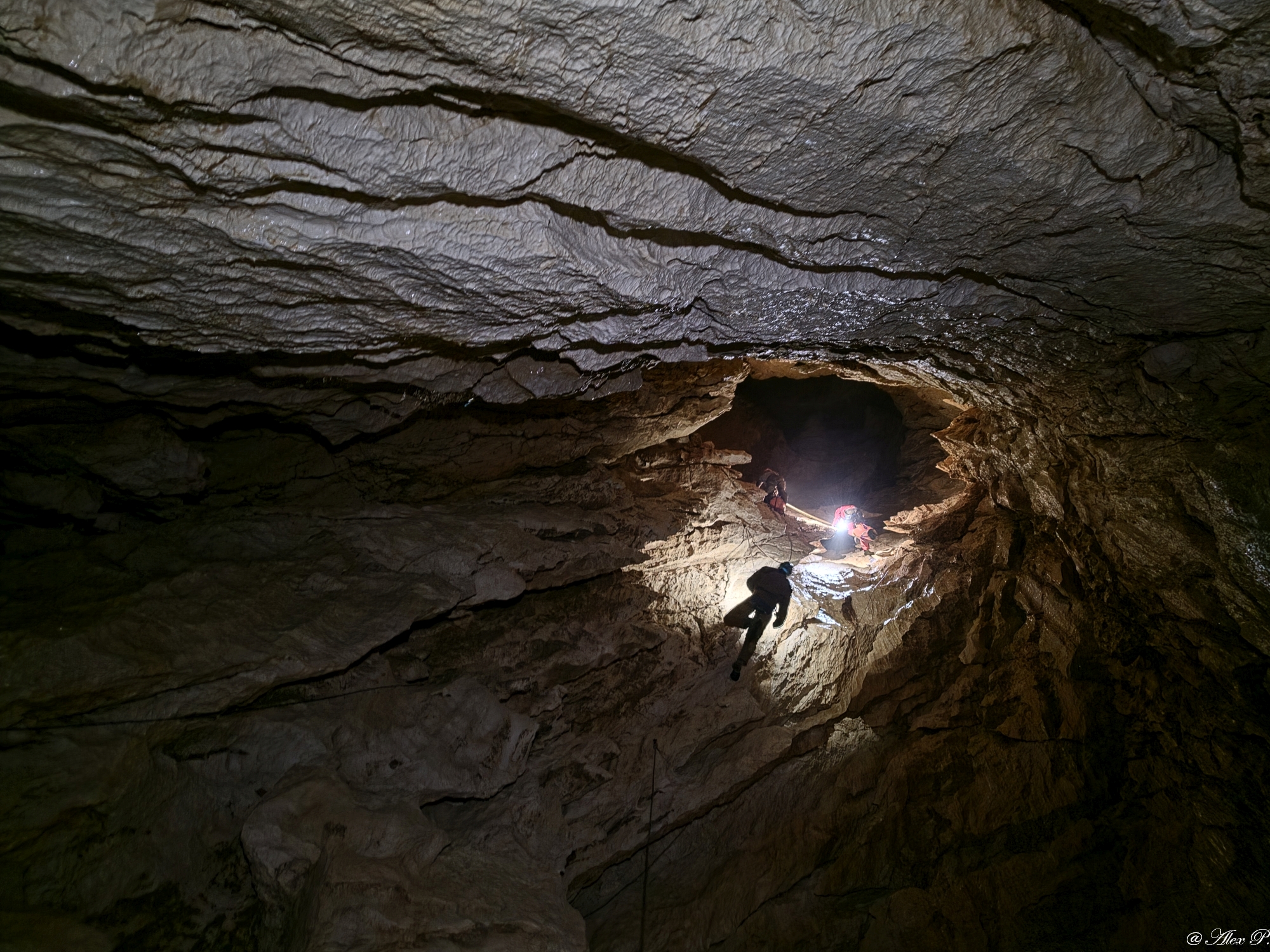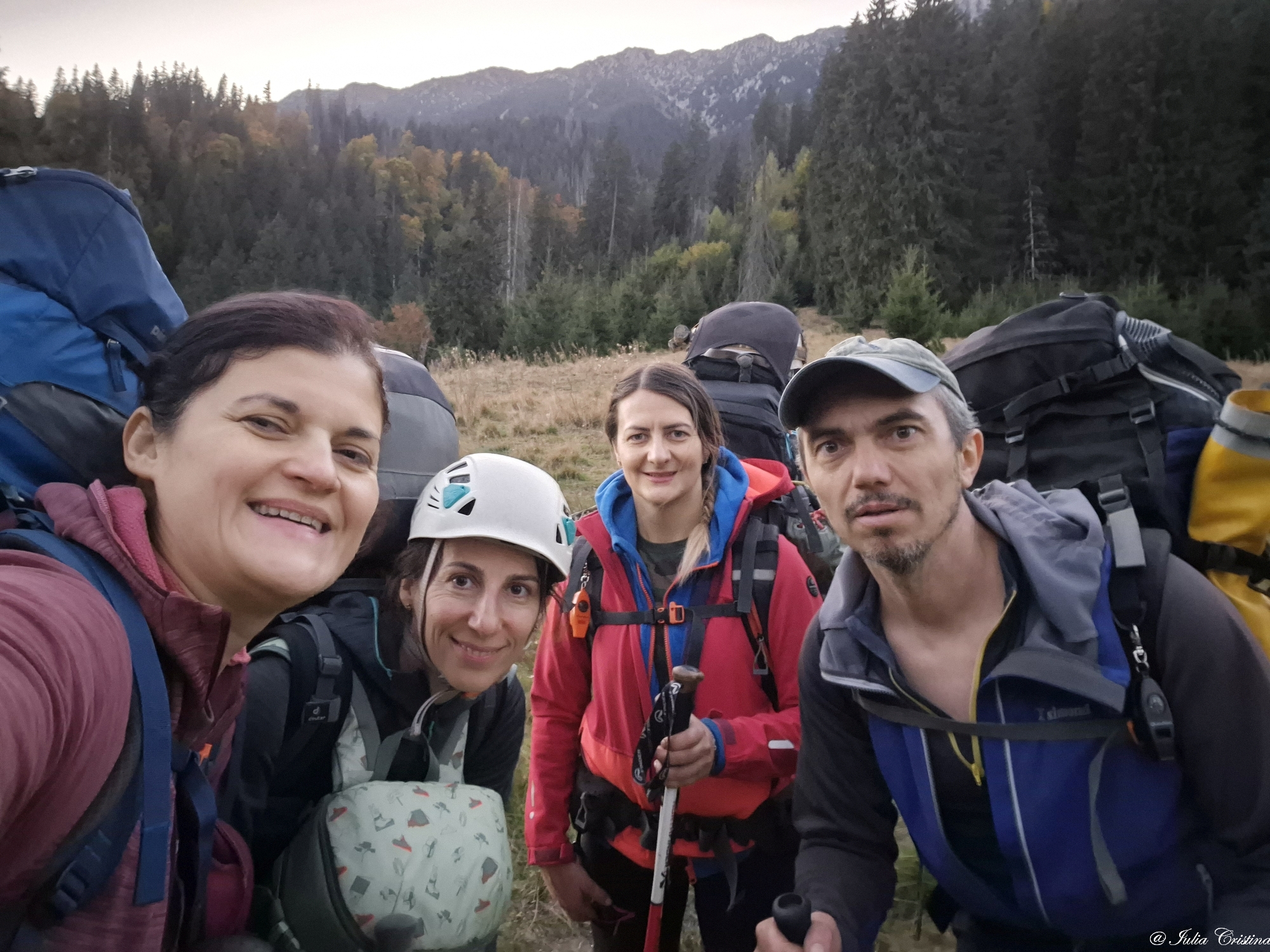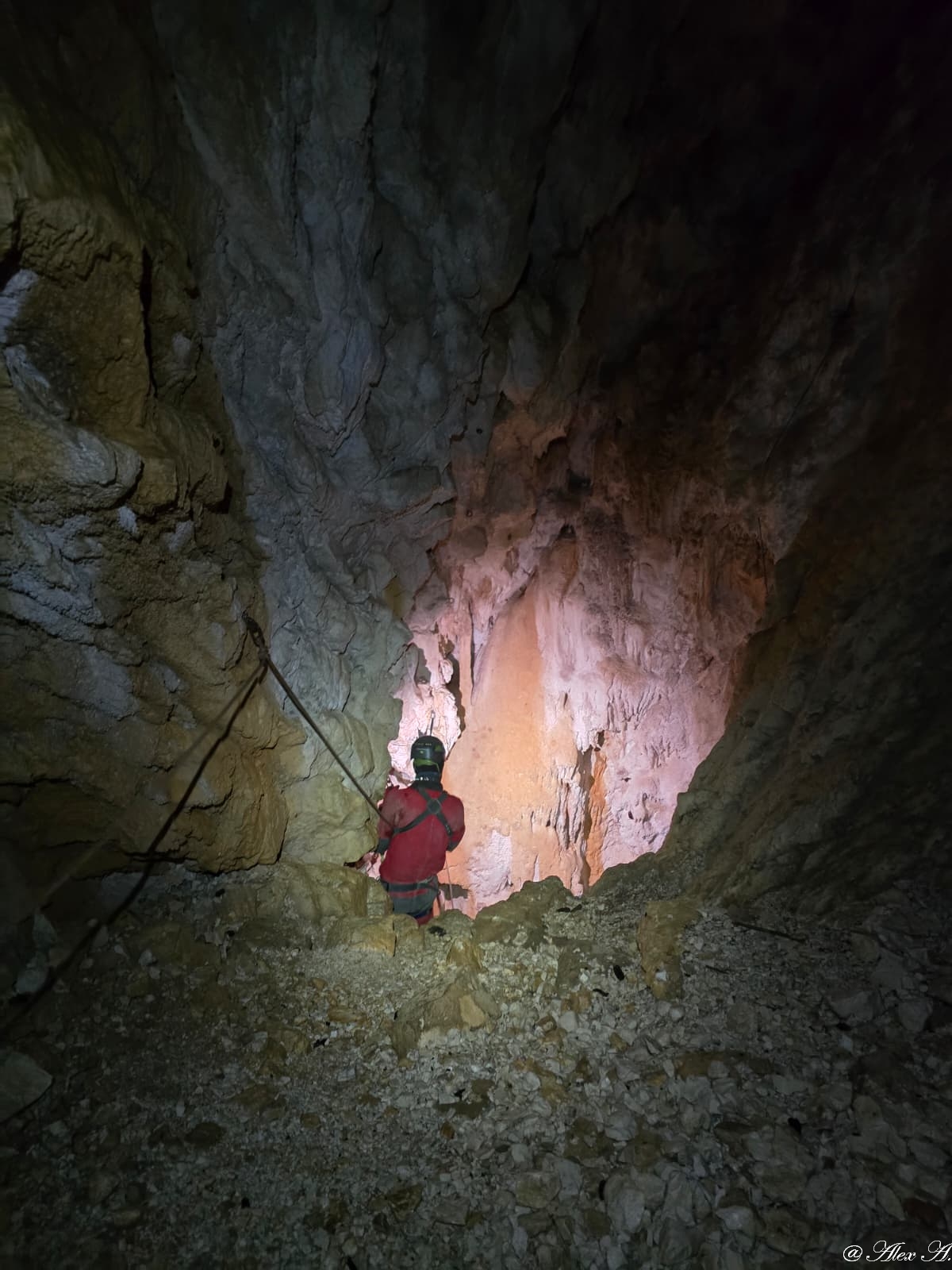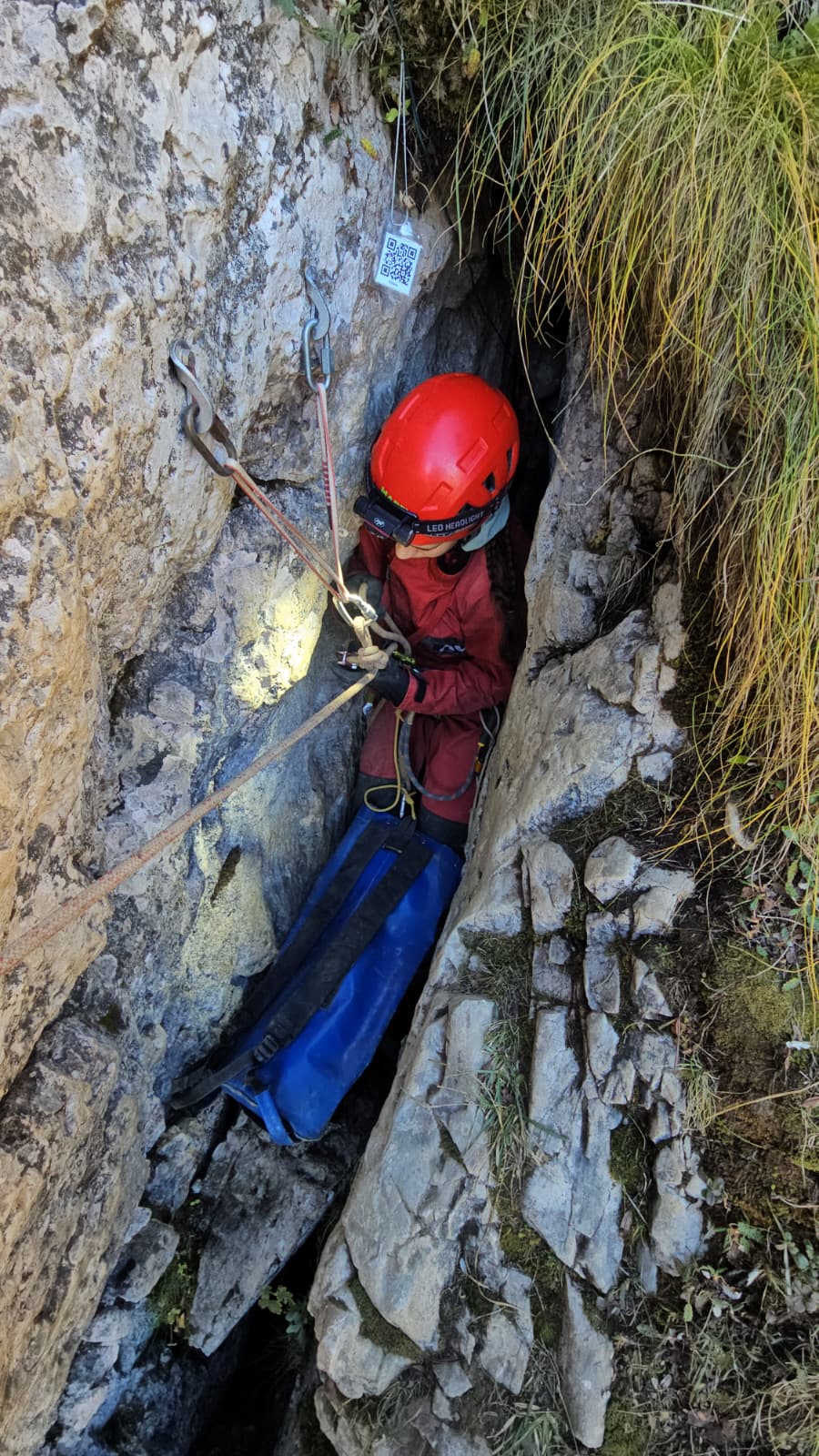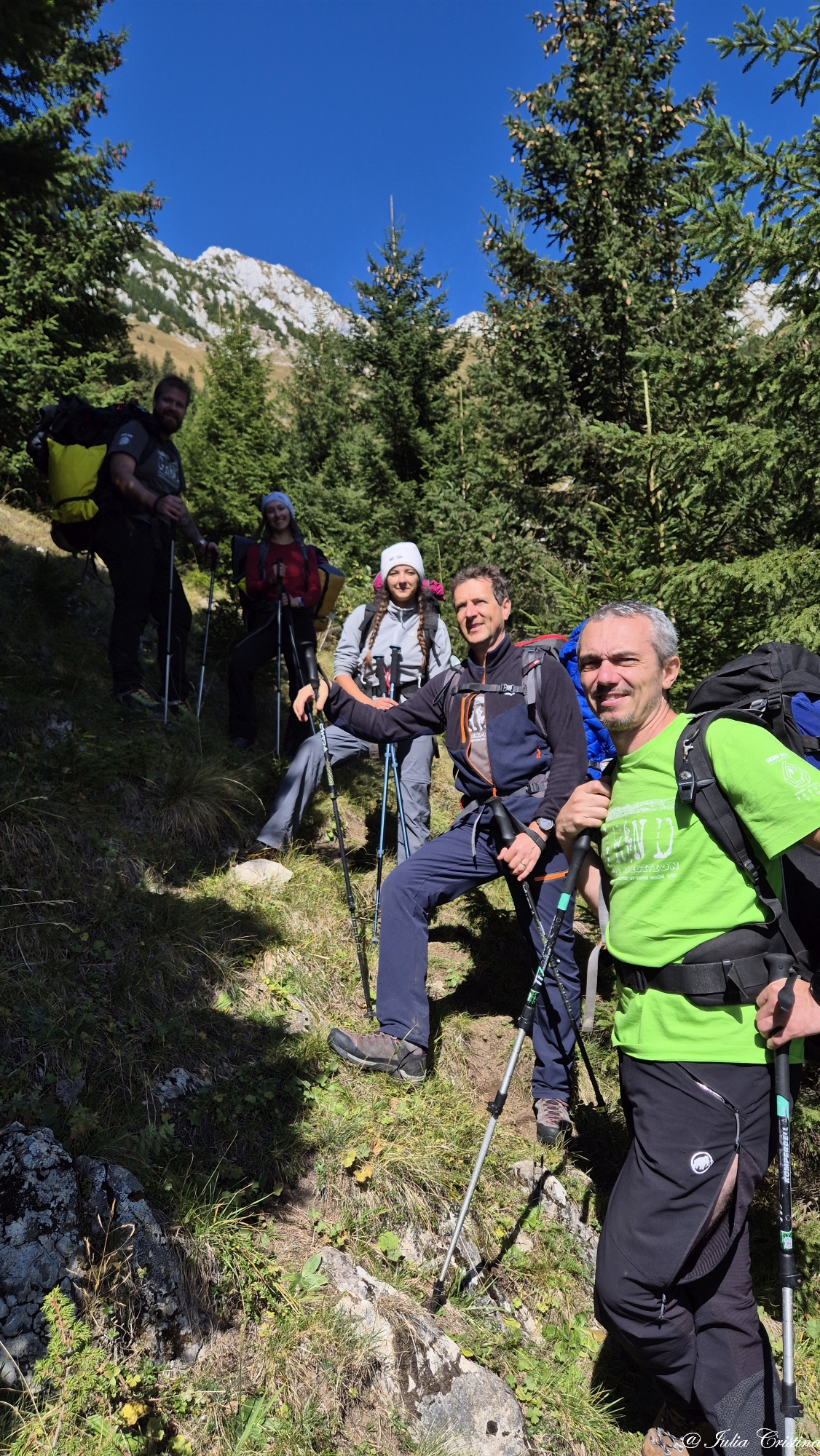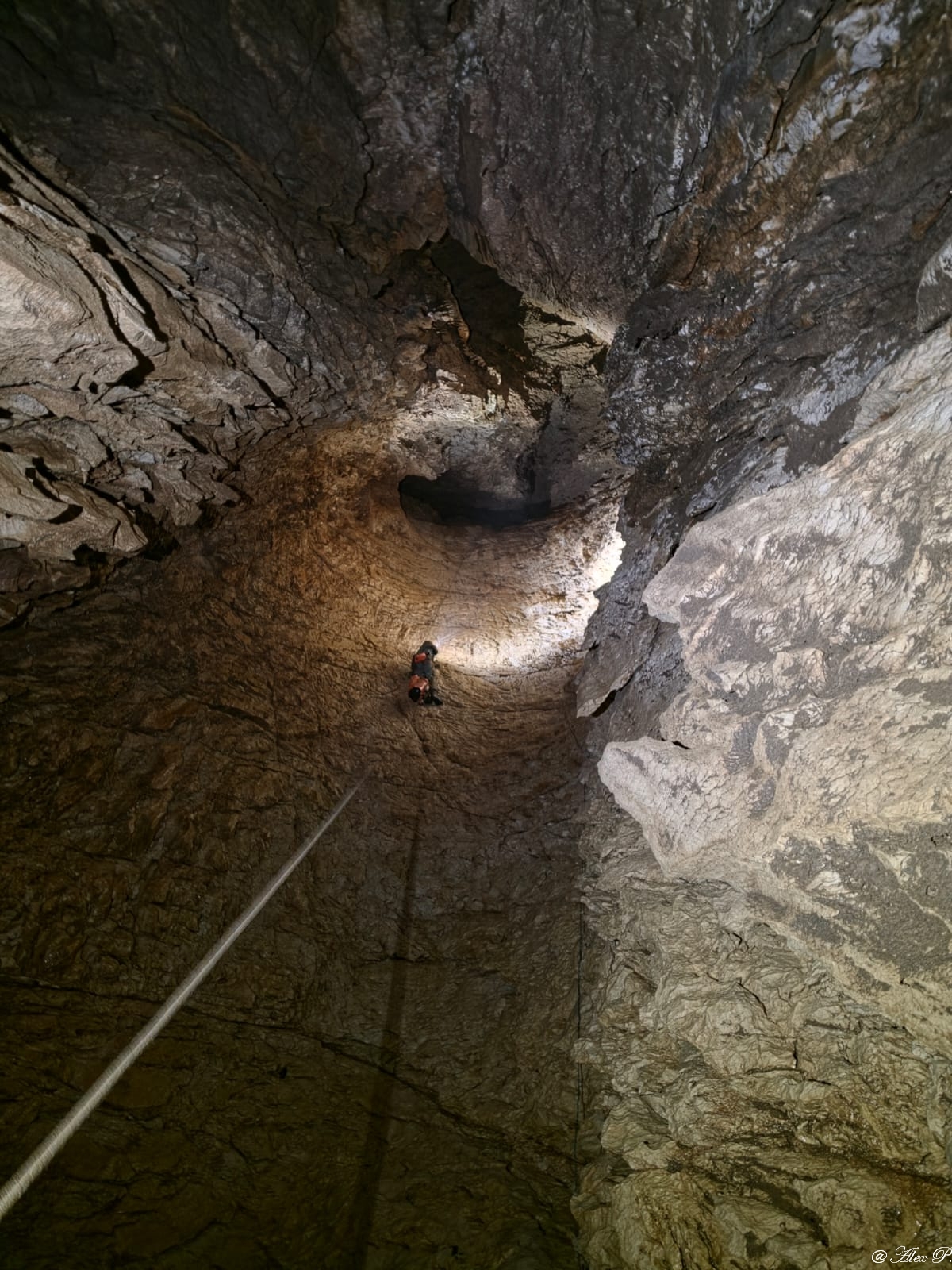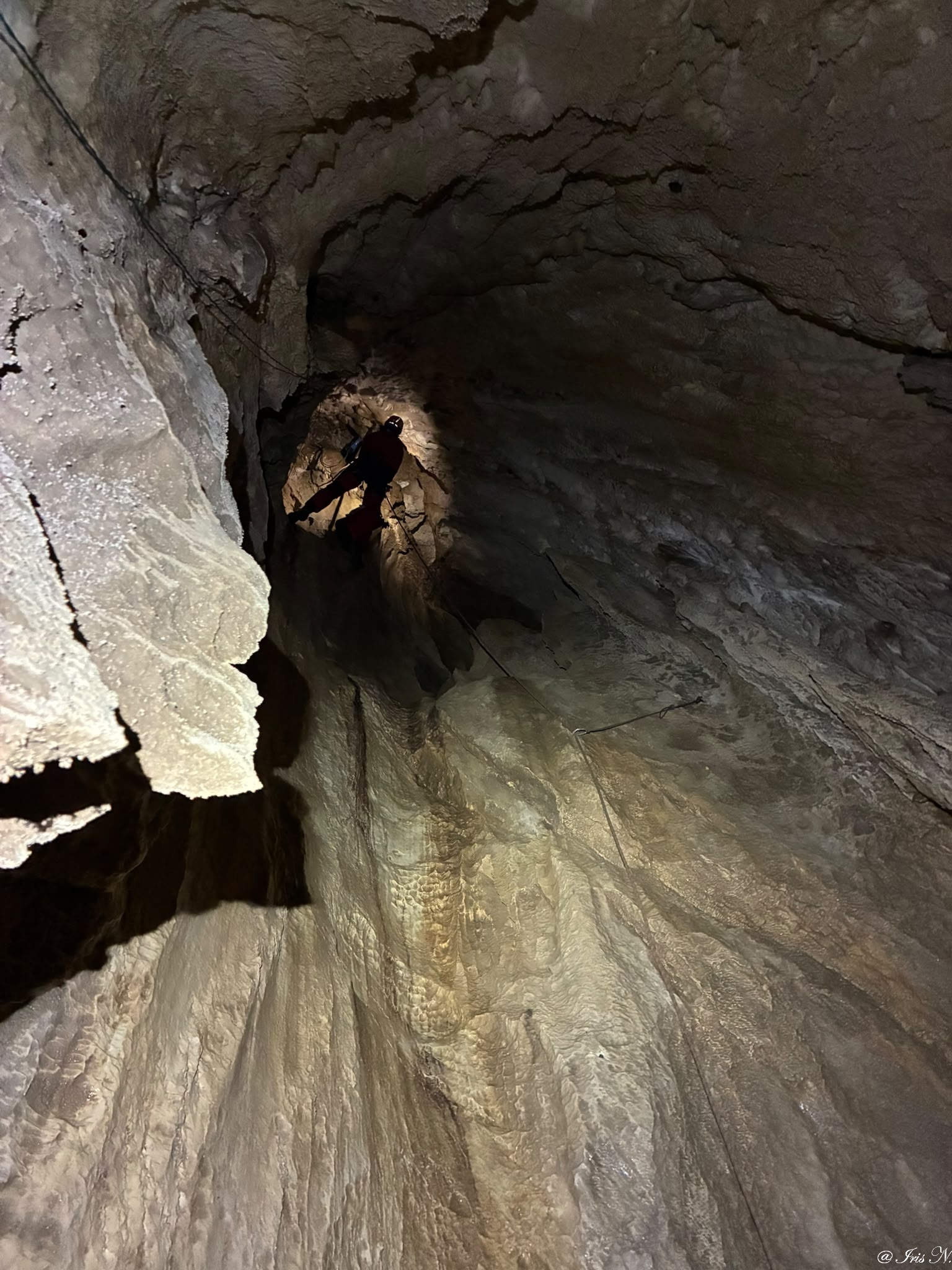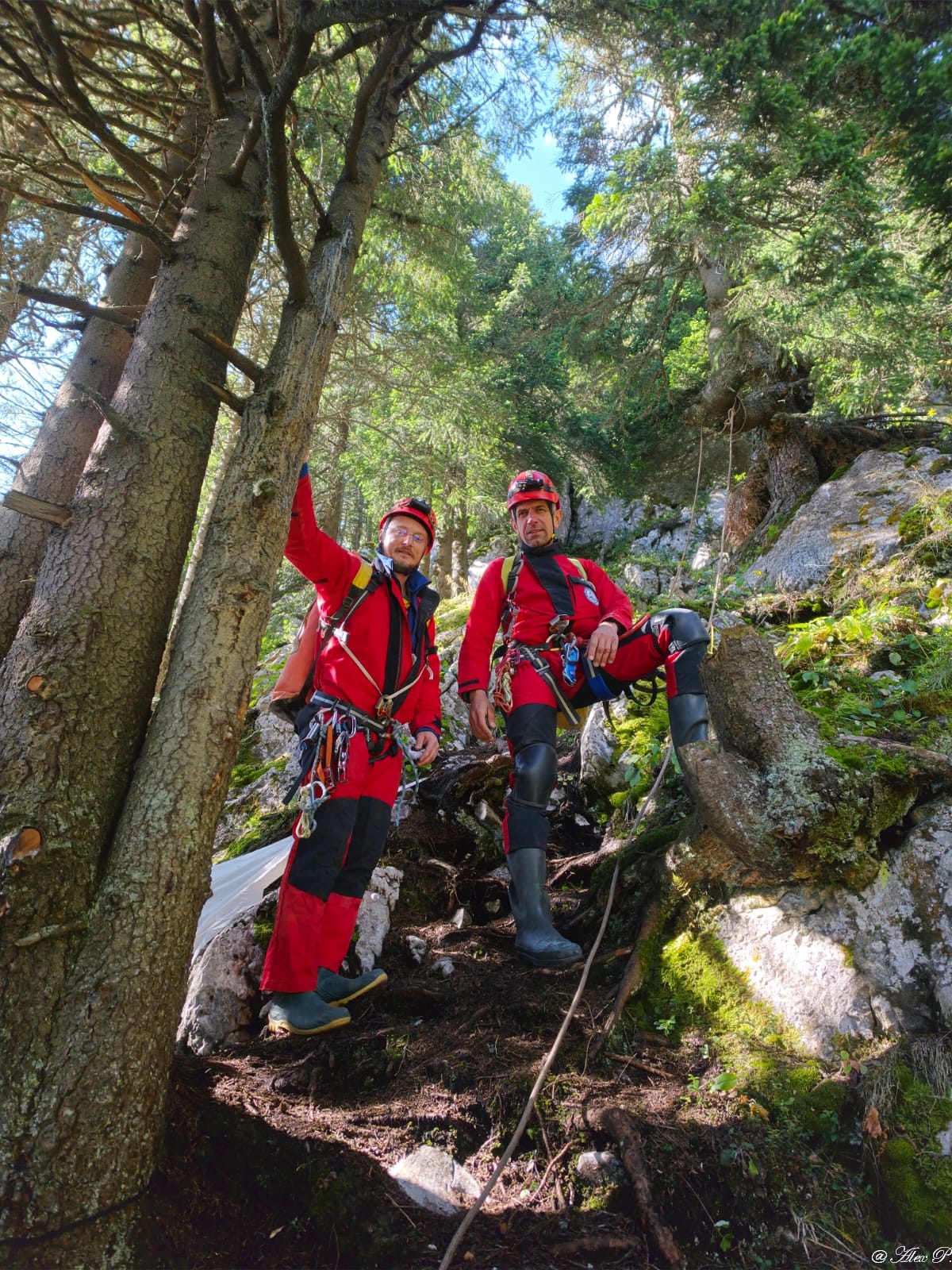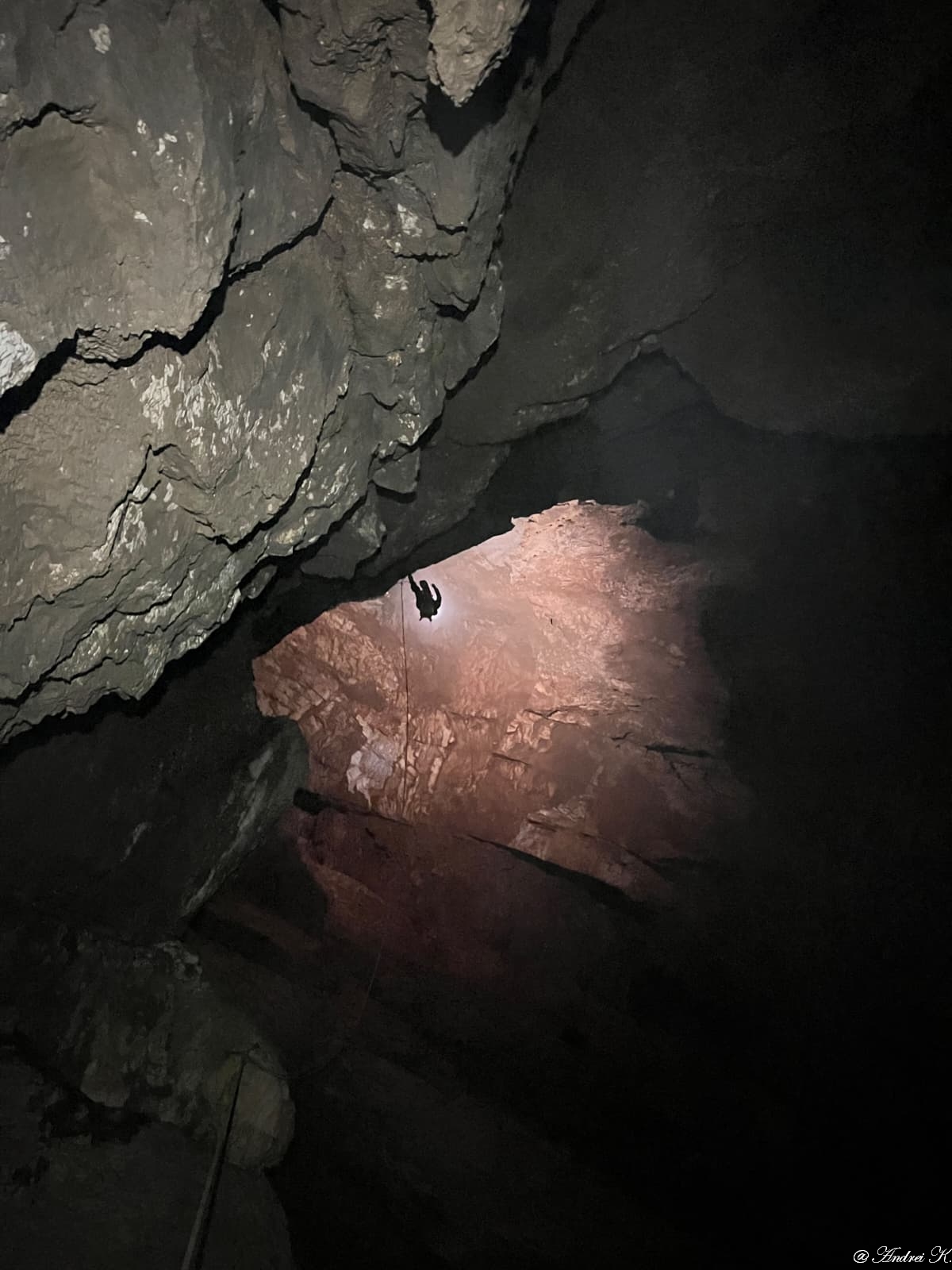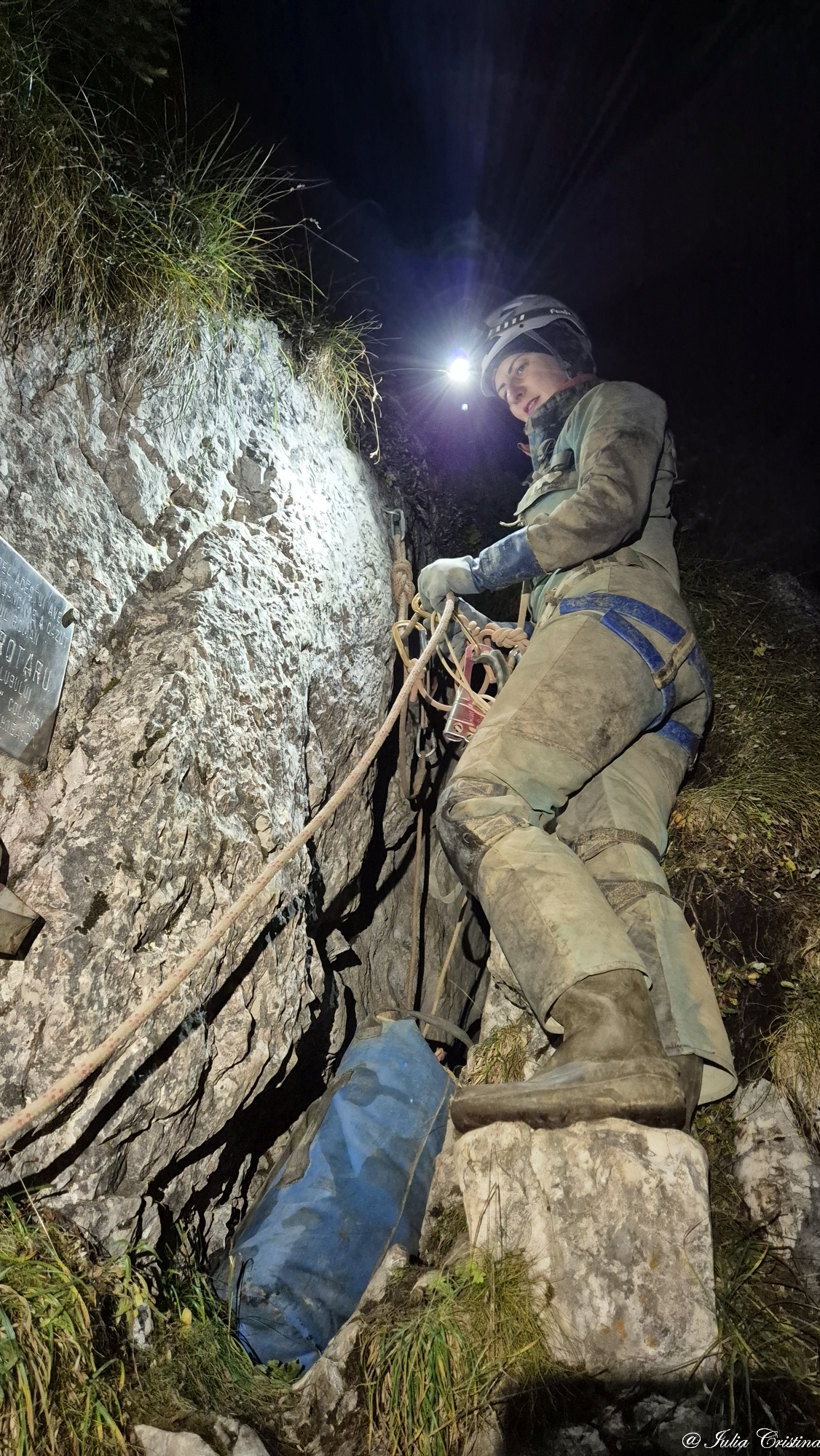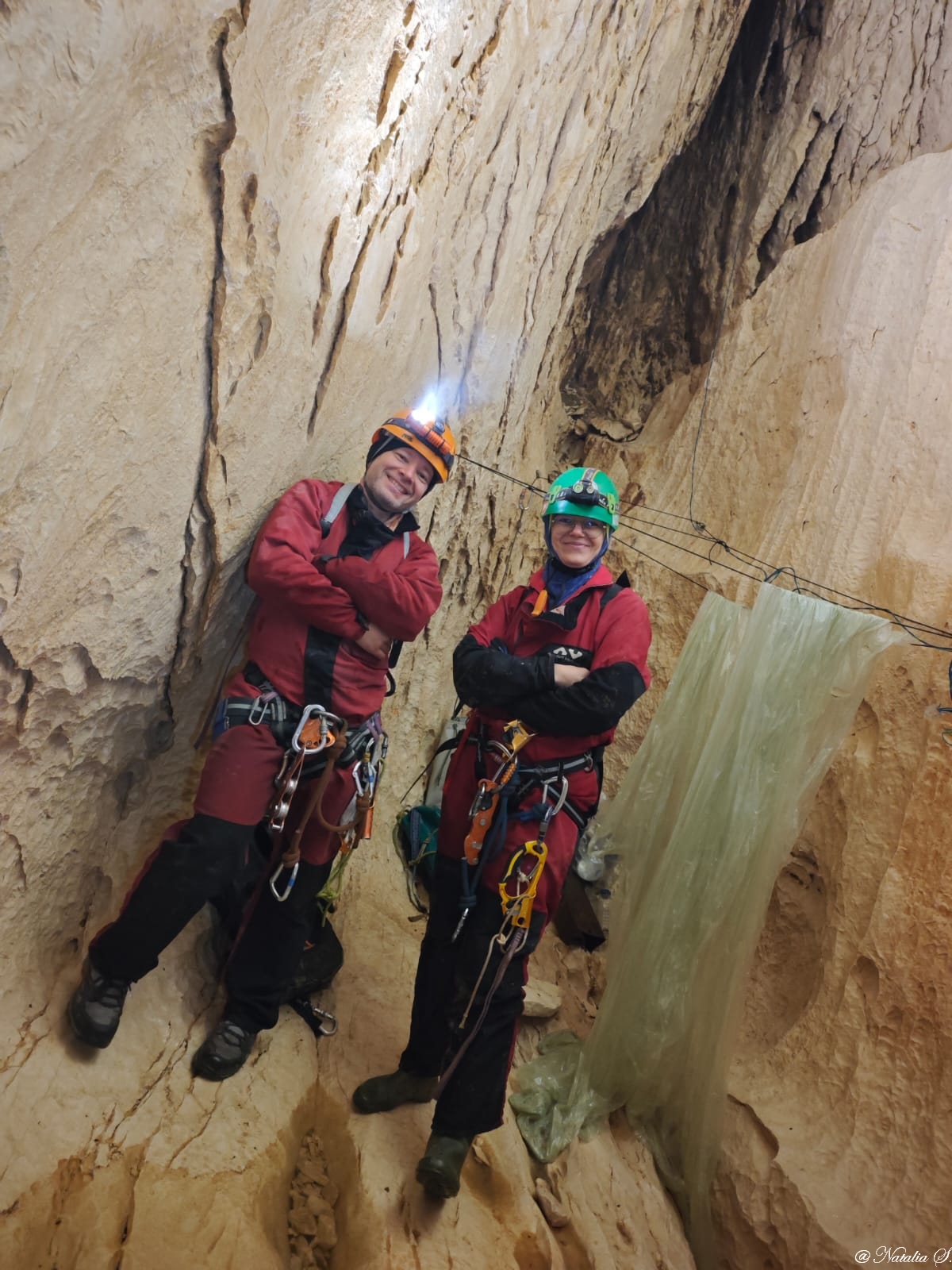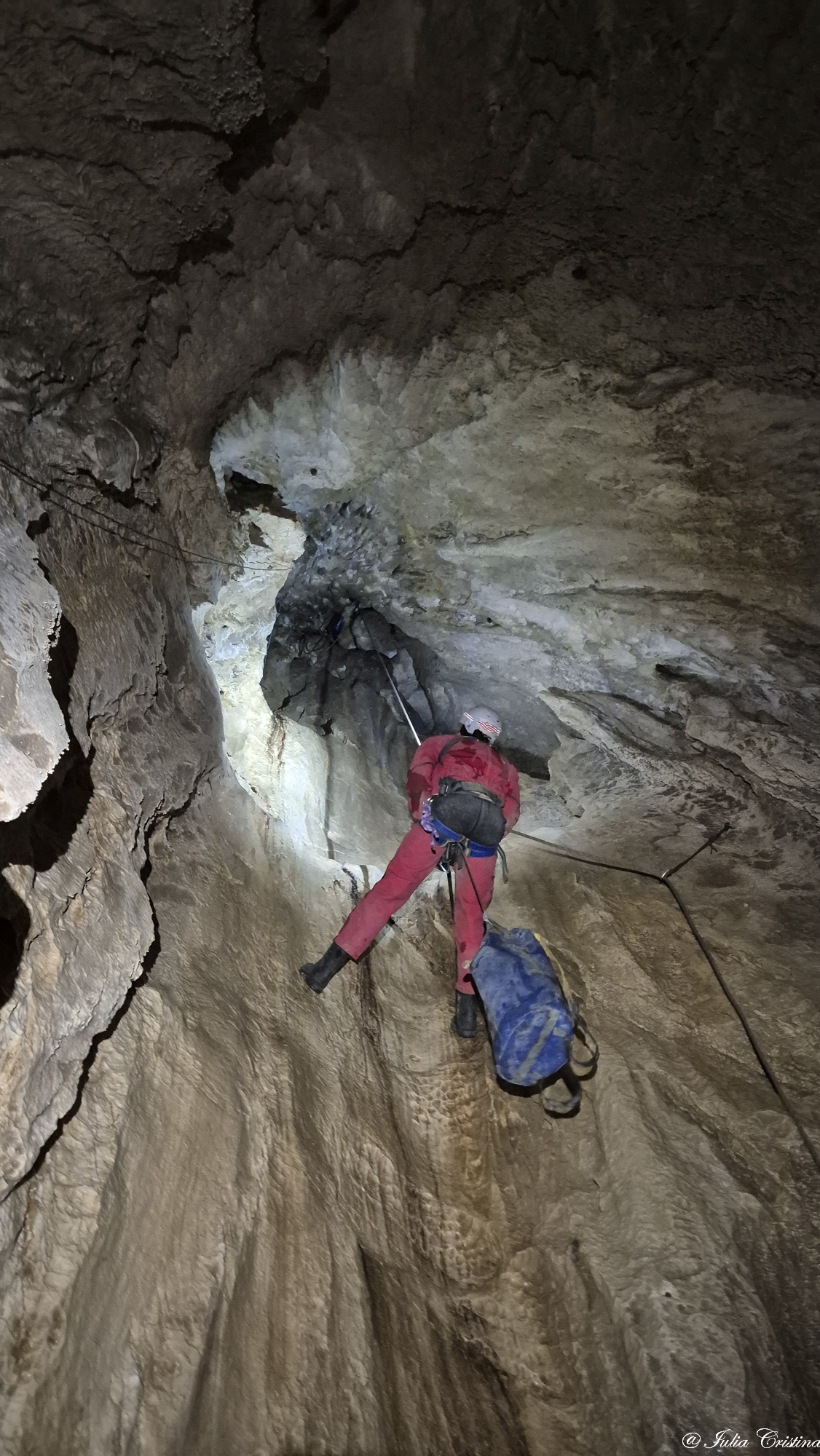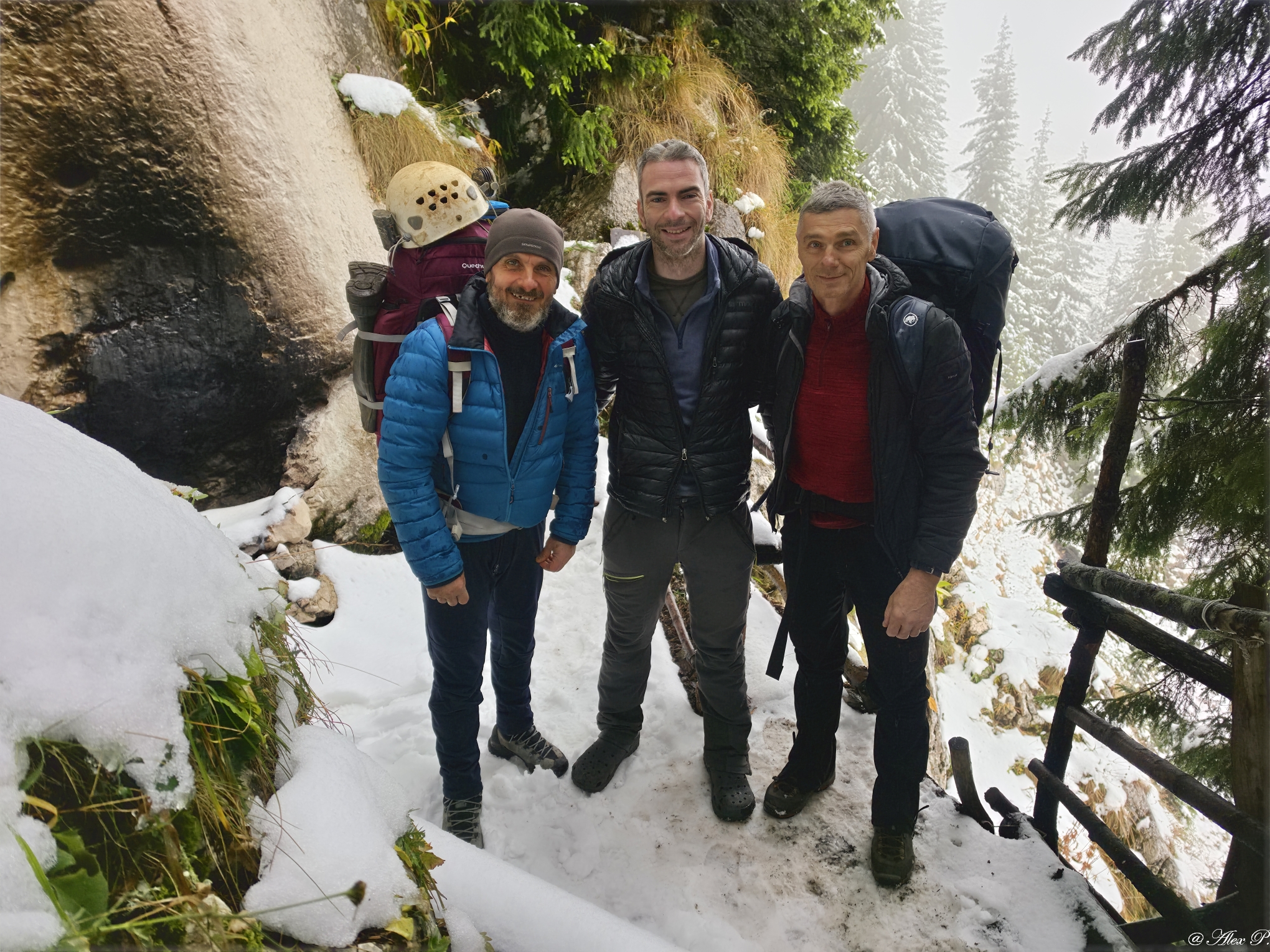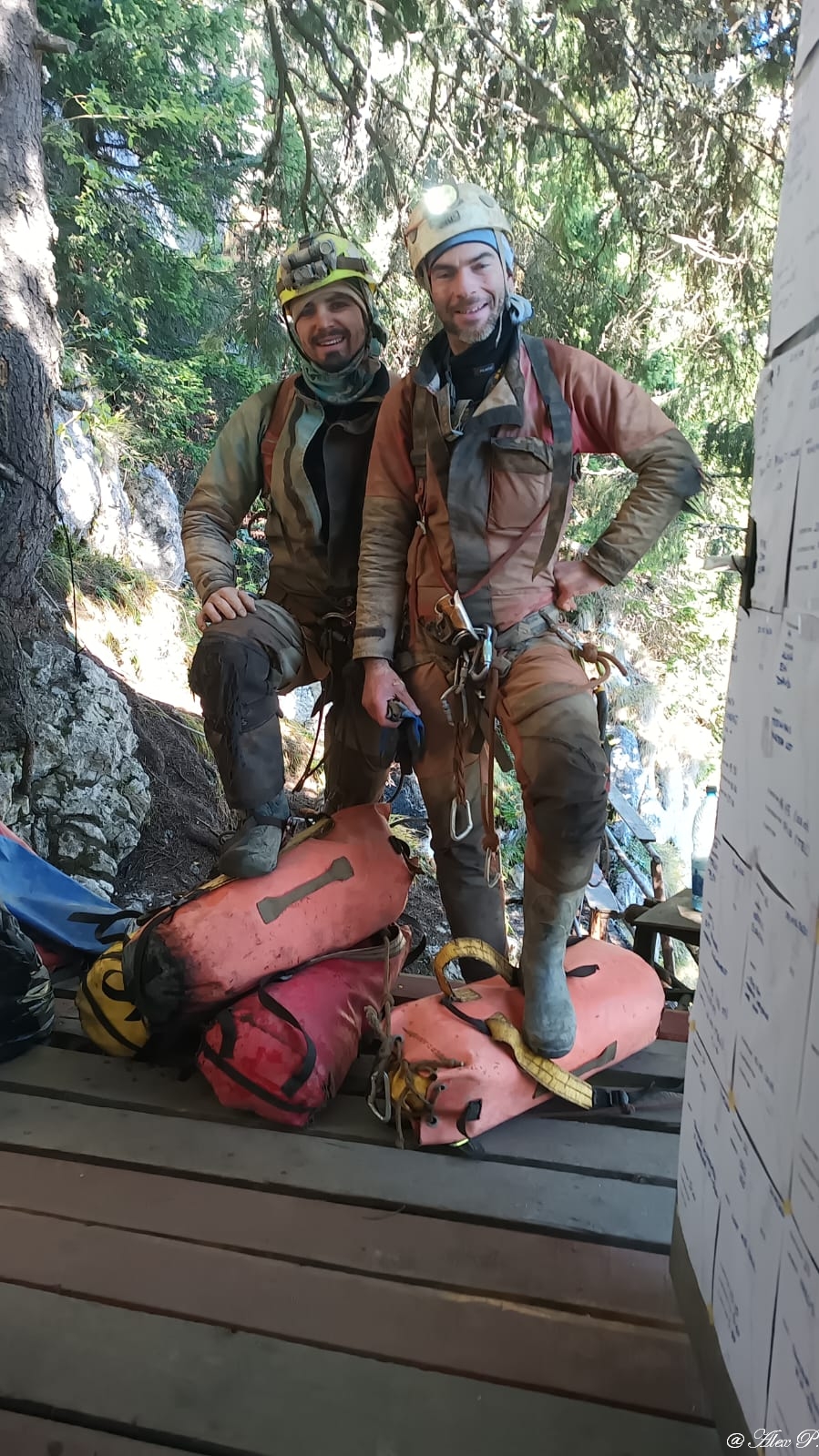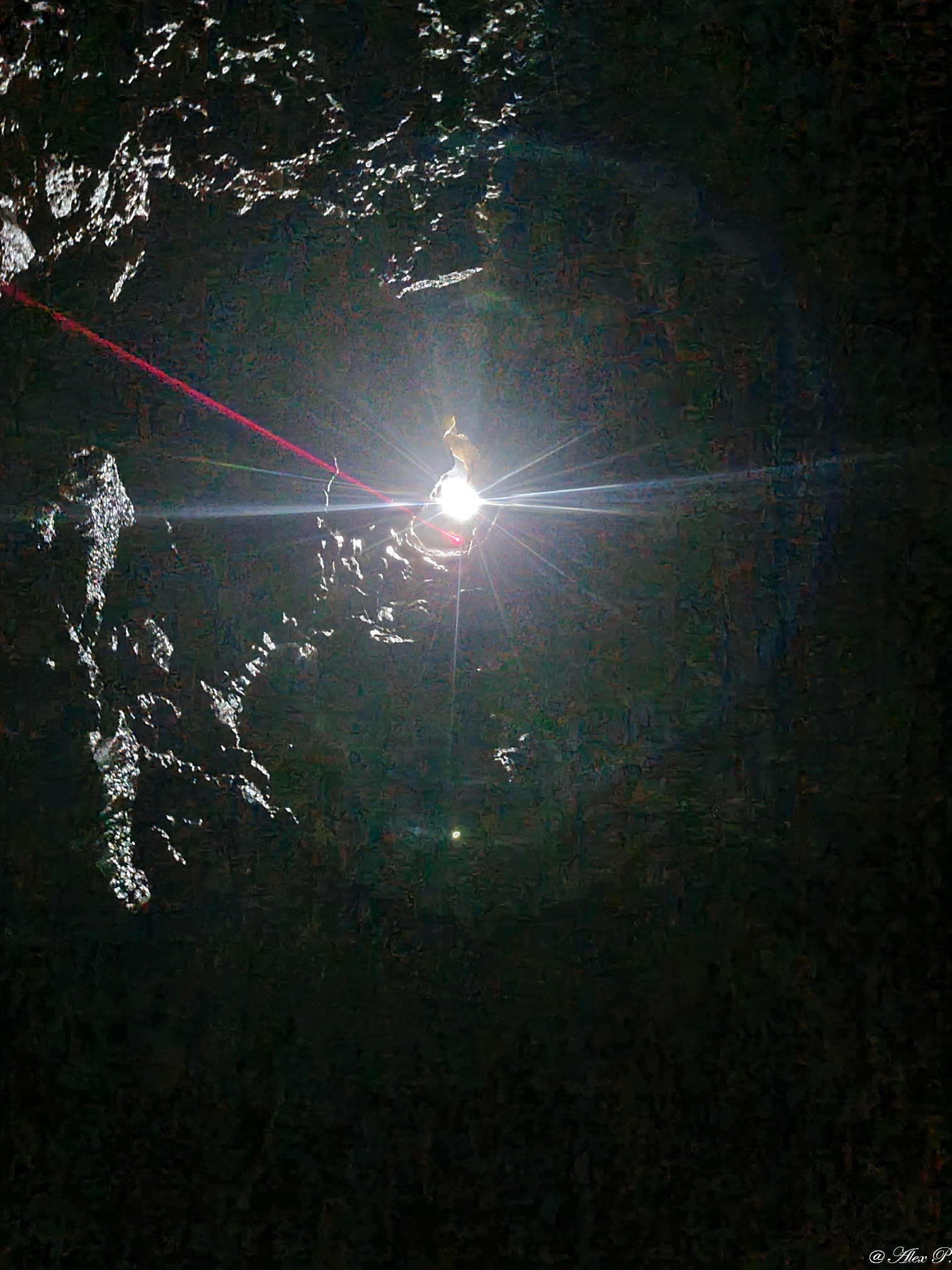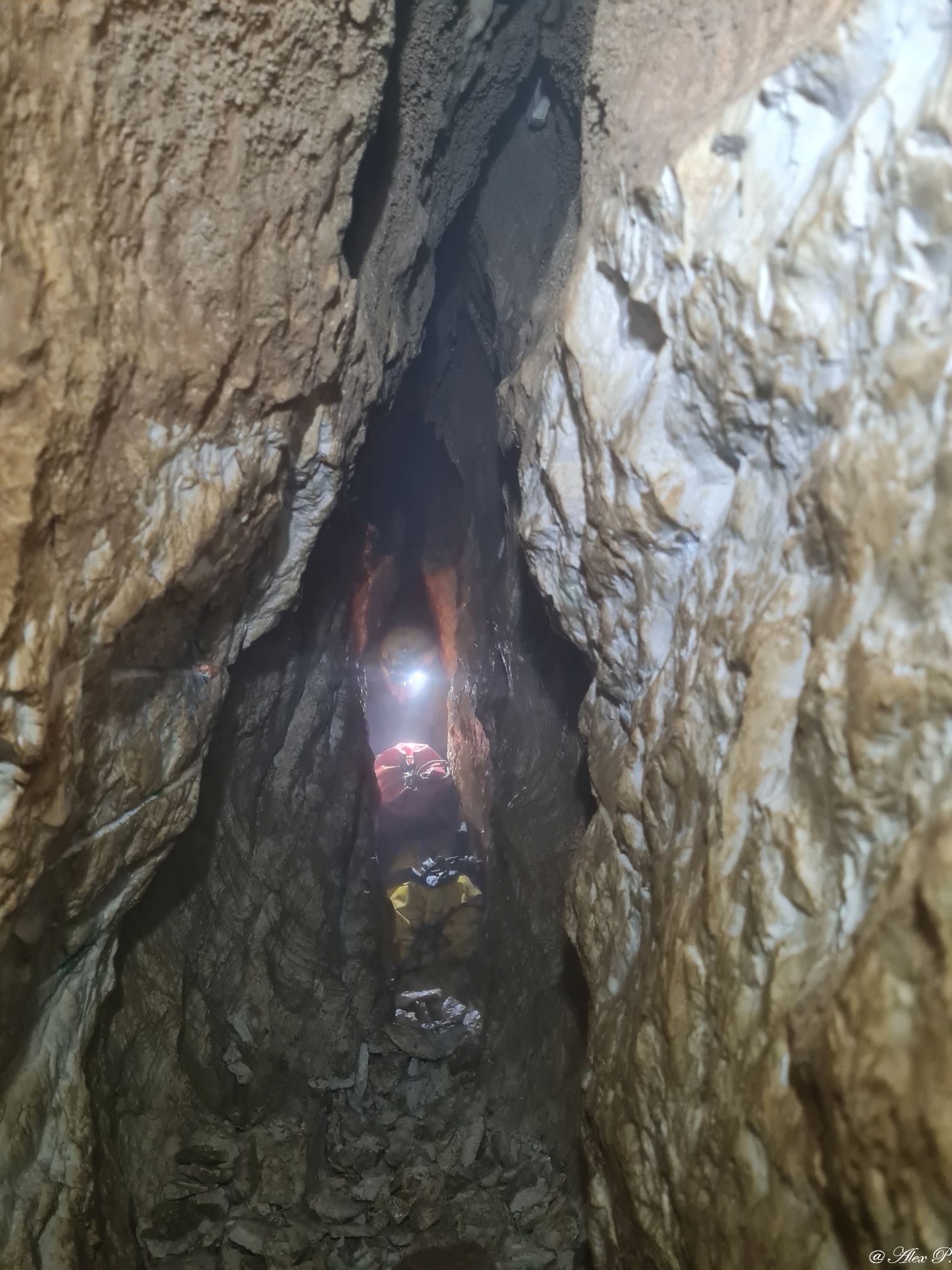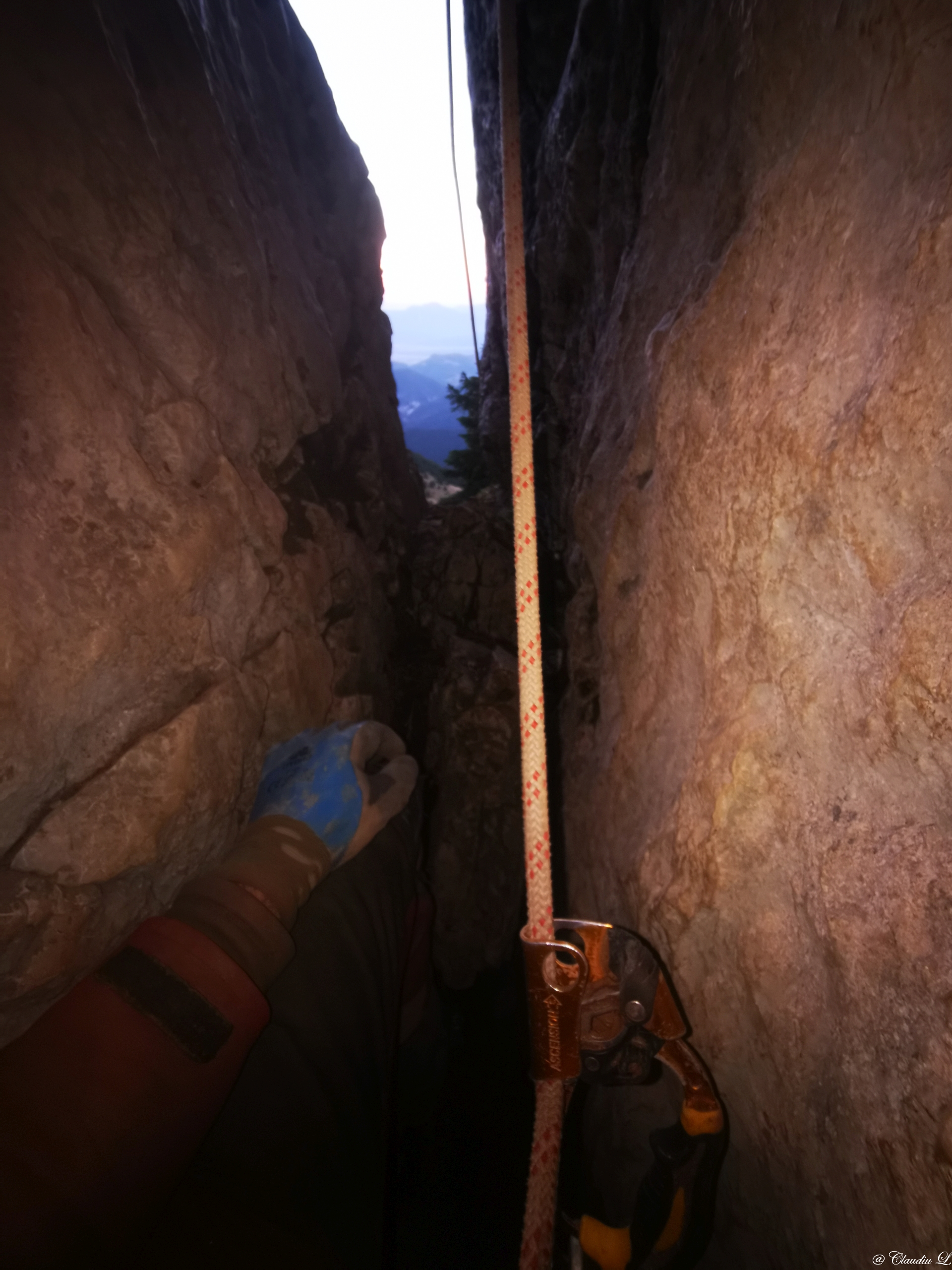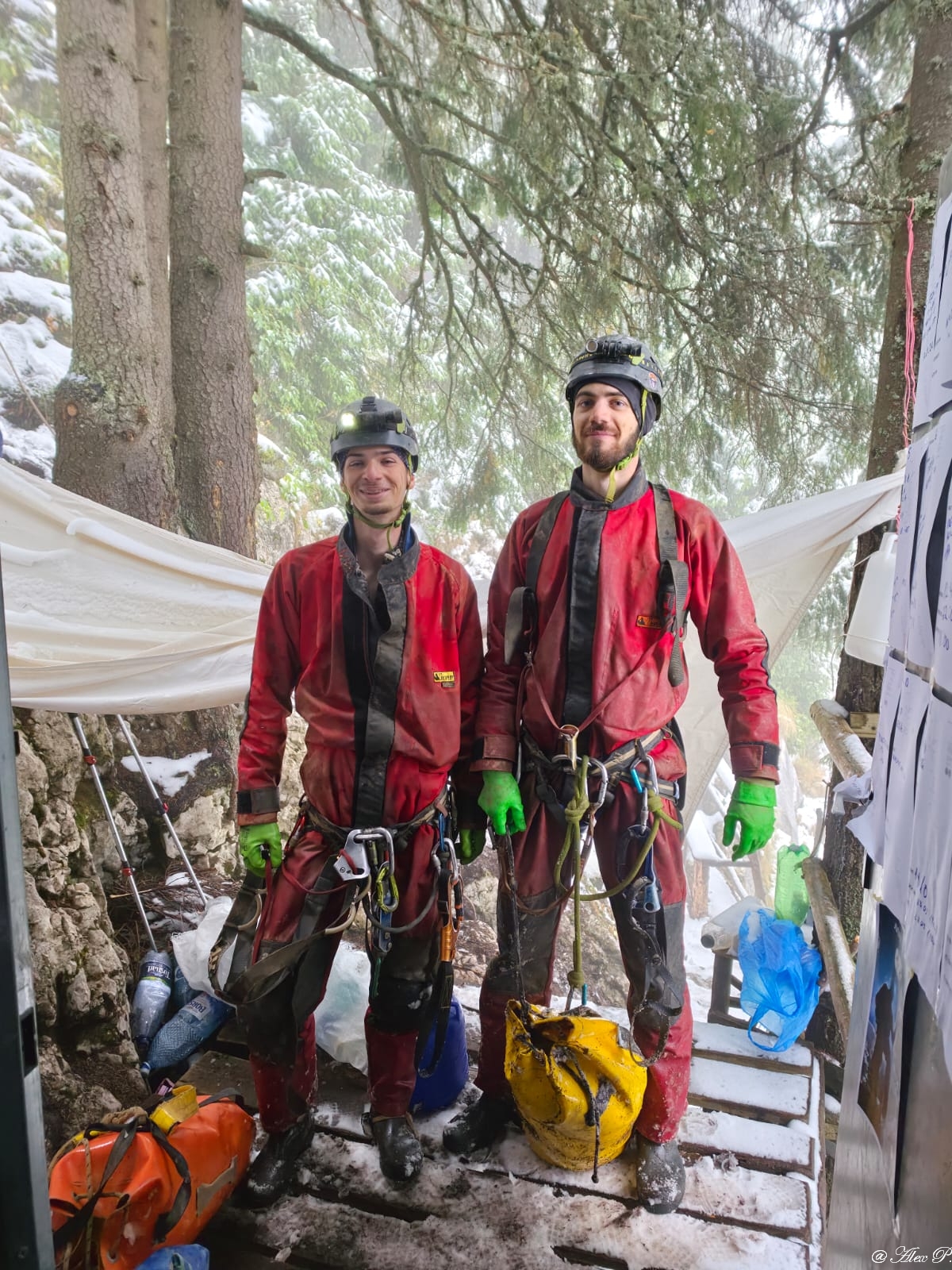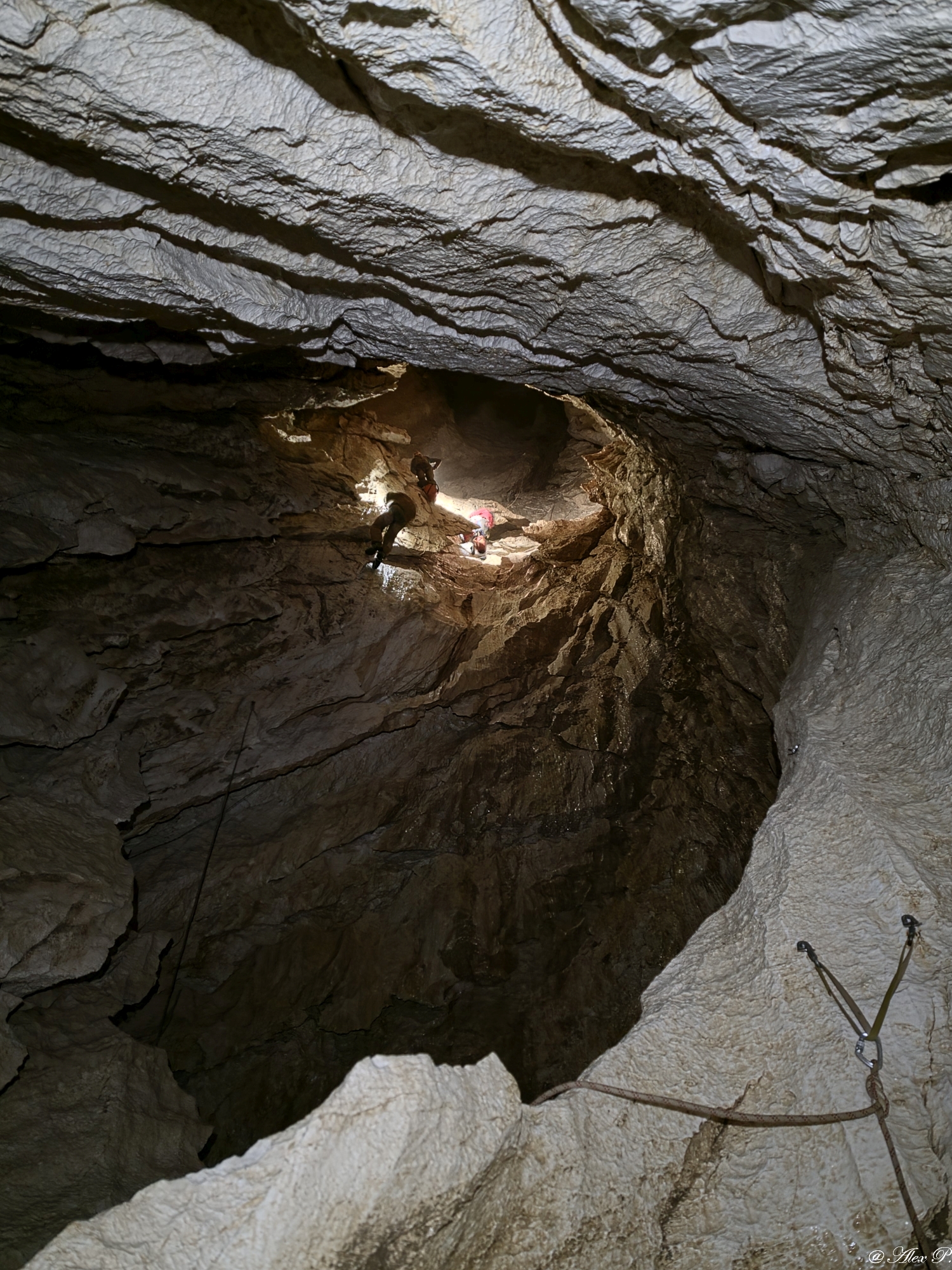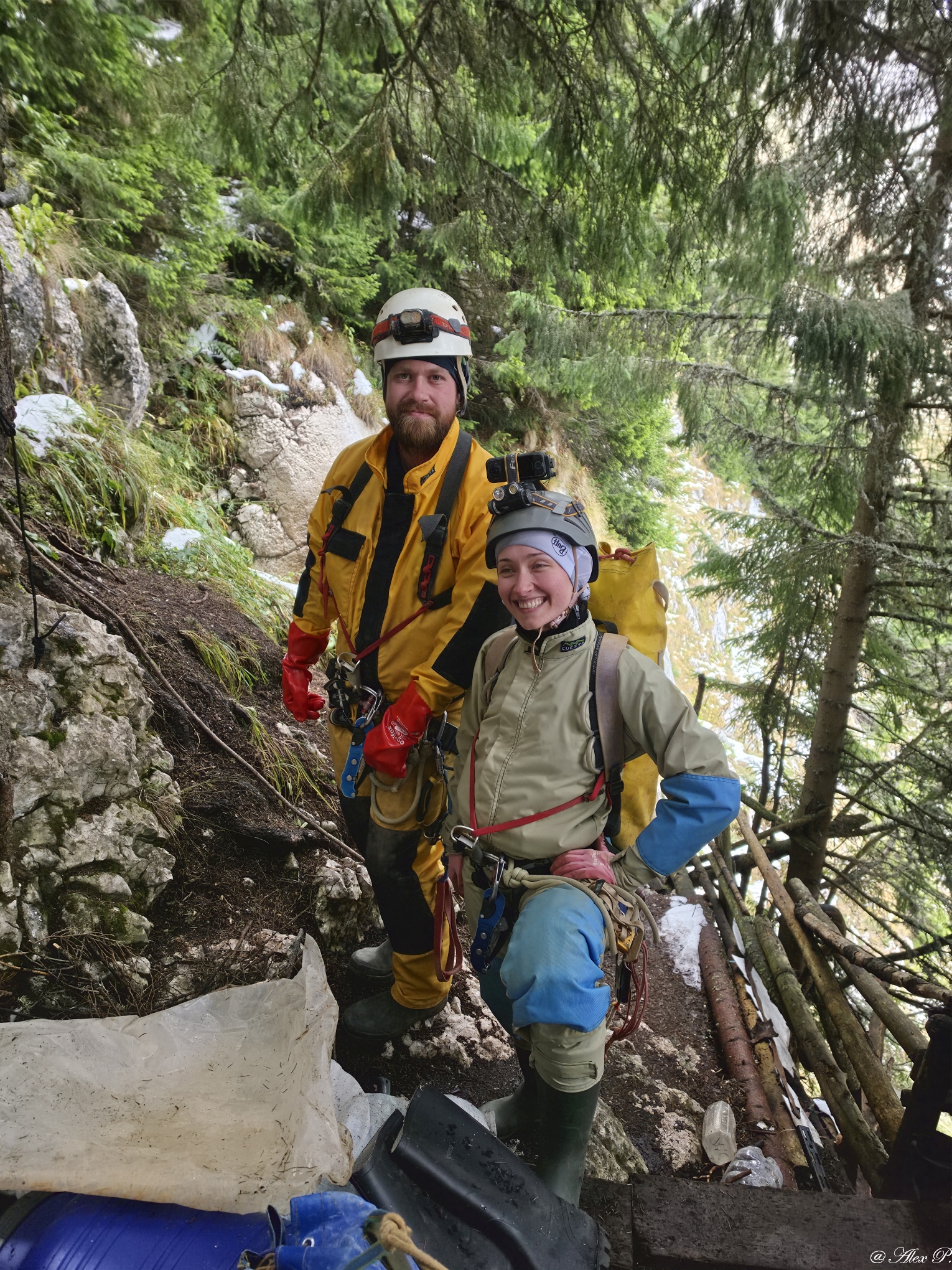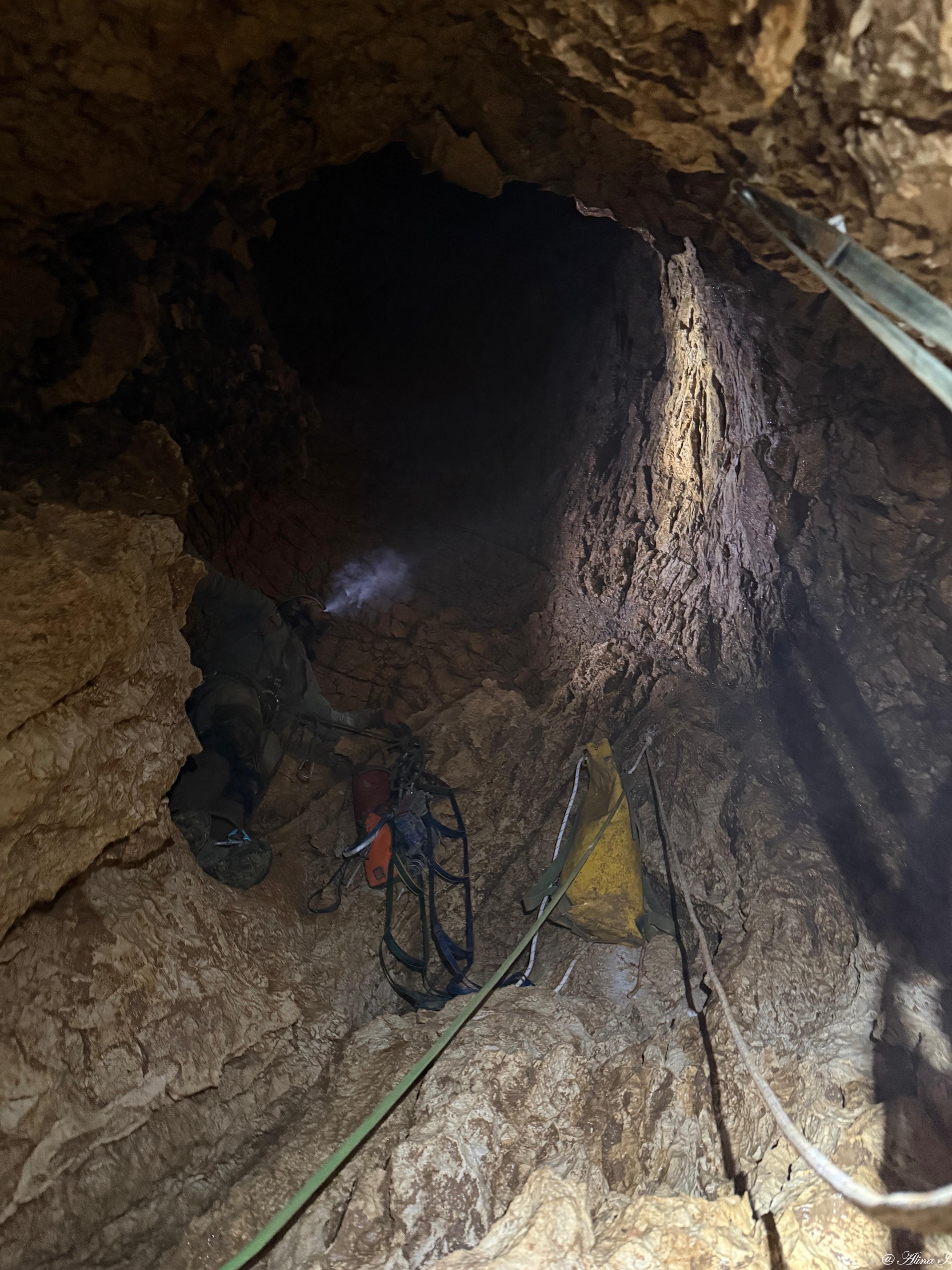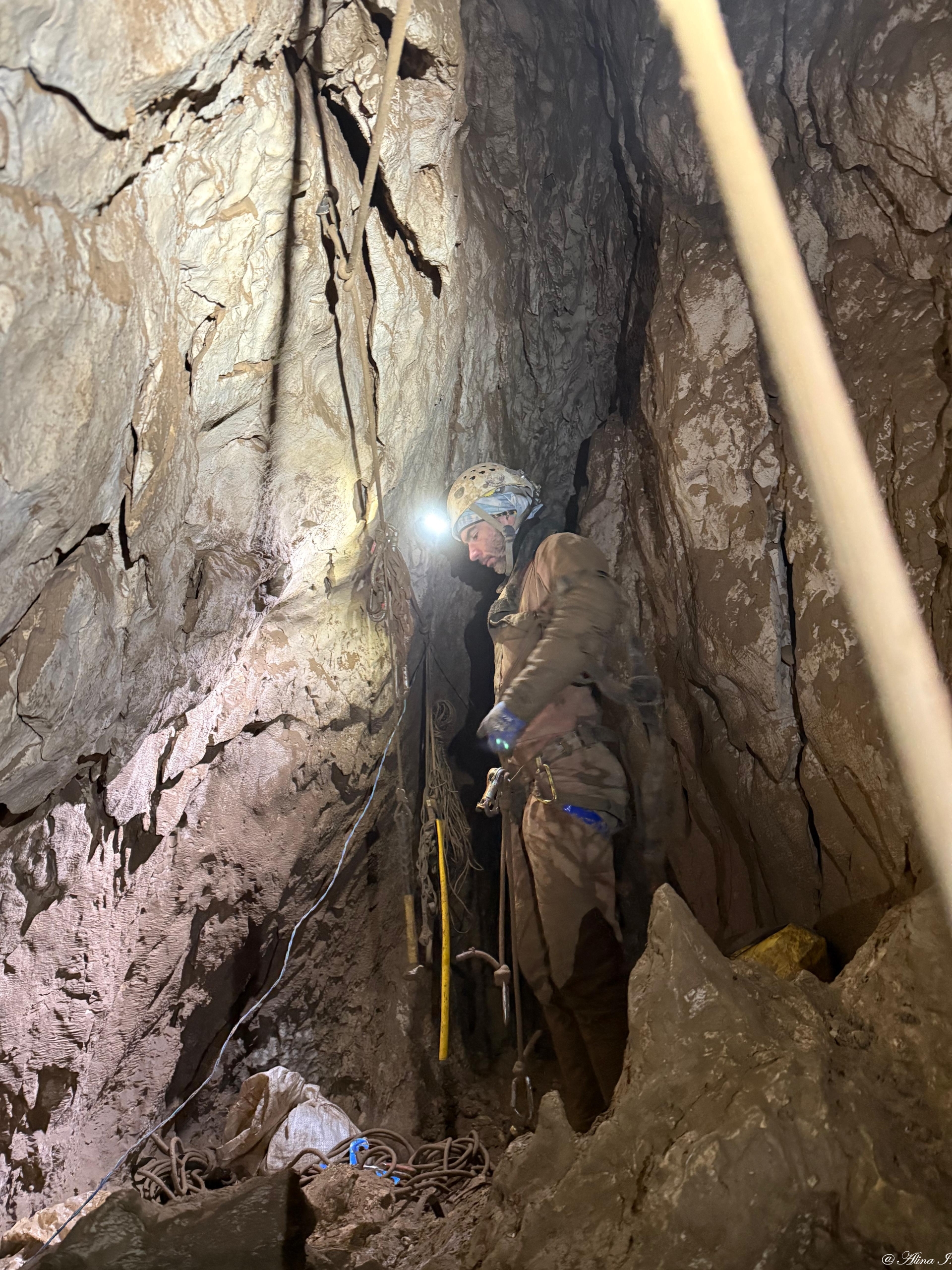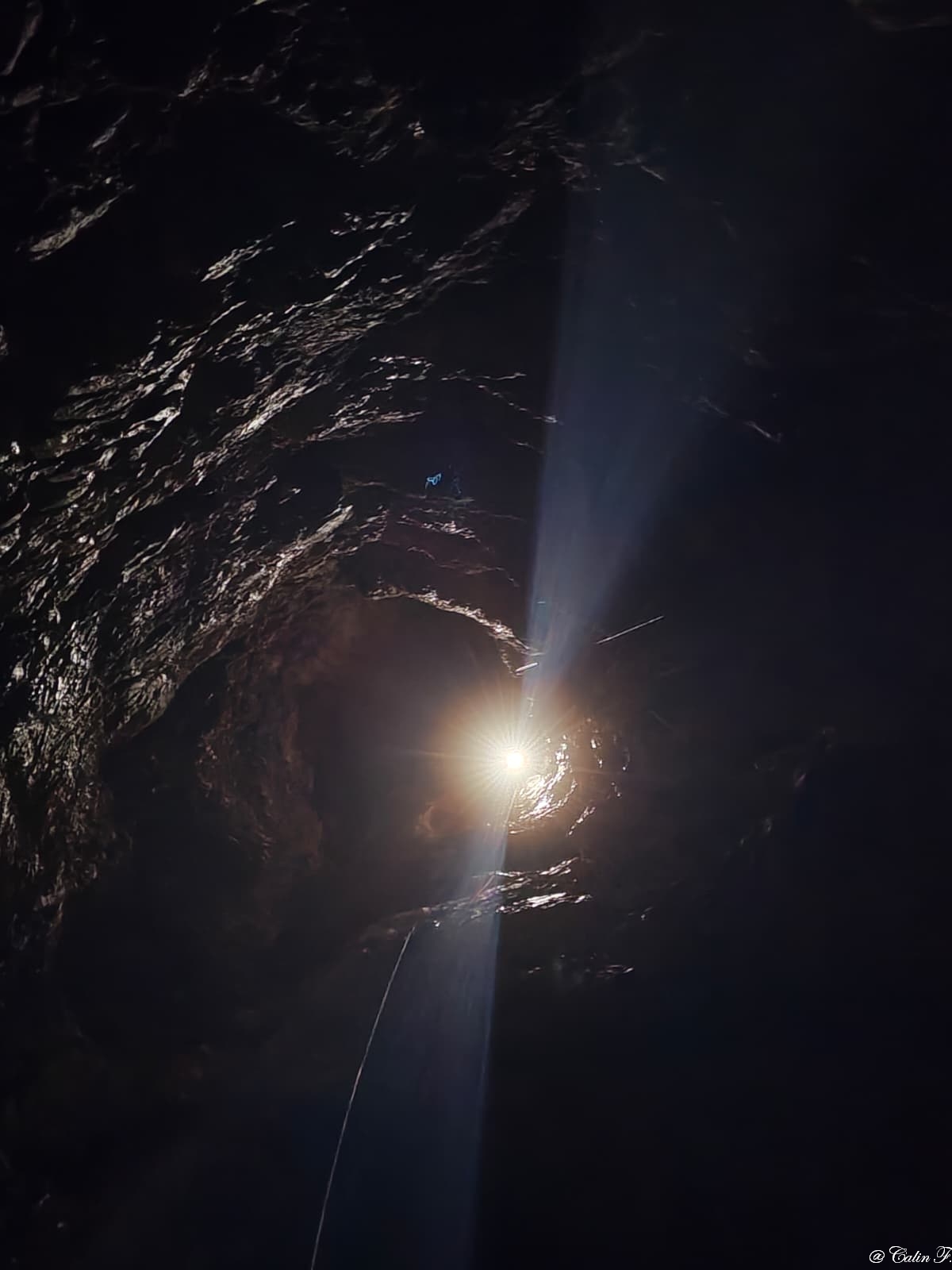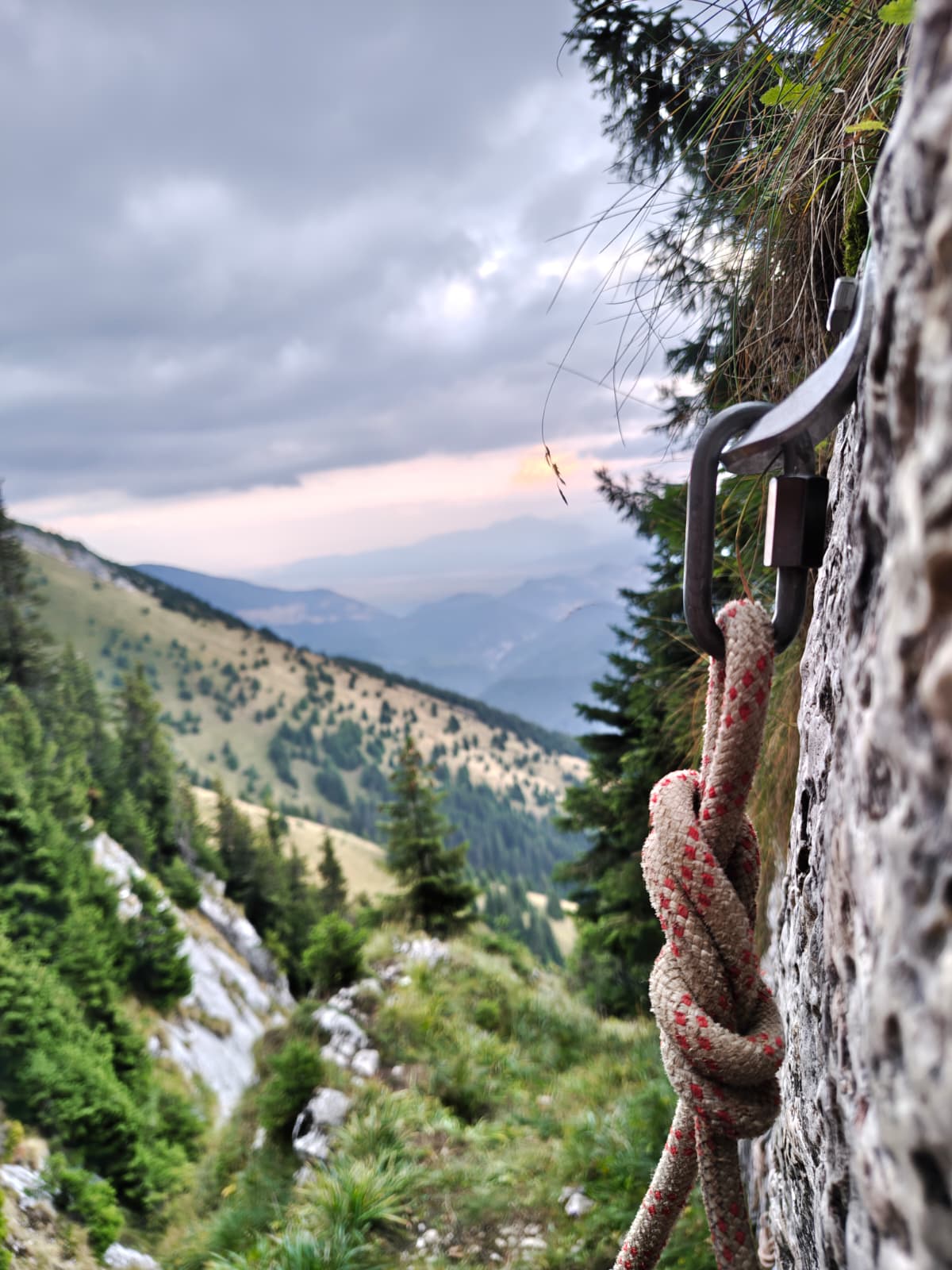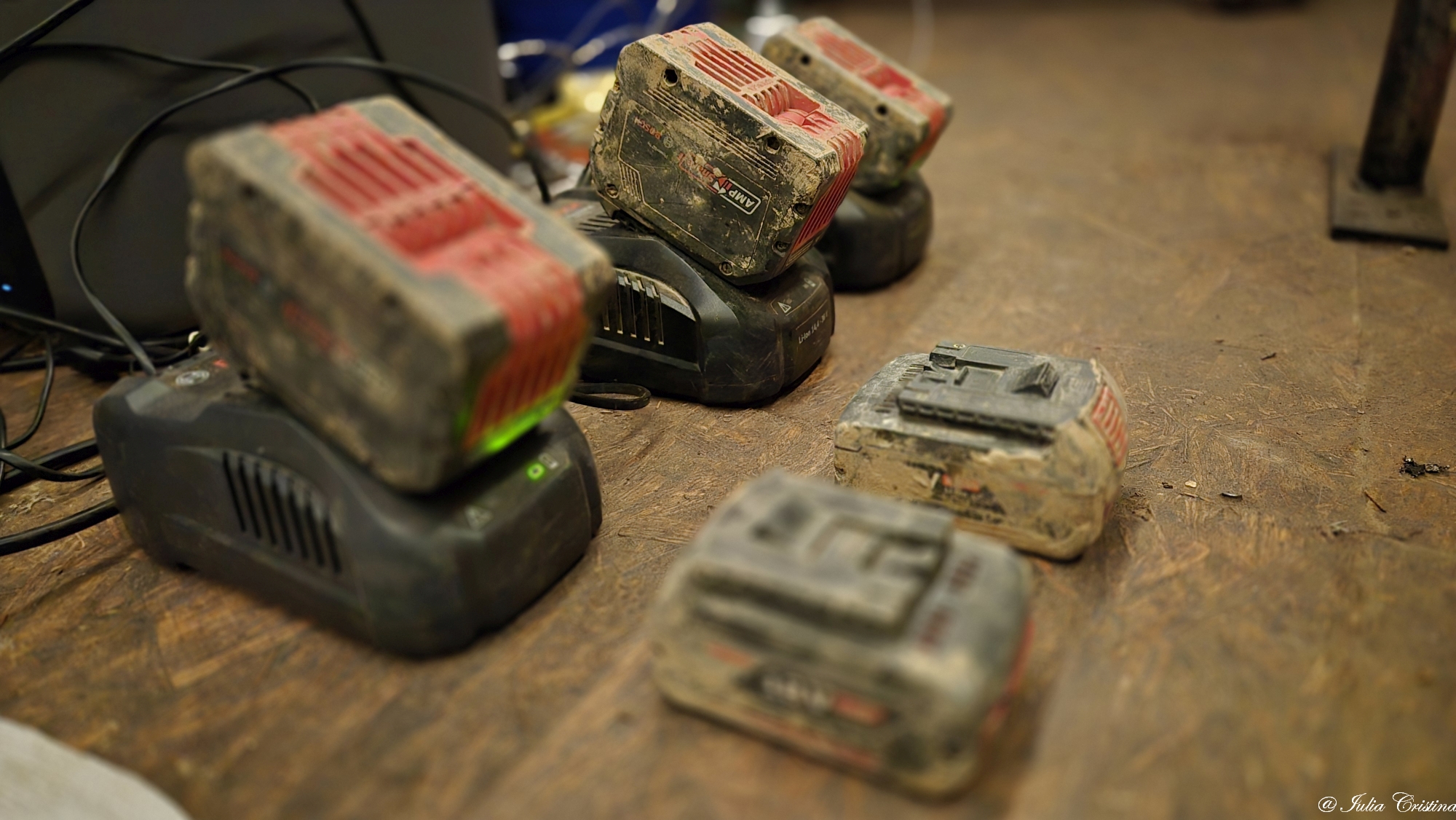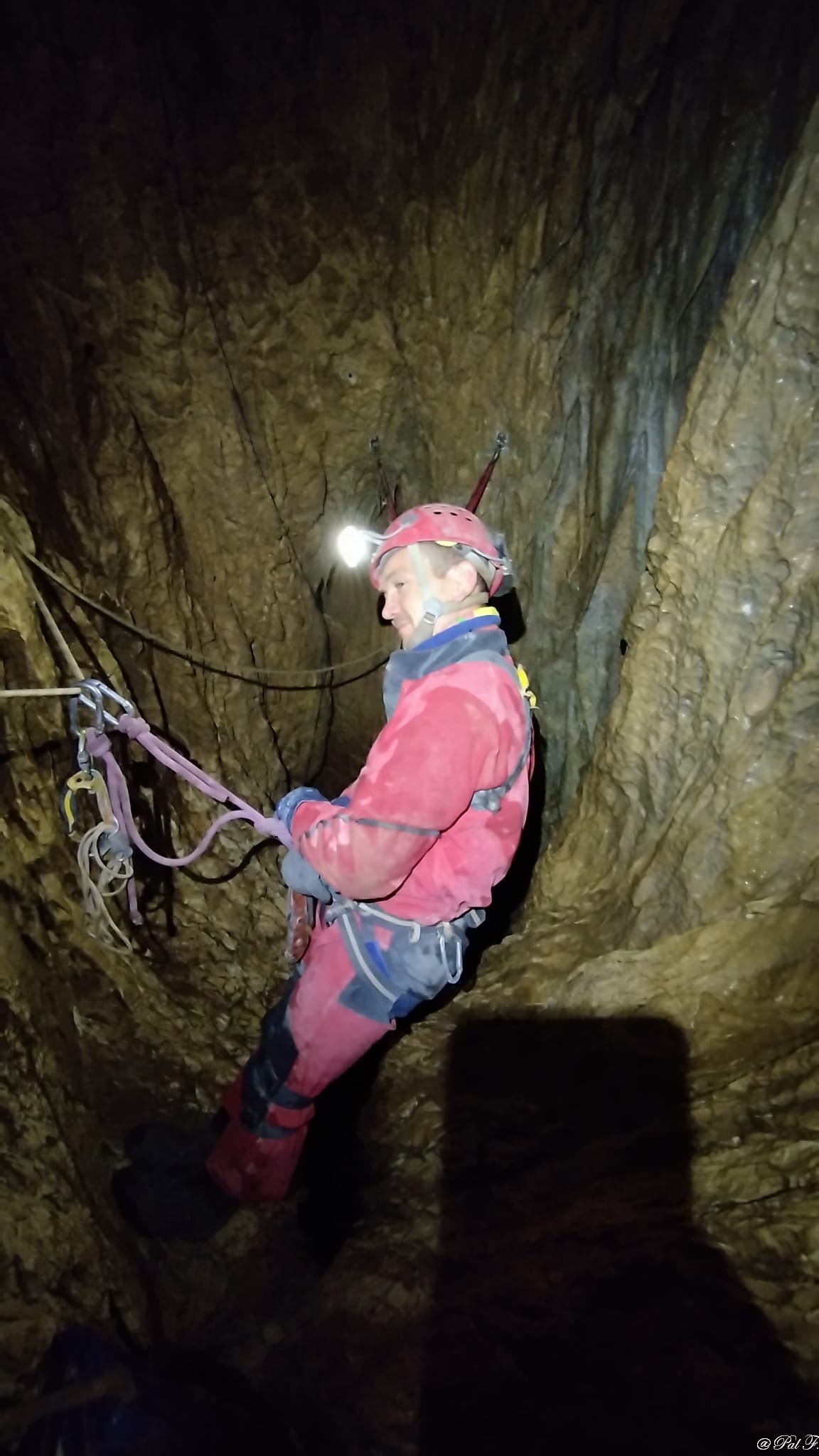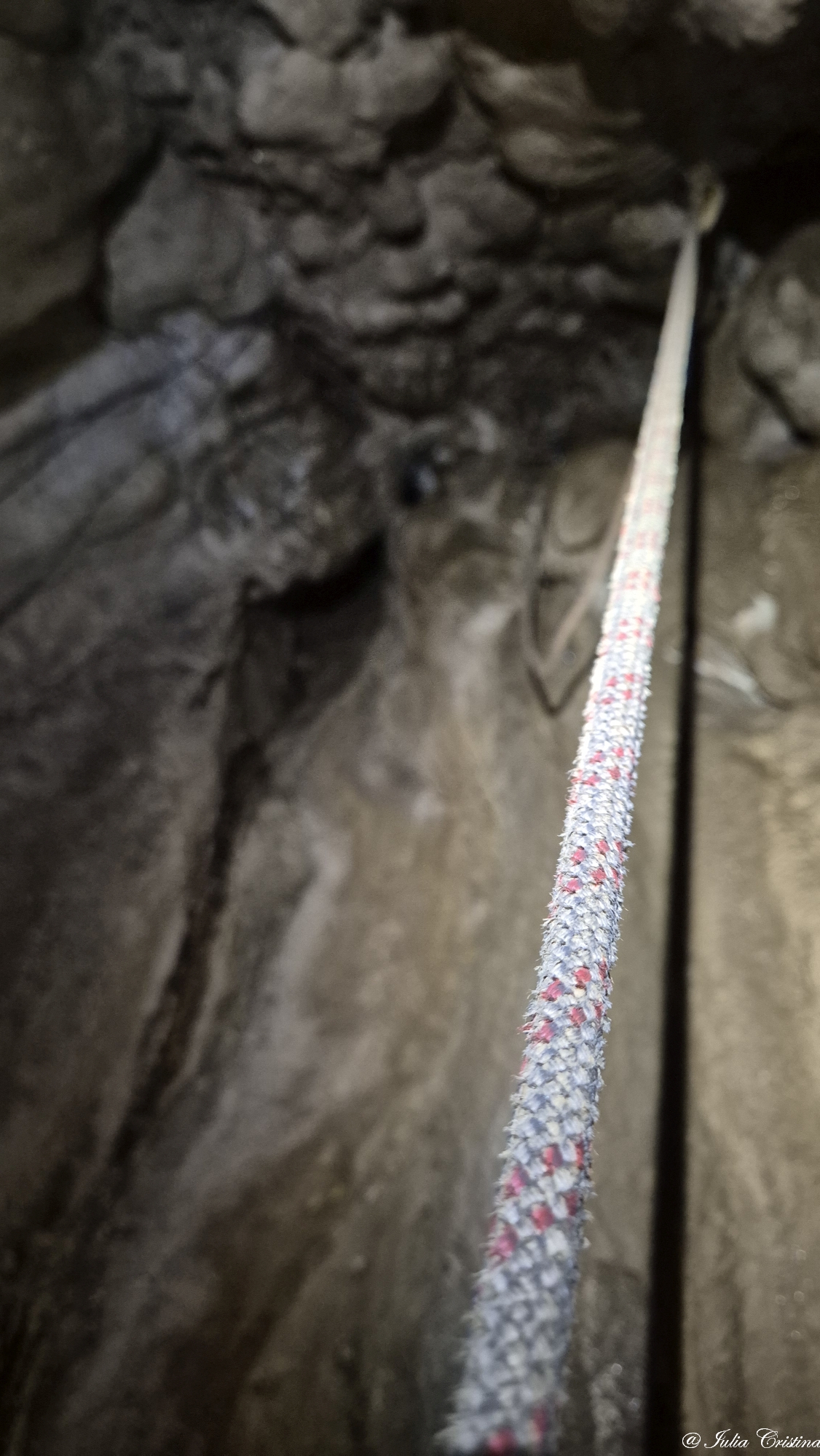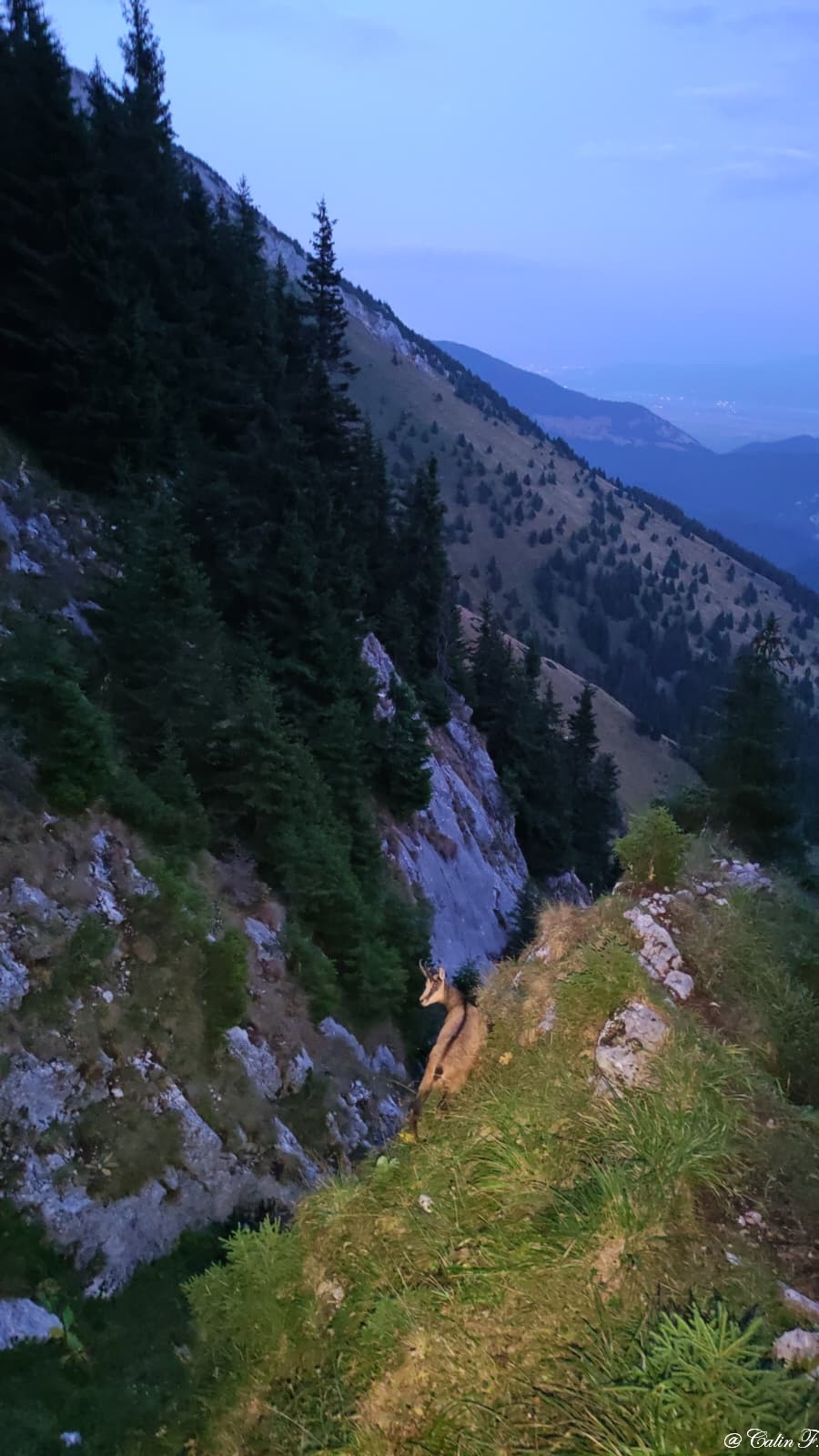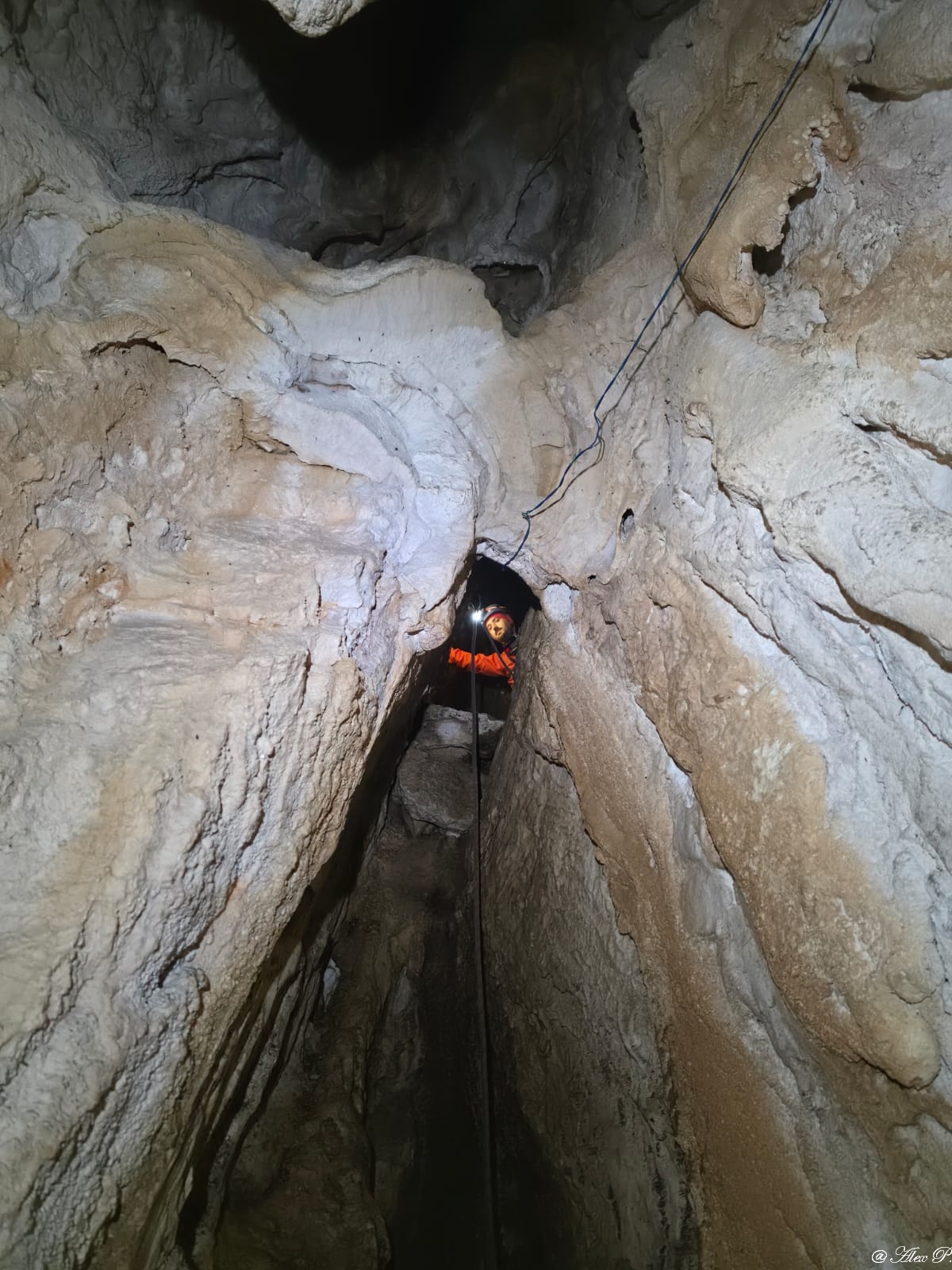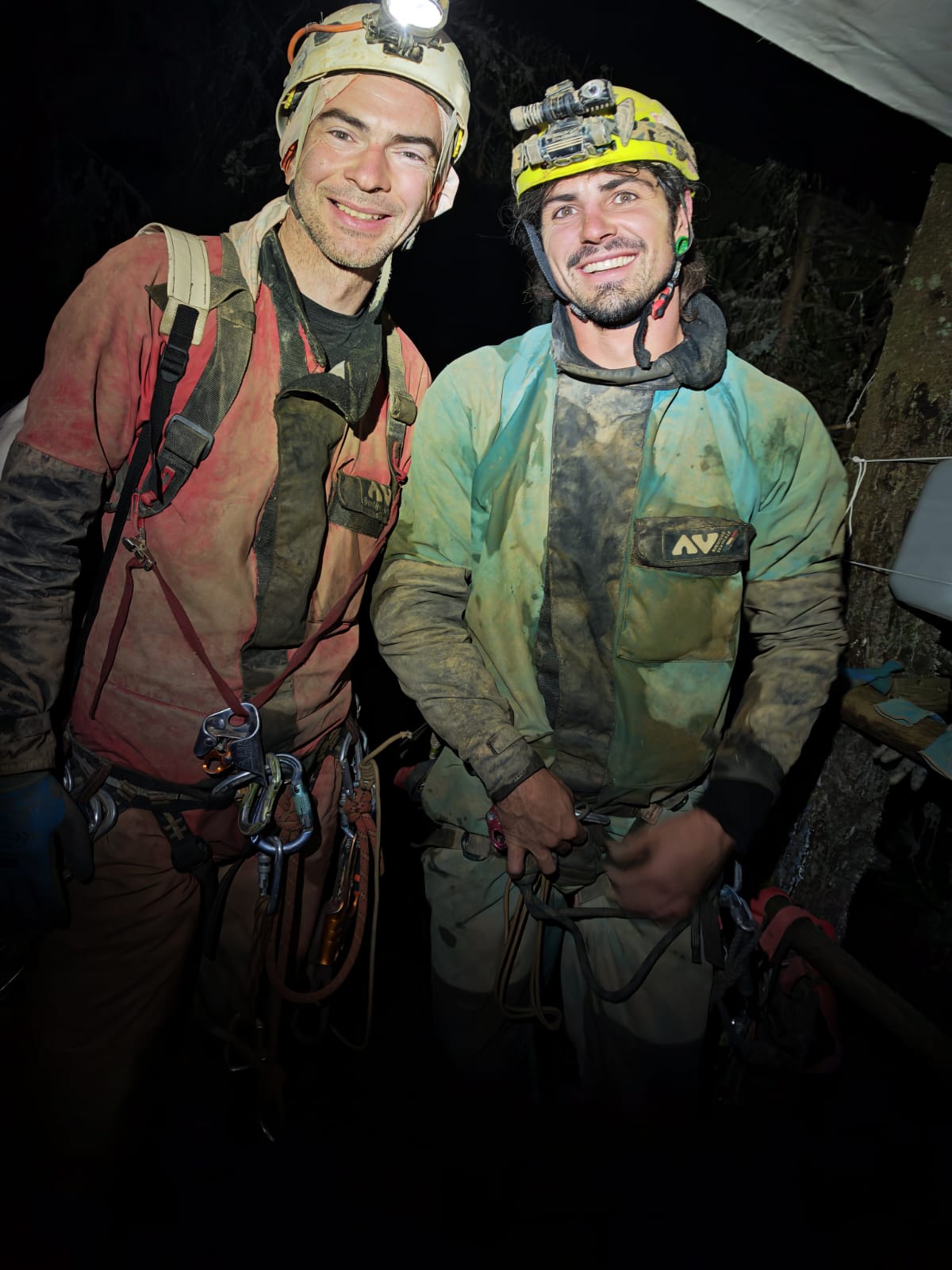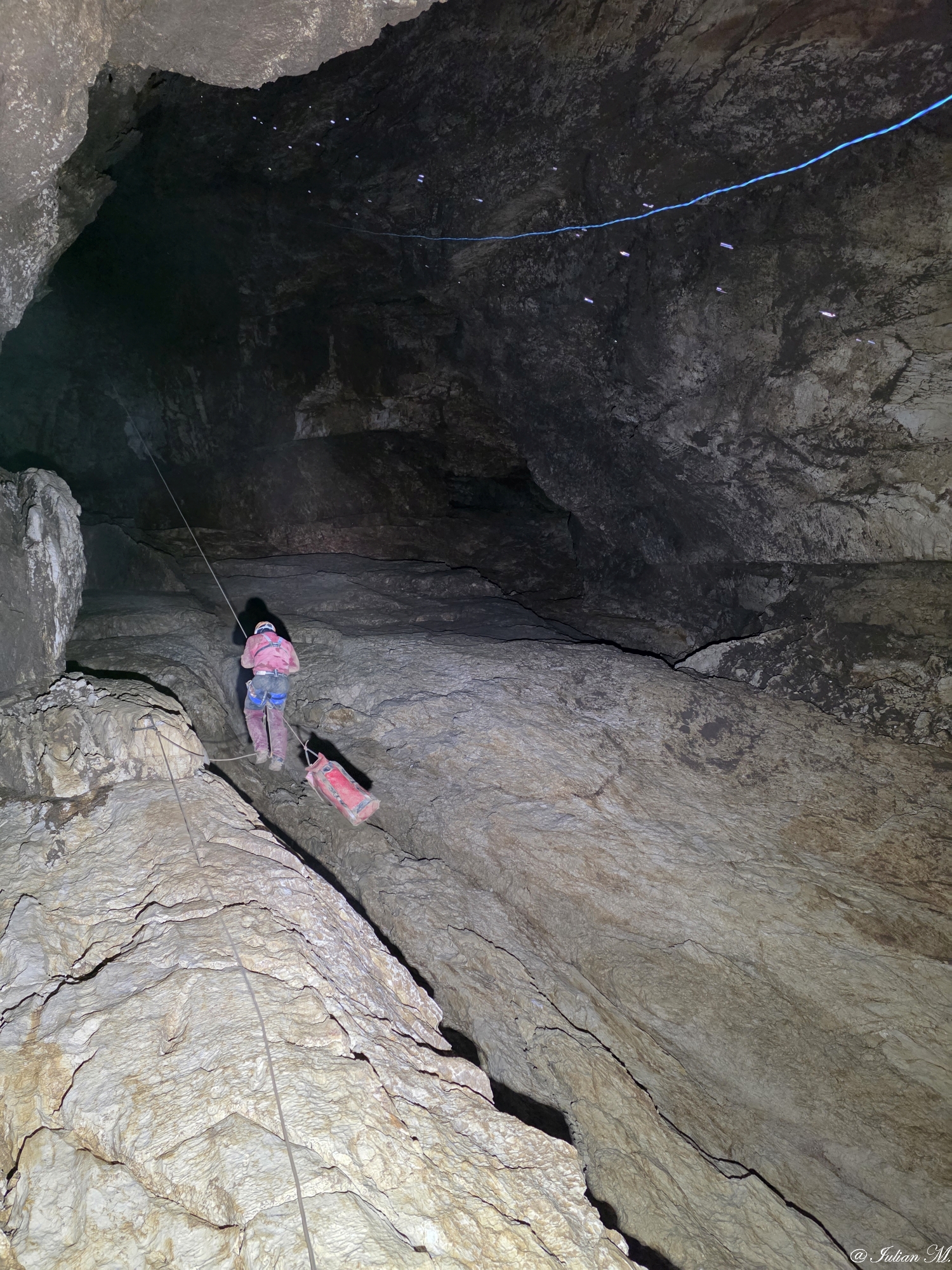
The Grind Explo 2026 caving expedition ran in the Piatra Craiului Mountains from September 11 to October 5, 2026, with further activity on October 10–11, bringing the total to 27 days of field activity. The teams continued exploring Avenul de sub Vârful Grind, Romania’s deepest known cave, a predominantly vertical system reaching −815 m below its entrance at an altitude of 1,922 m.
The main objective of this year’s expedition was to explore the terminal sump at the end of a new, parallel branch discovered in 2025.
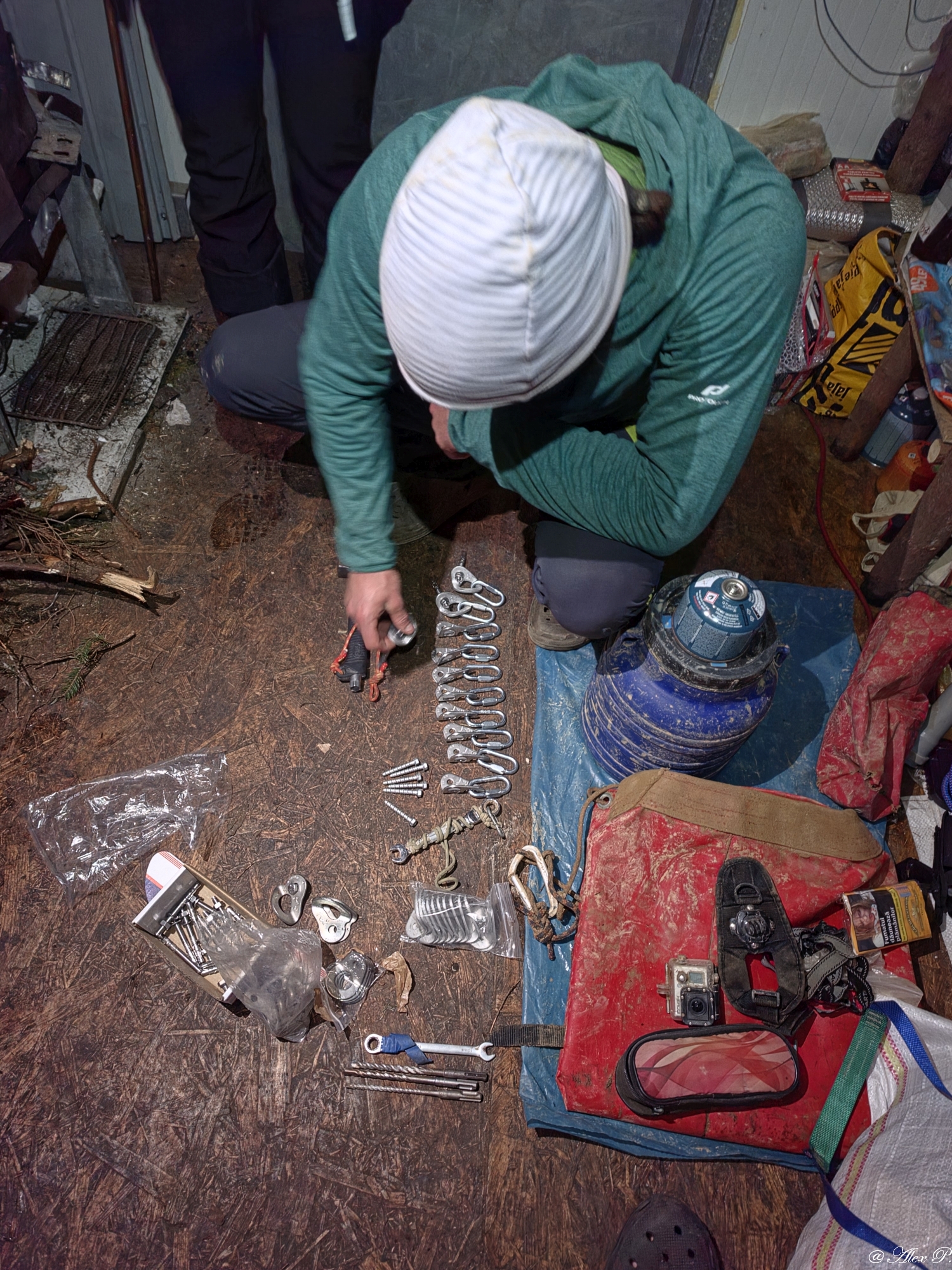
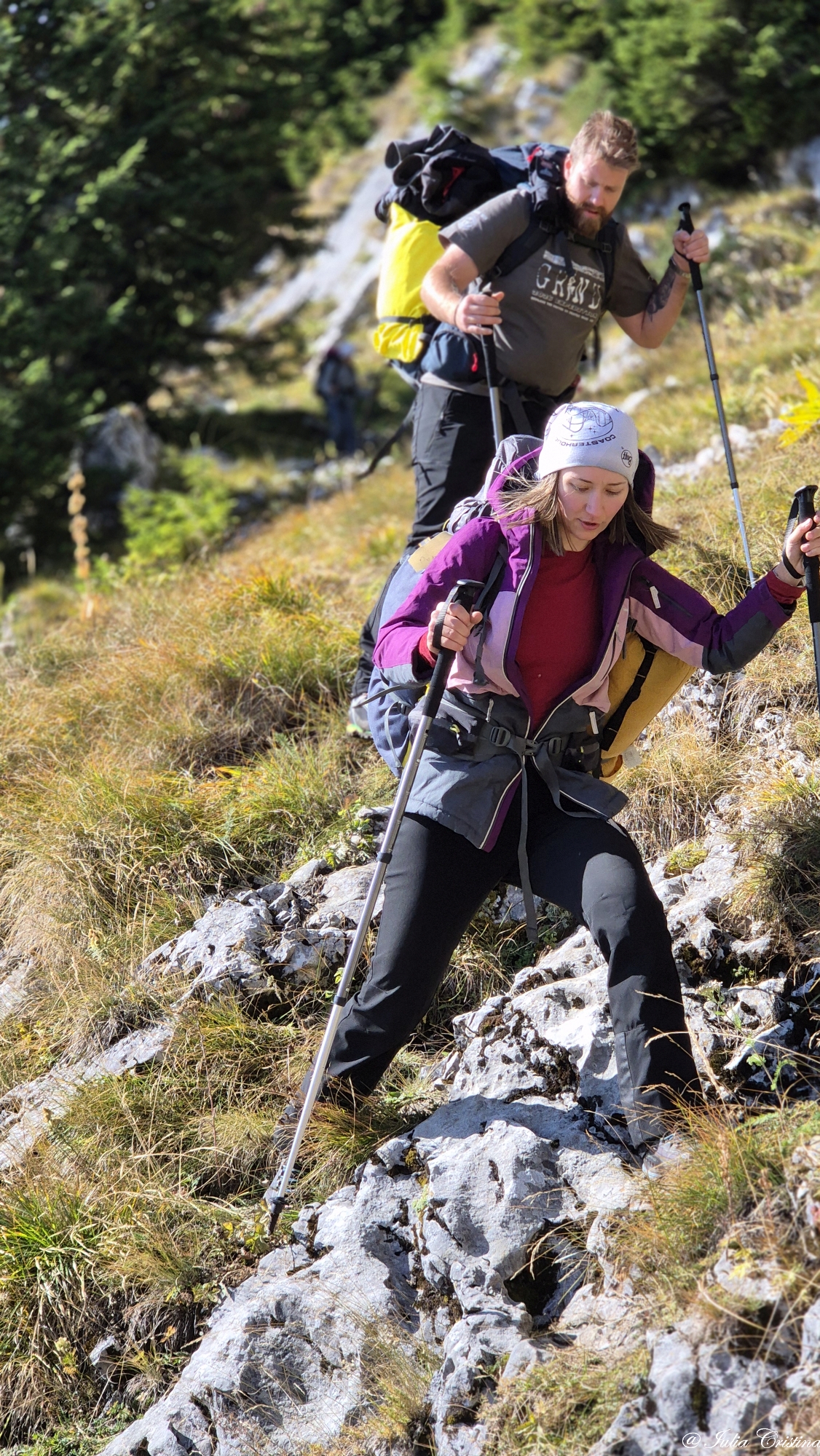
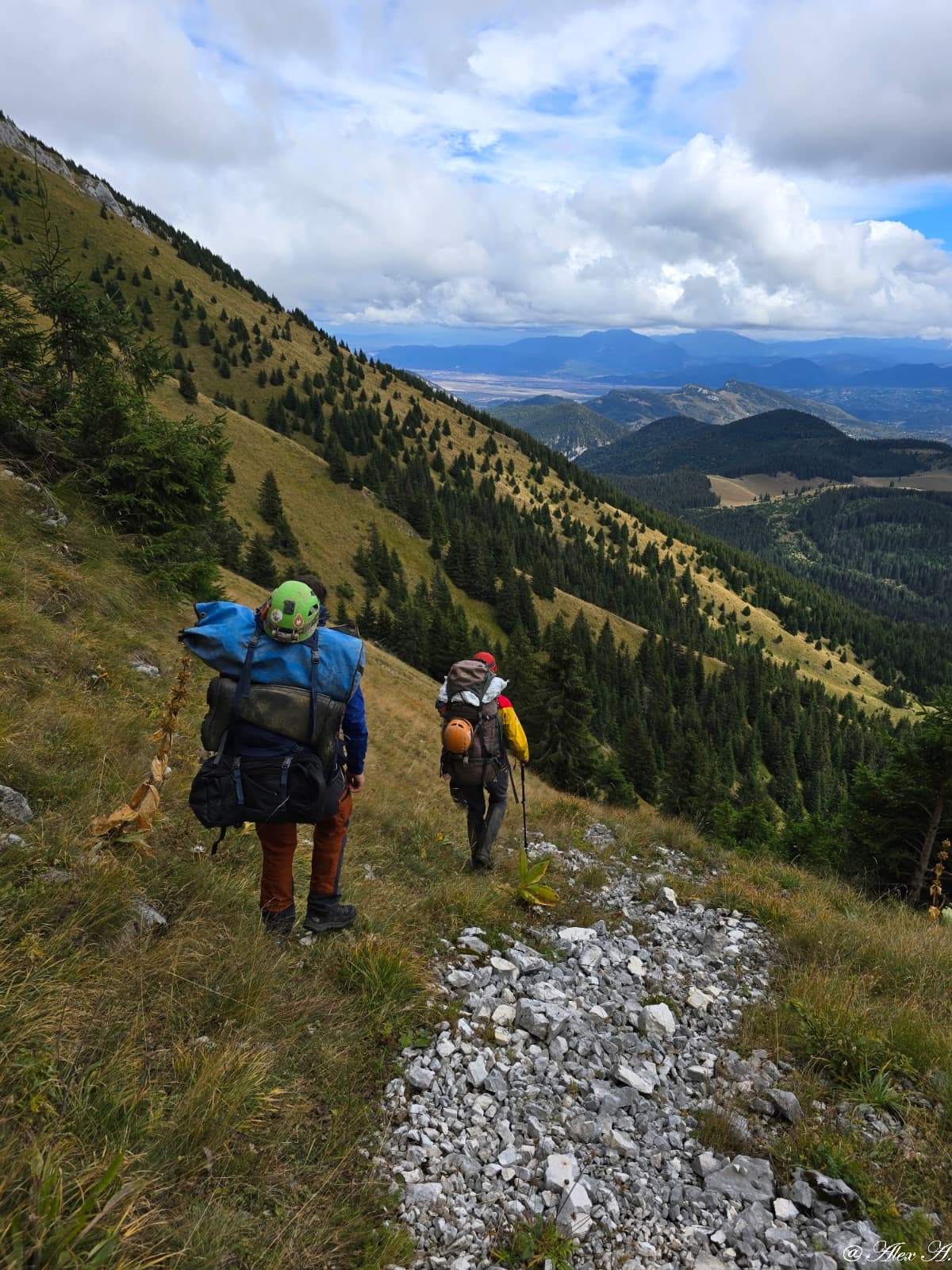
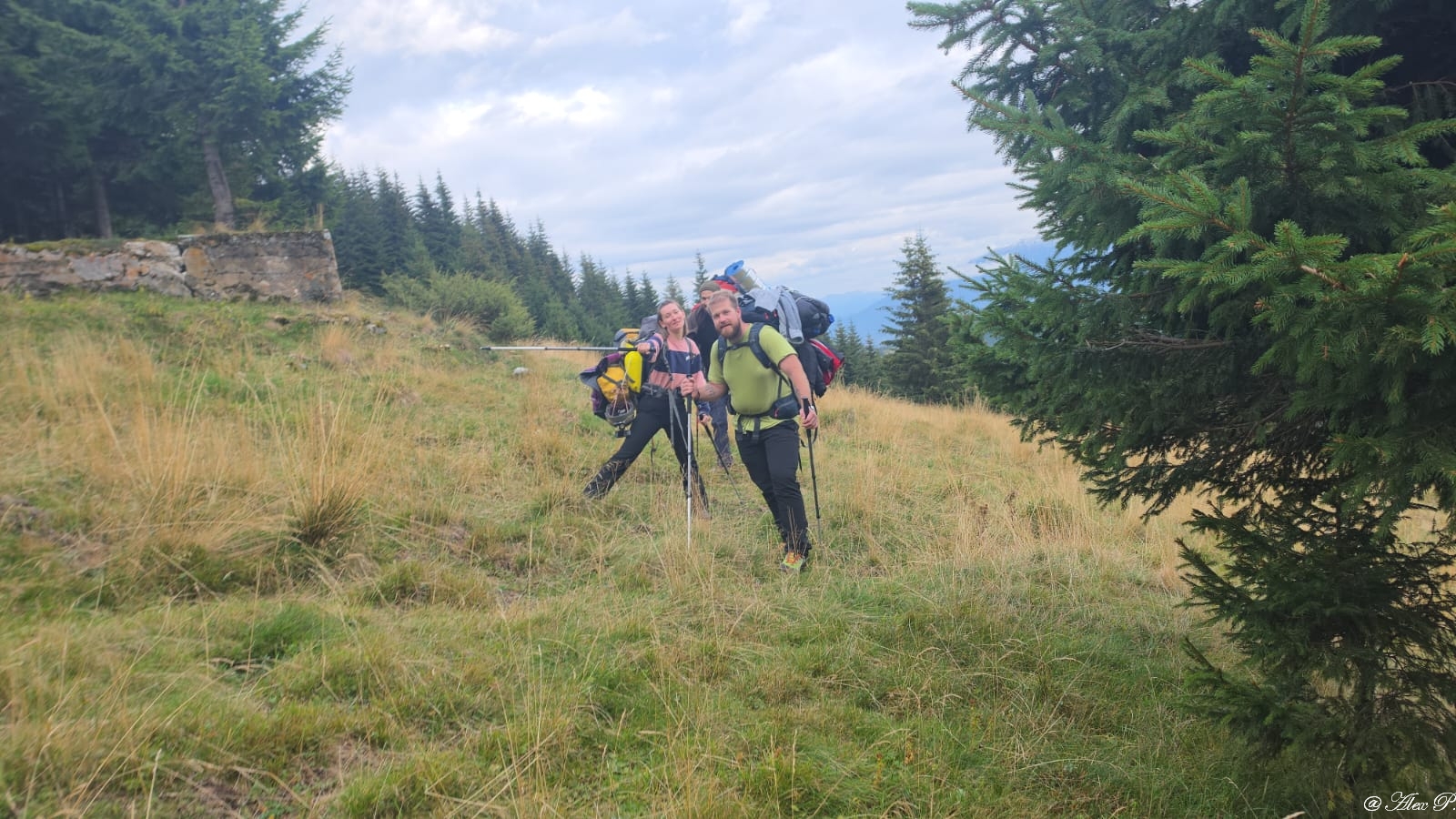
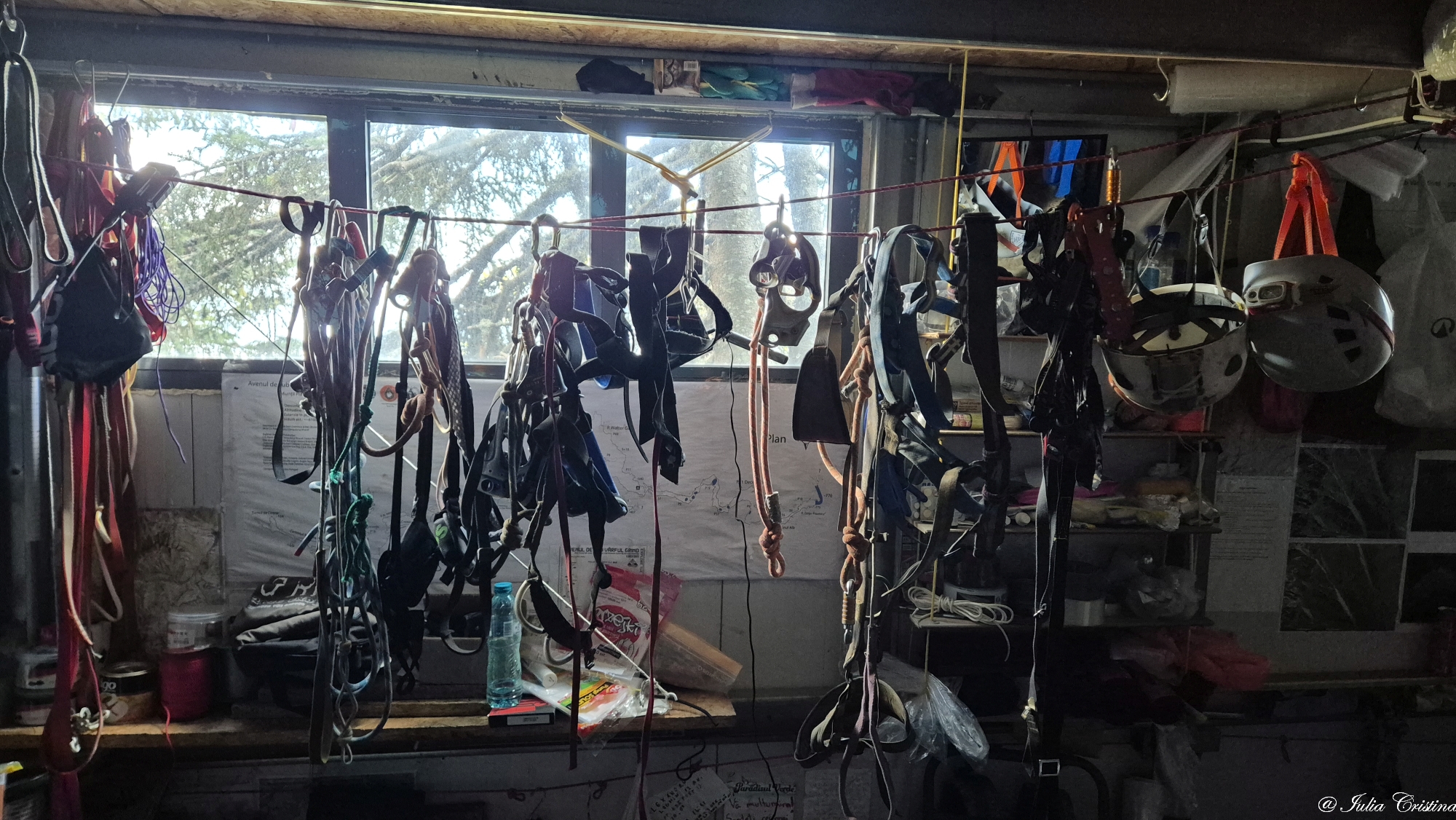
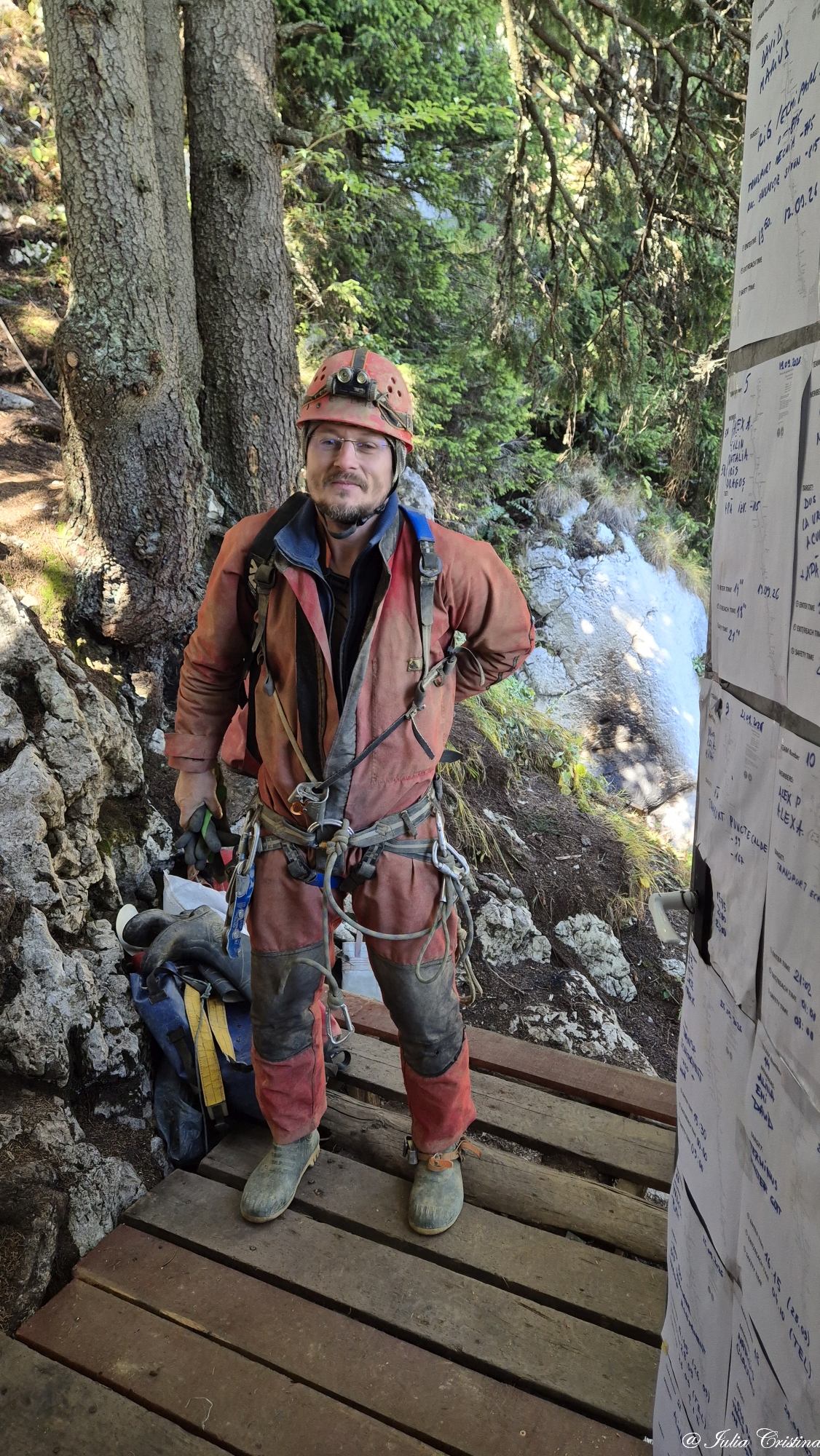
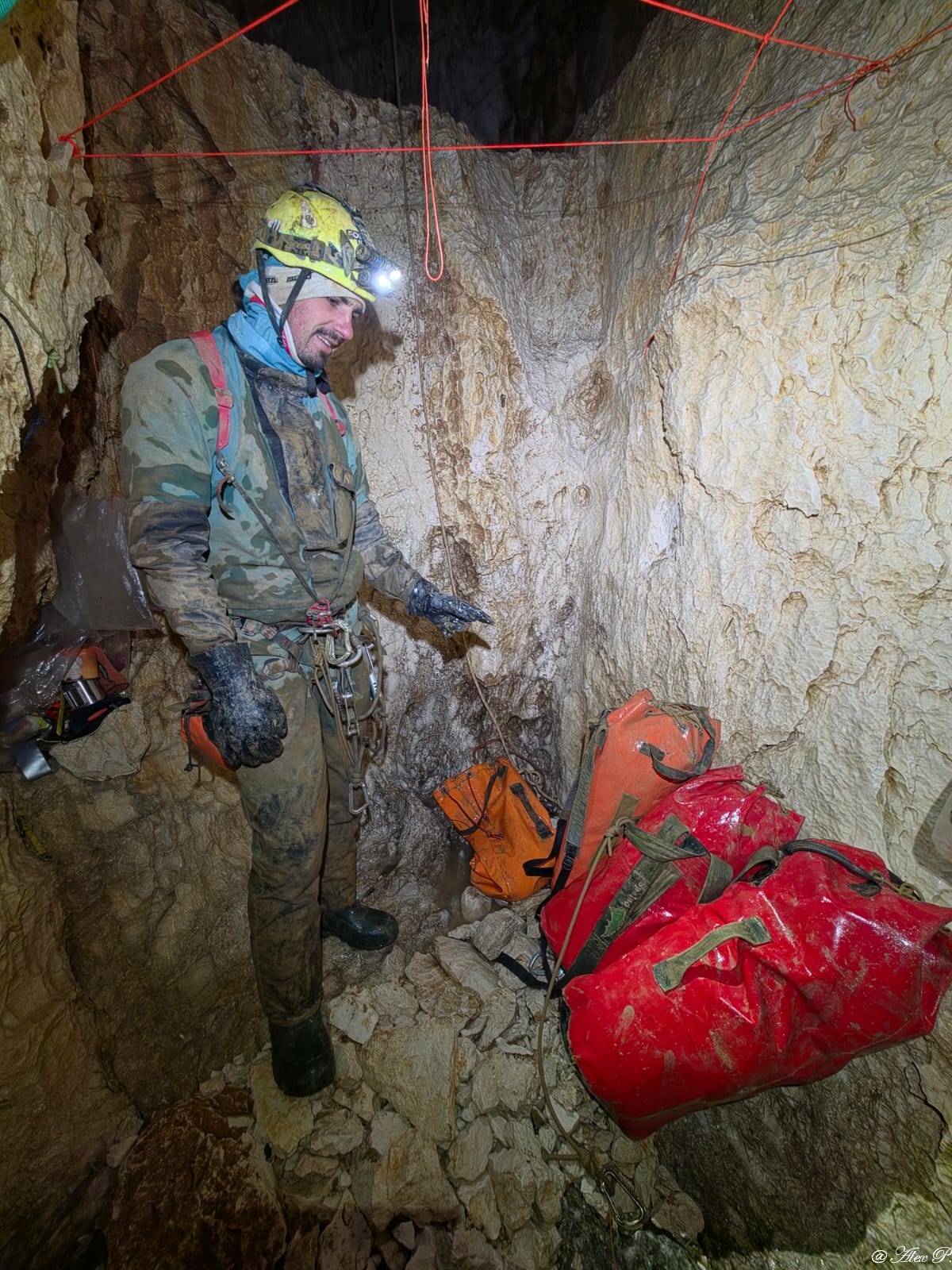
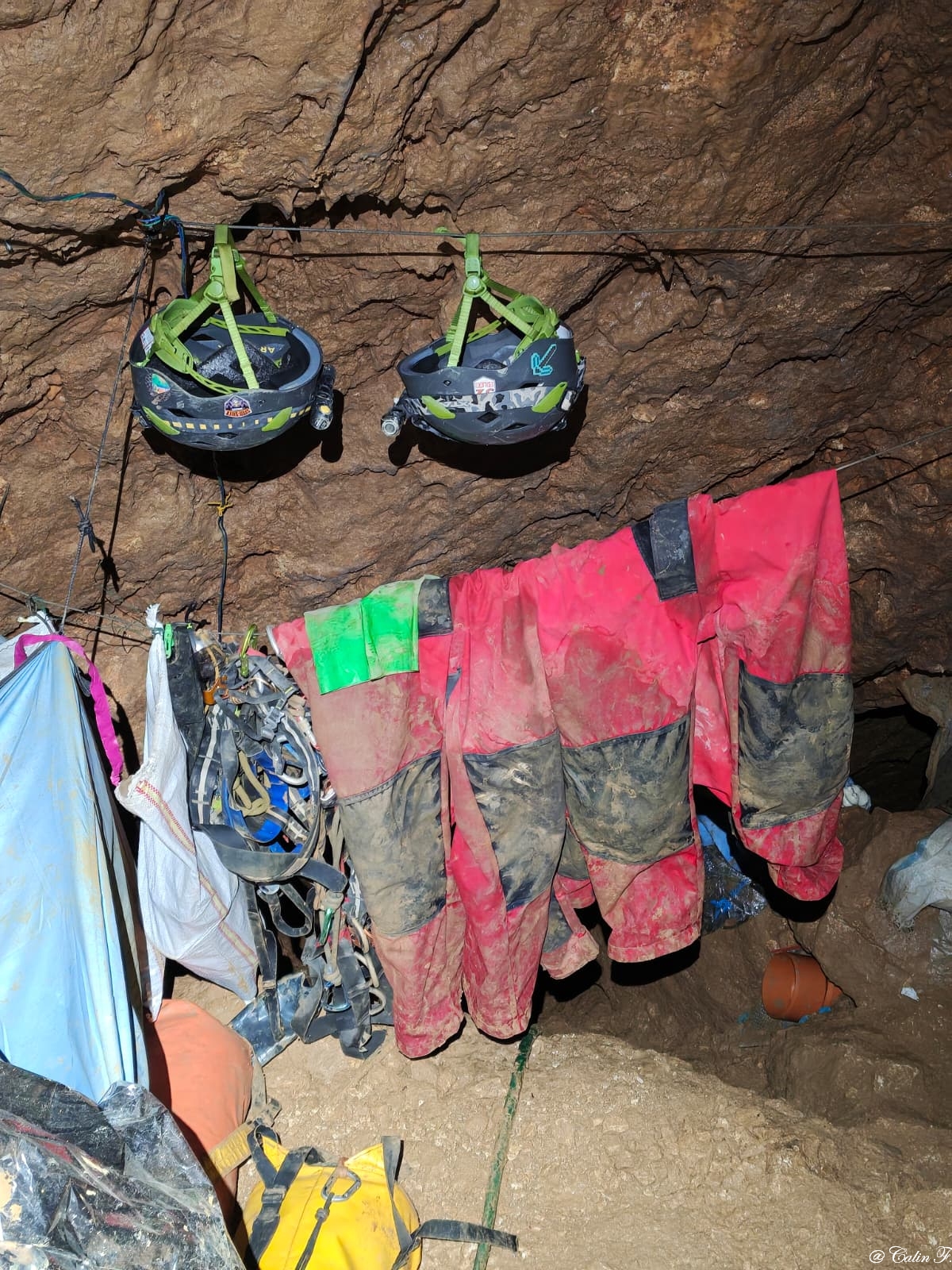
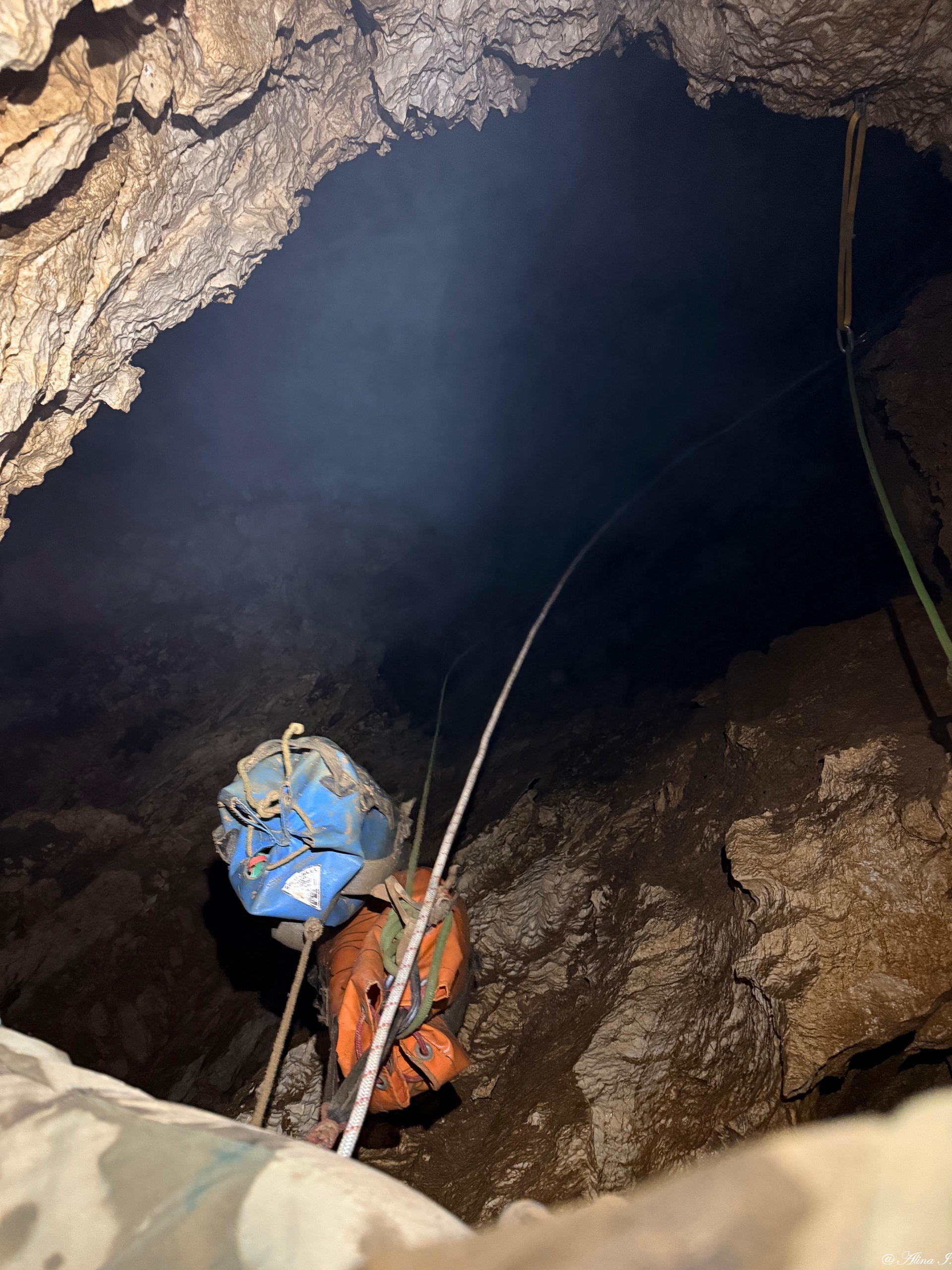
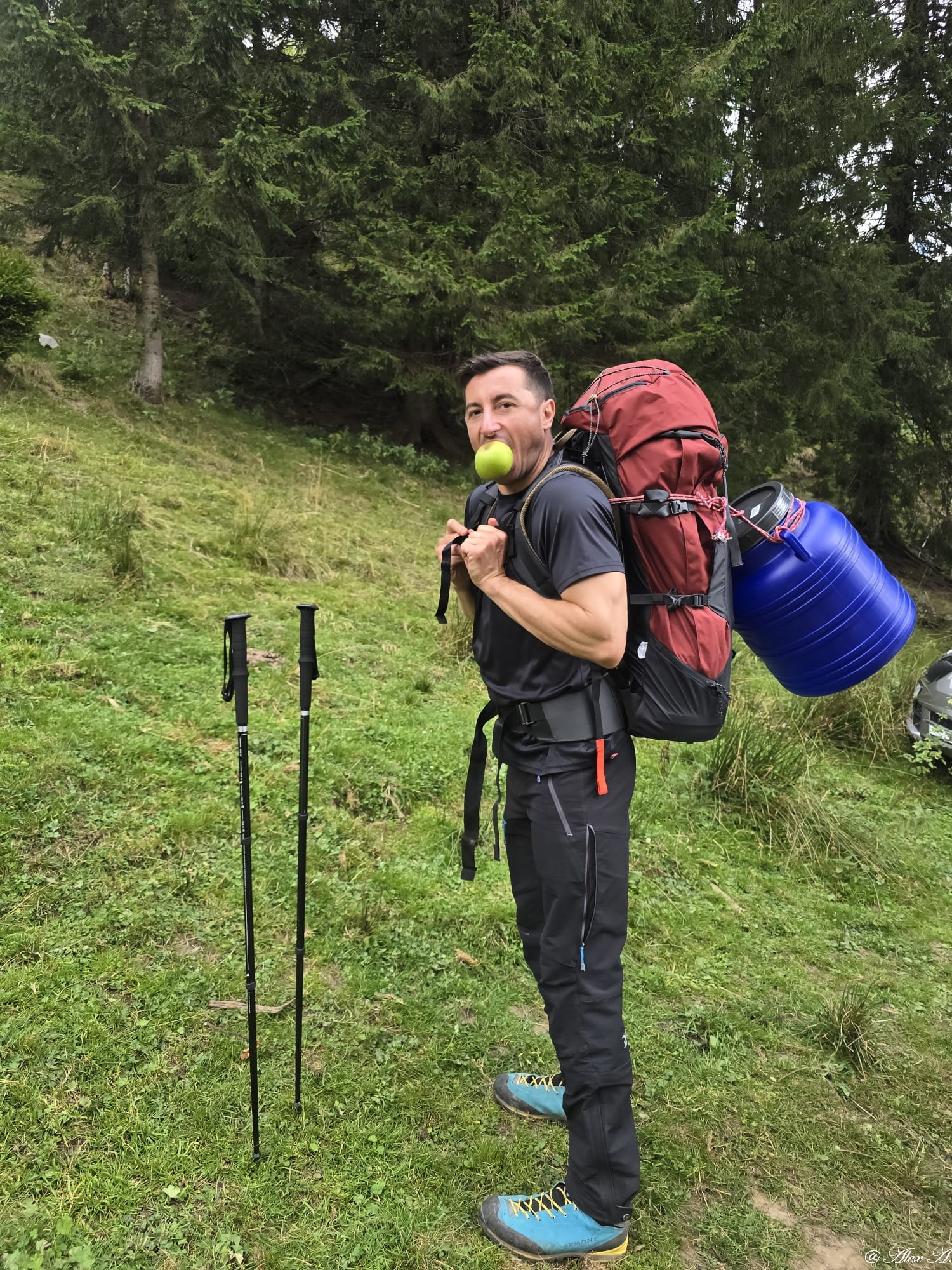
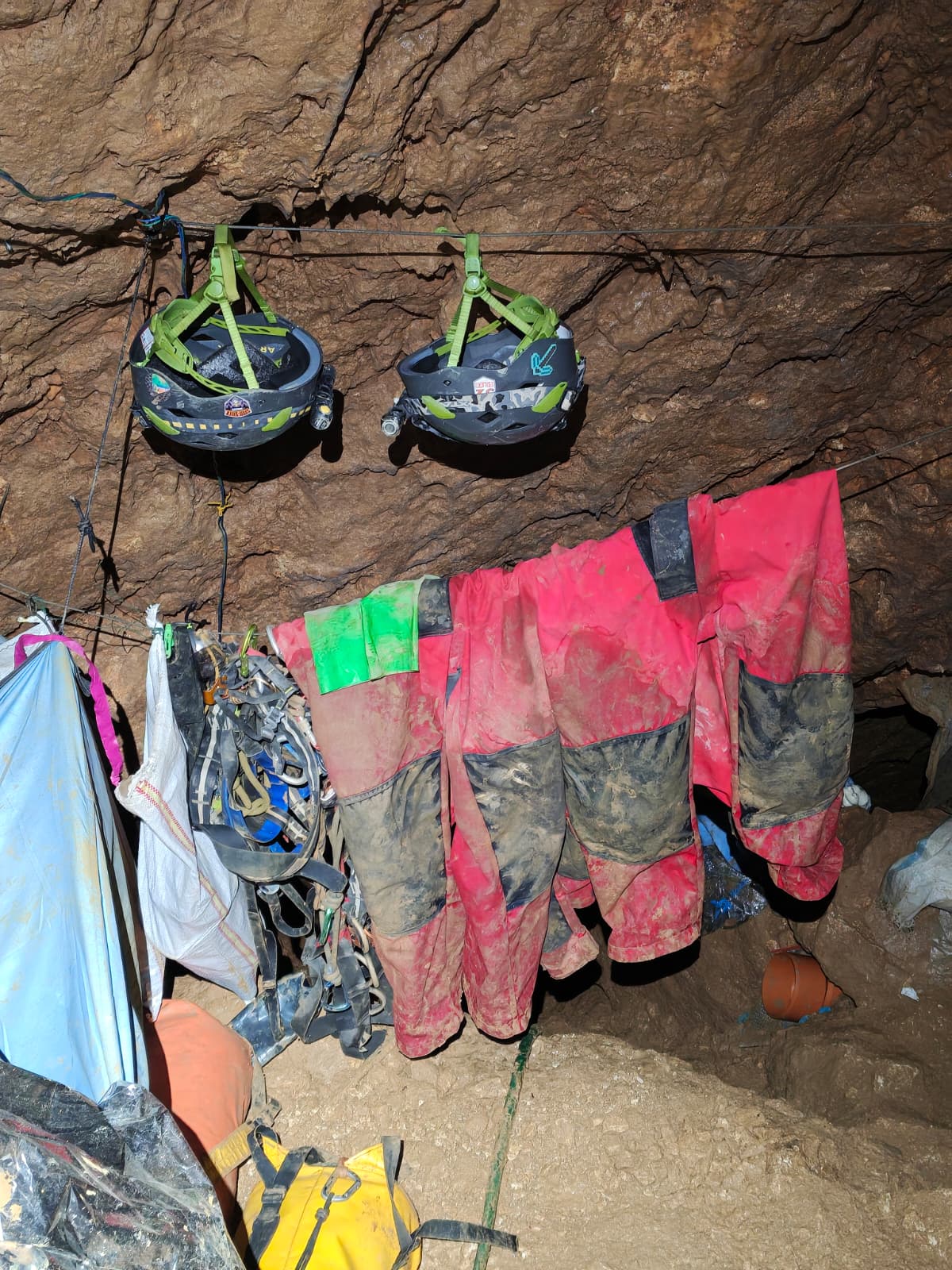
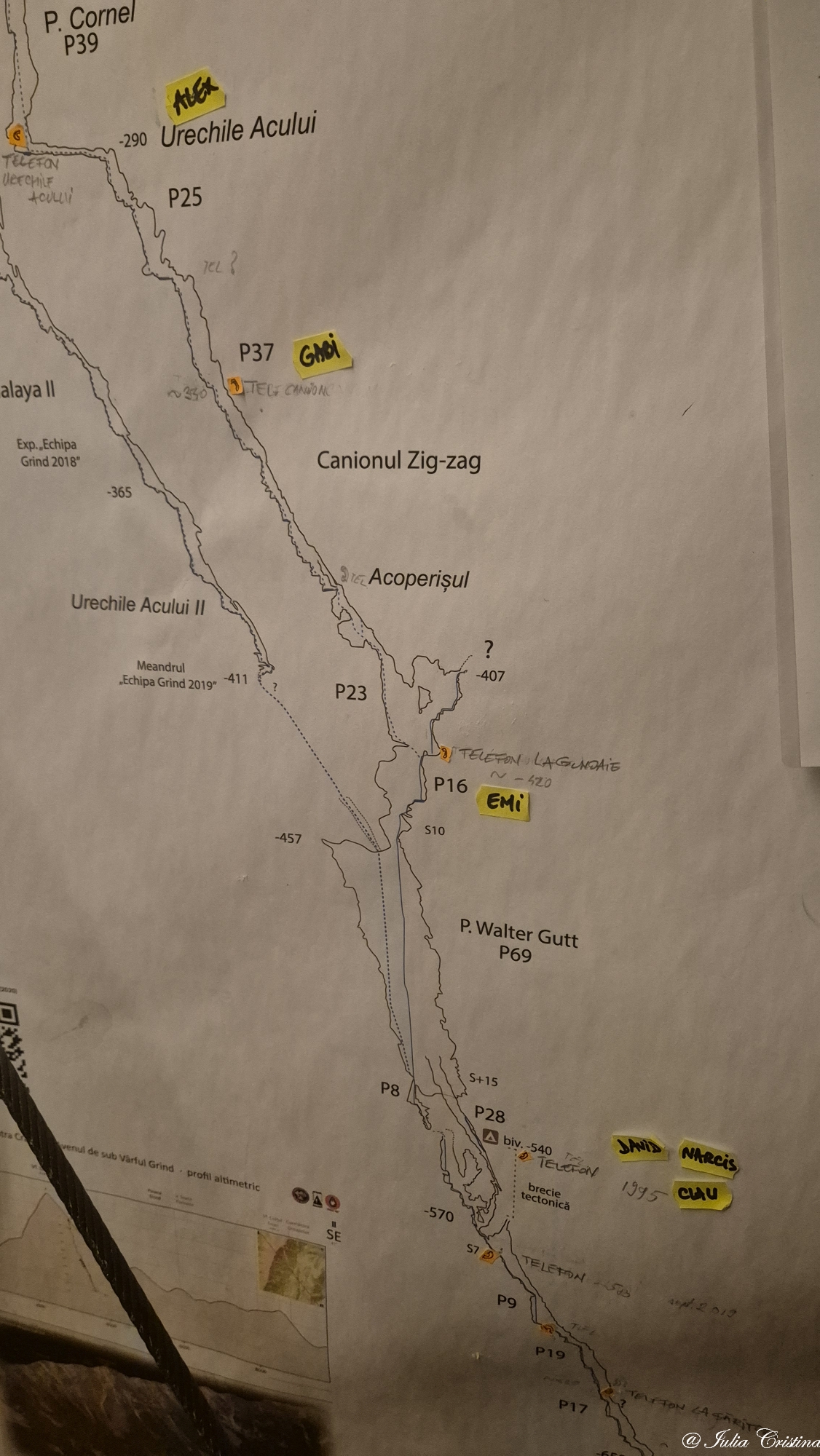
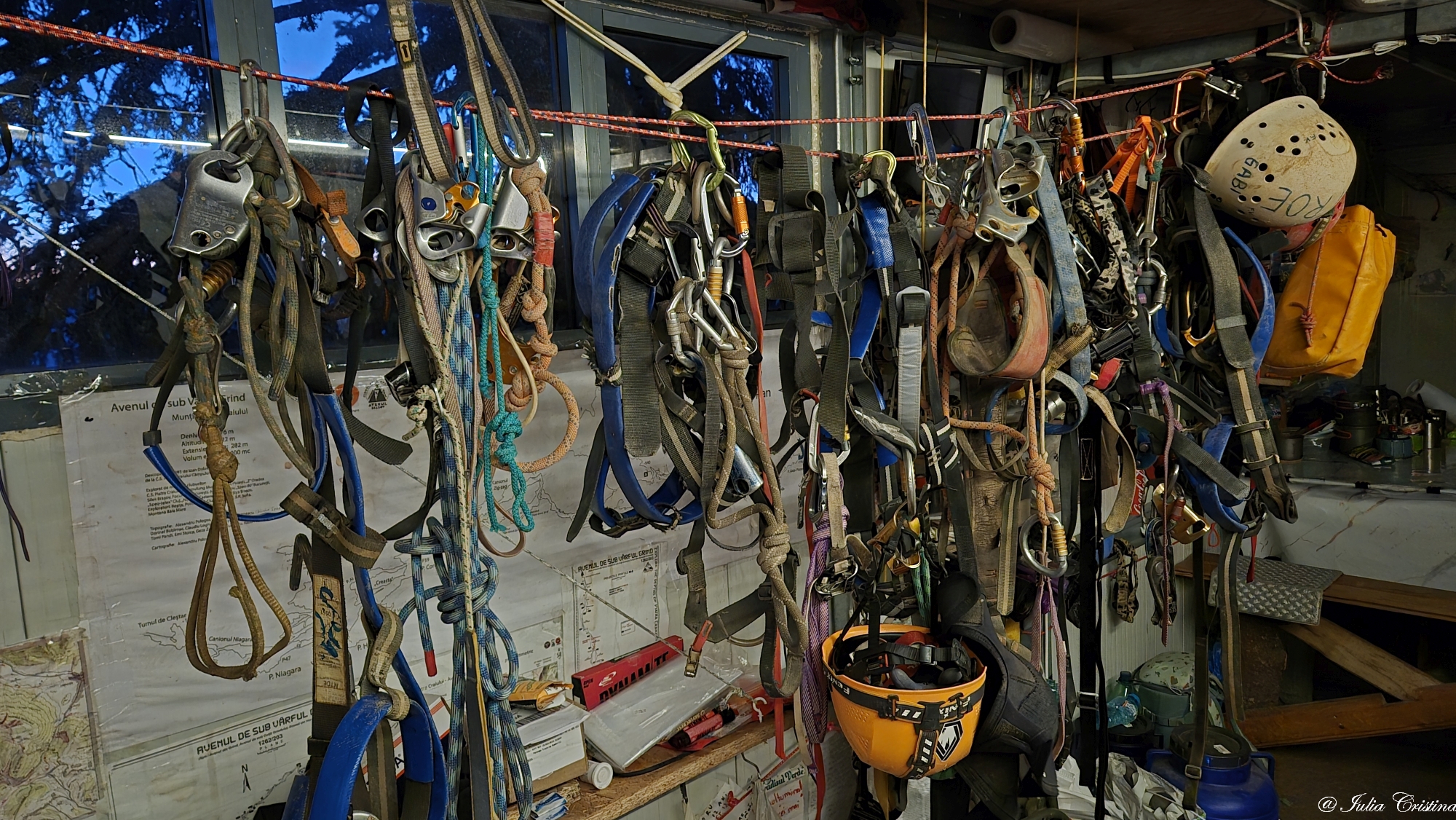
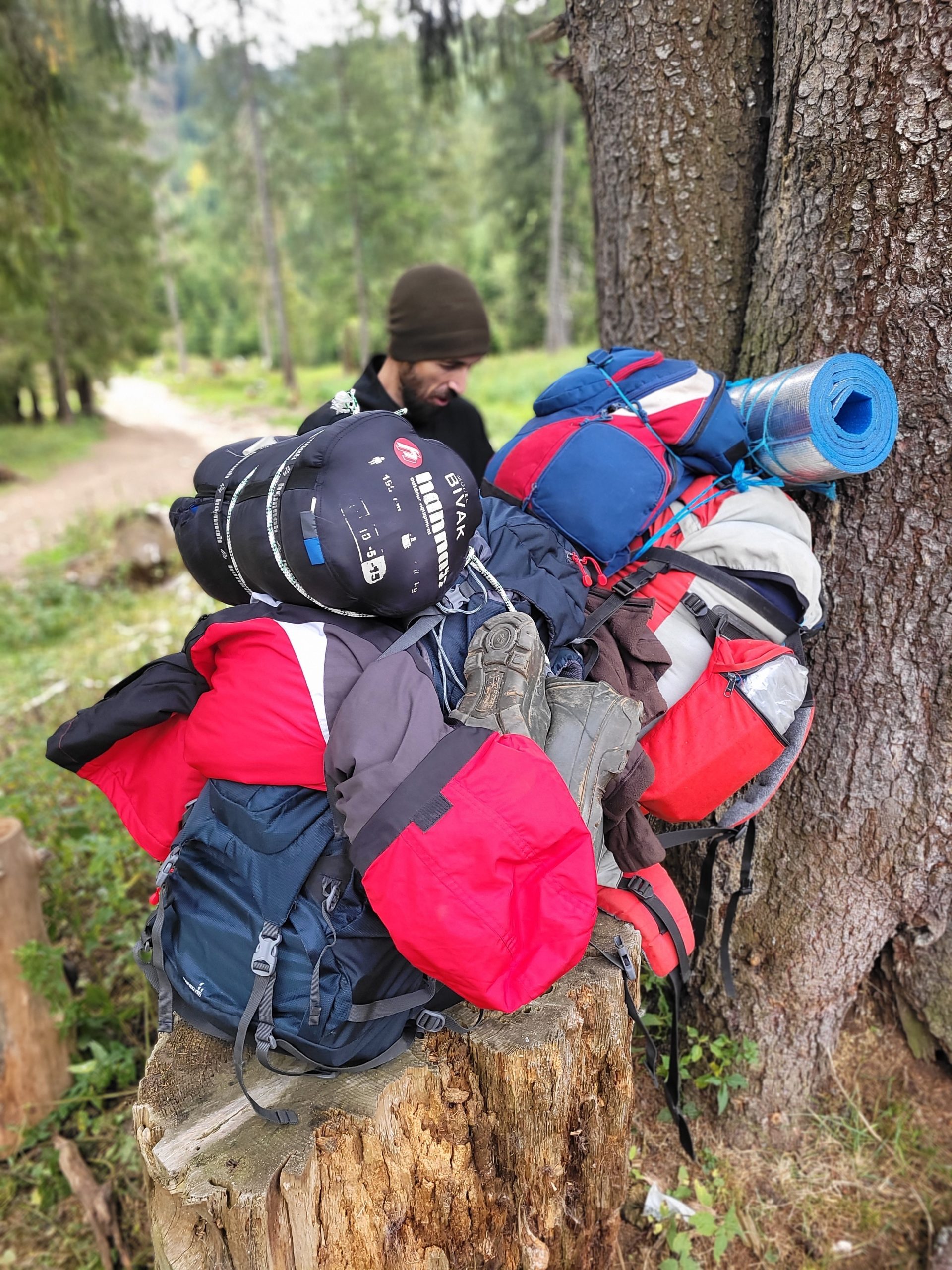
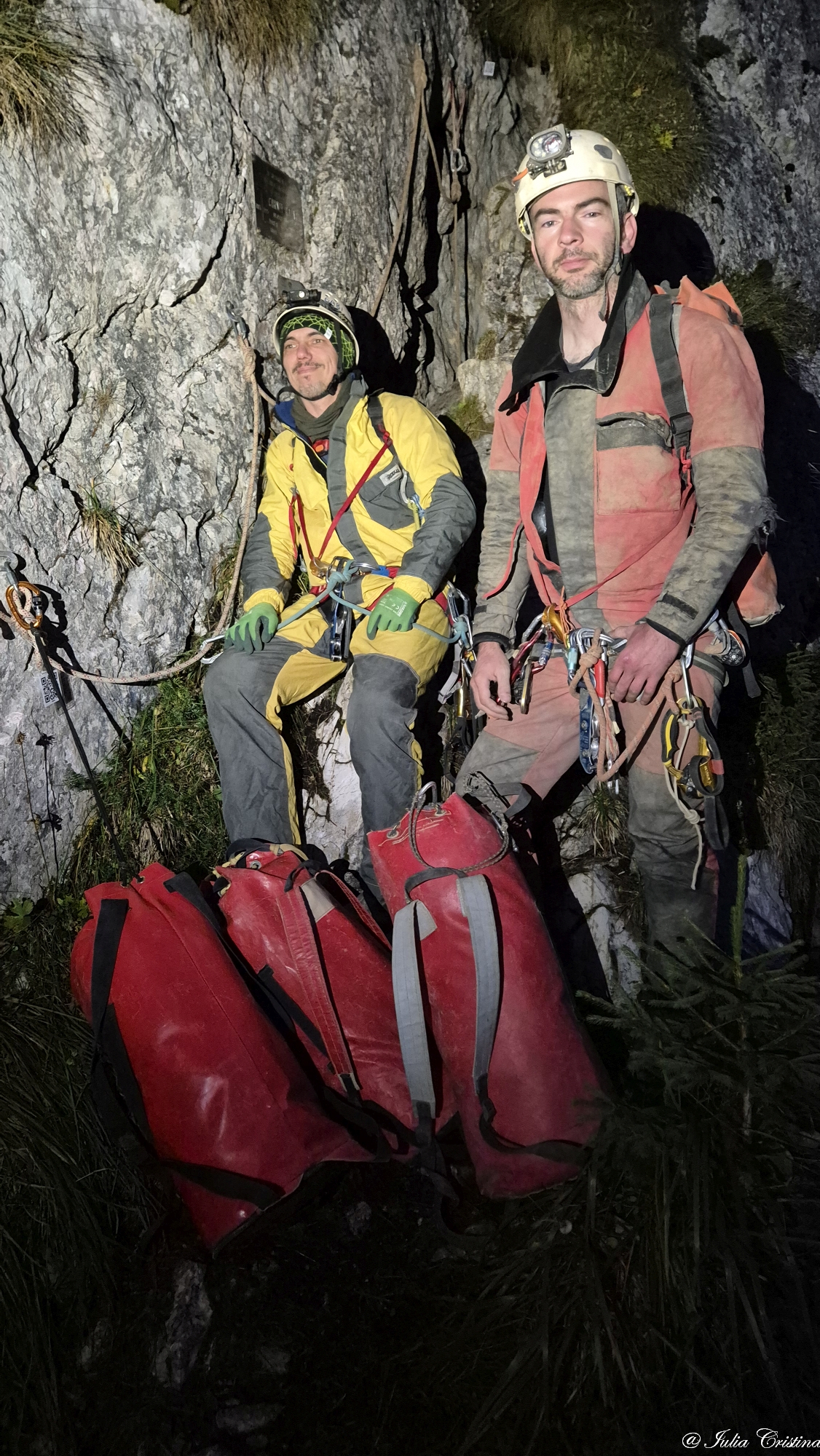
Preparations began in the first days of the expedition and involved complex logistics. Hundreds of kilograms of equipment were carried up to the cave entrance, on steep karst terrain below the Piatra Craiului ridge in an area known as Hornurile Grindului, with no direct access by mountain trail. From there, diving and other specialised gear was transported down towards the terminus over multiple trips, almost entirely through a succession of pitches. The underground bivouacs at −540 m and −775 m were reopened and prepared, rigging near the terminus was improved, and initial digging and rock removal at the sump prepared the site for the dive.
National Record at −815 Metres
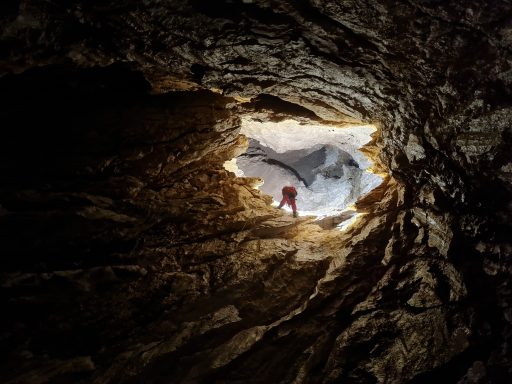
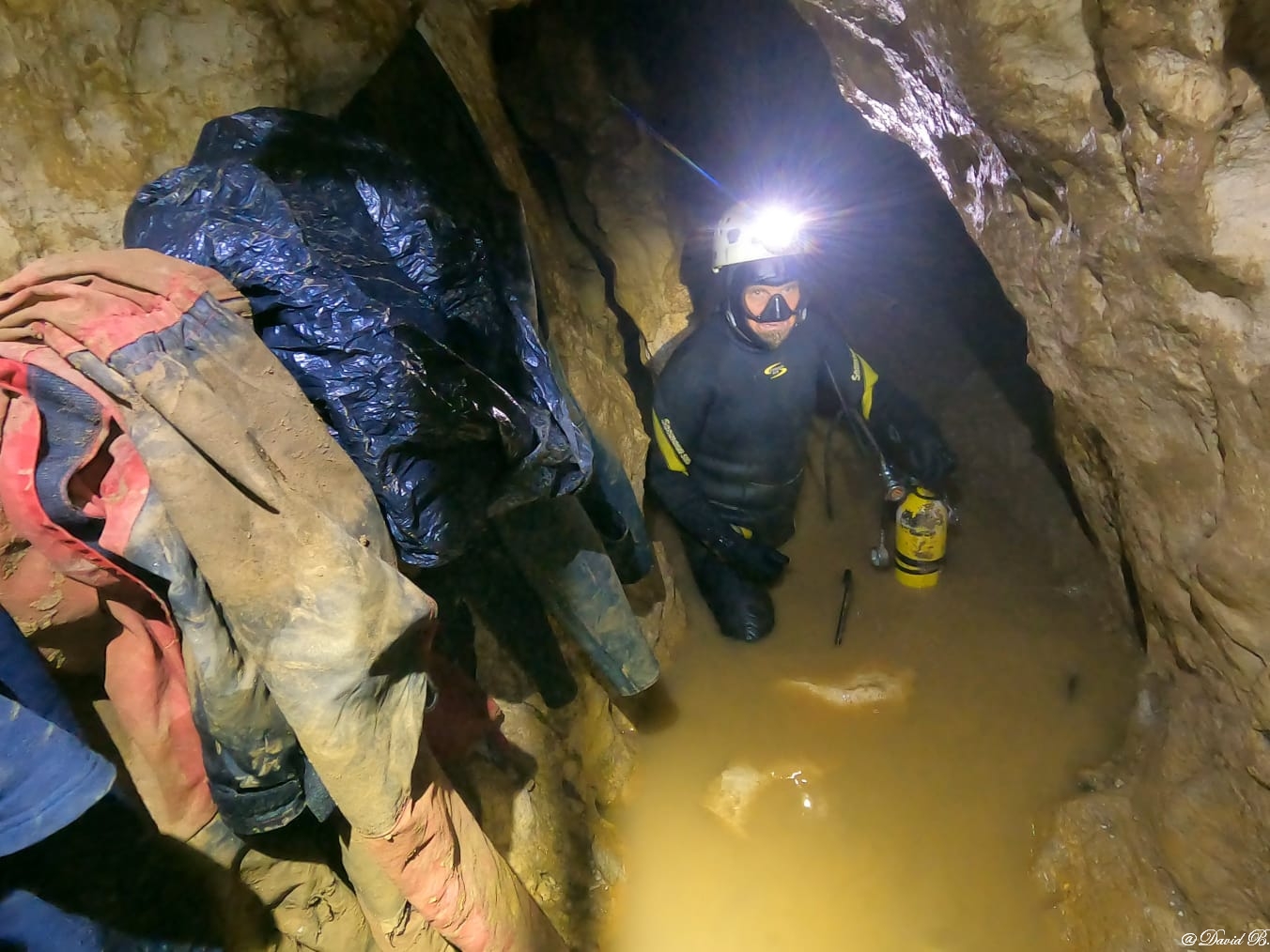
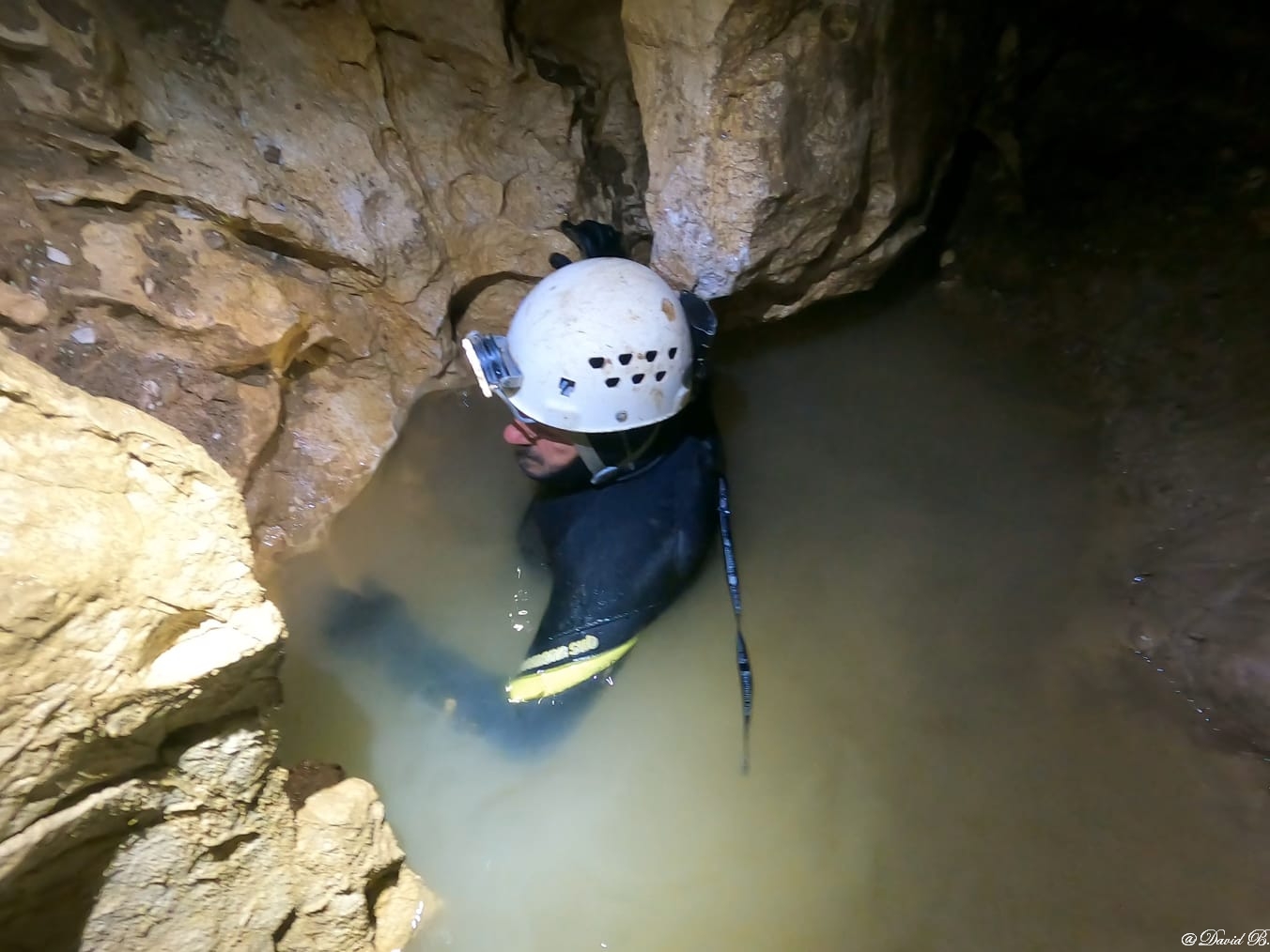
On September 23, cave diver Radu Pușcas made the first dive in the terminal sump of Avenul de sub Vârful Grind, at −815 m, setting a new Romanian national record for a cave dive carried out at the greatest vertical depth below a cave entrance.
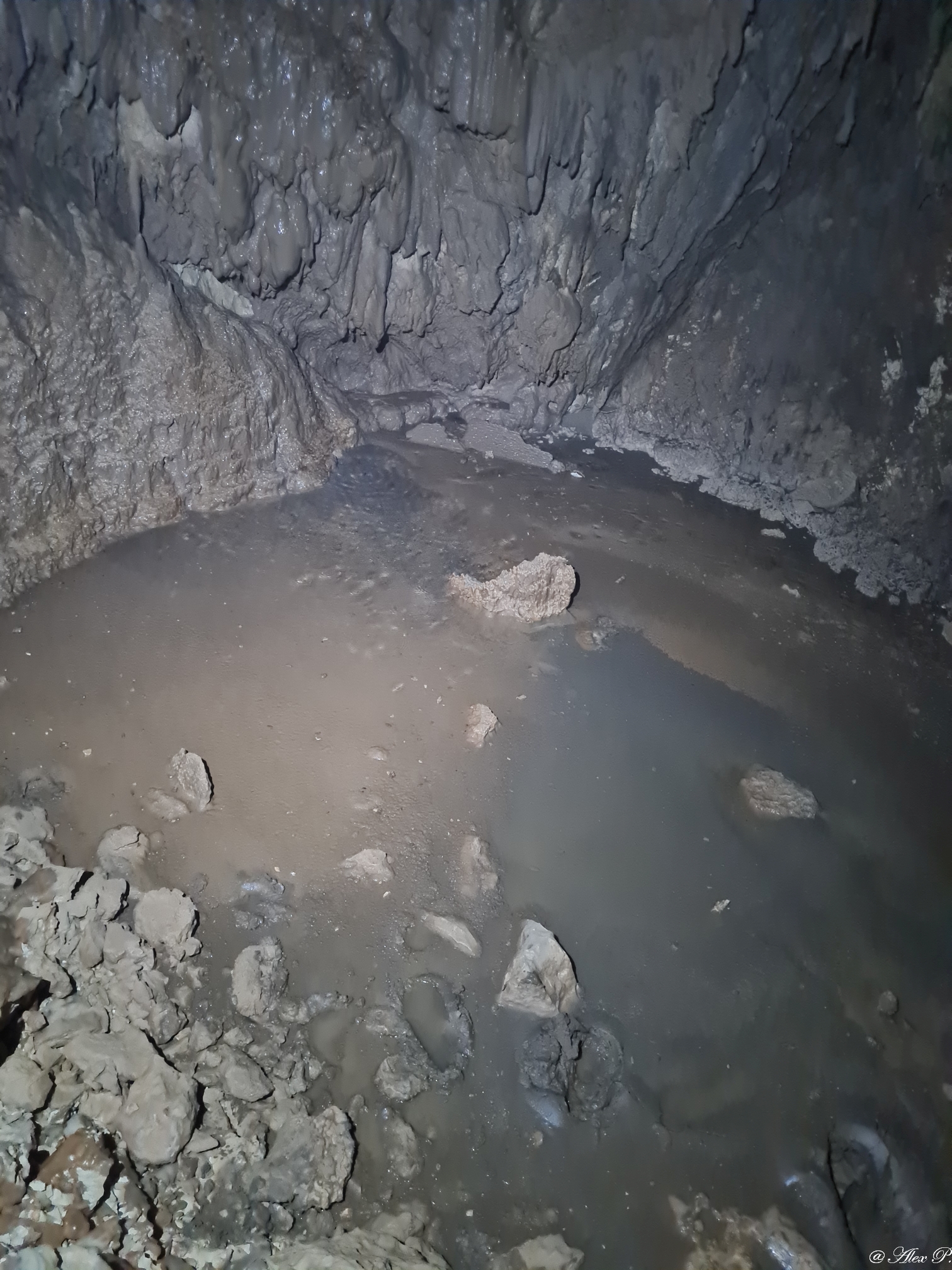
The dive showed that the sump is shallow, with less than one metre of water, but the underwater continuation is blocked by a tight constriction and the shape of the submerged passage. Radu pushed partway into the narrowest section but was unable to pass the constriction.
The dive established the sump’s configuration and set the main objective for the rest of the expedition: widening the constriction to allow further exploration.
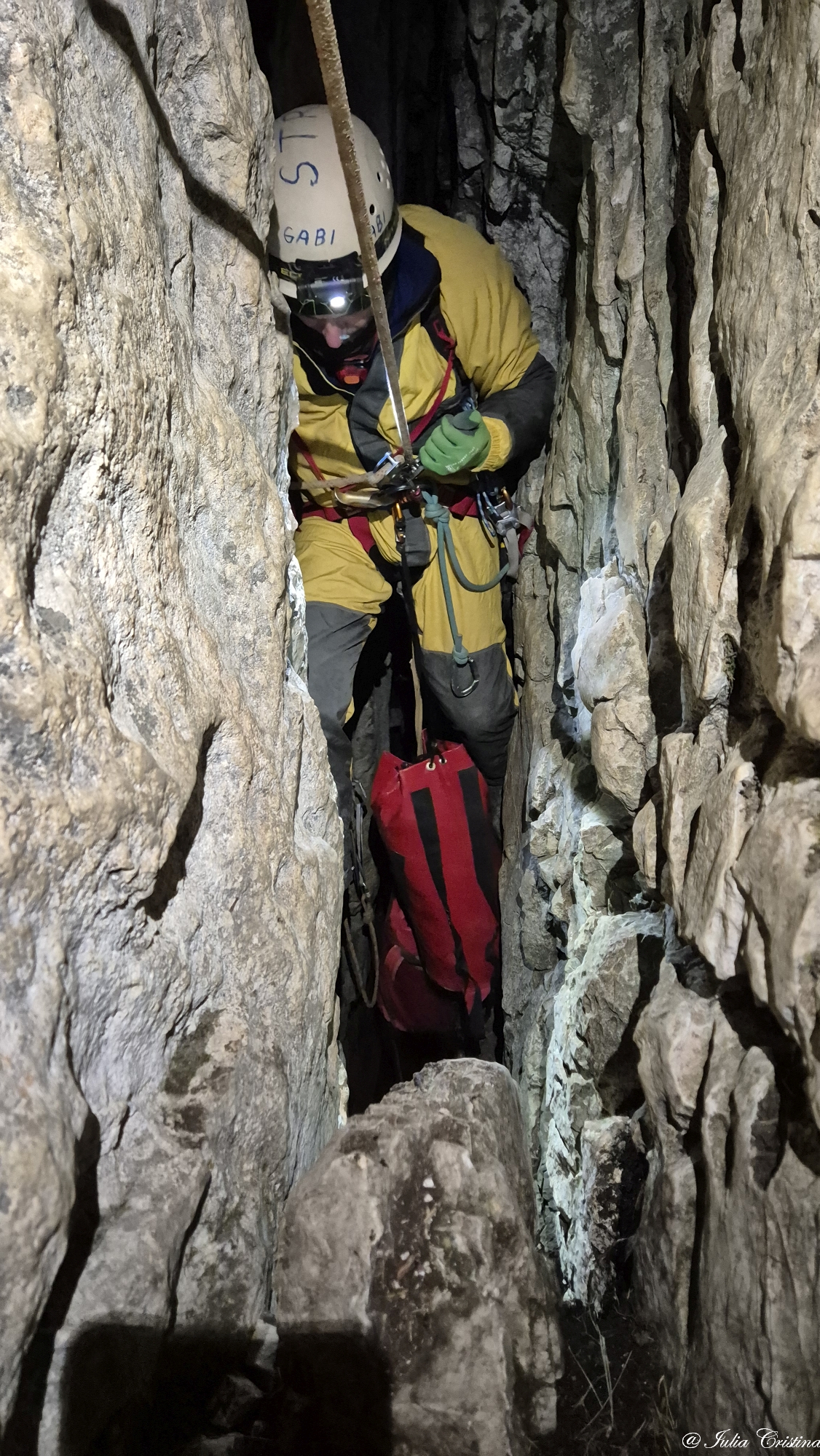
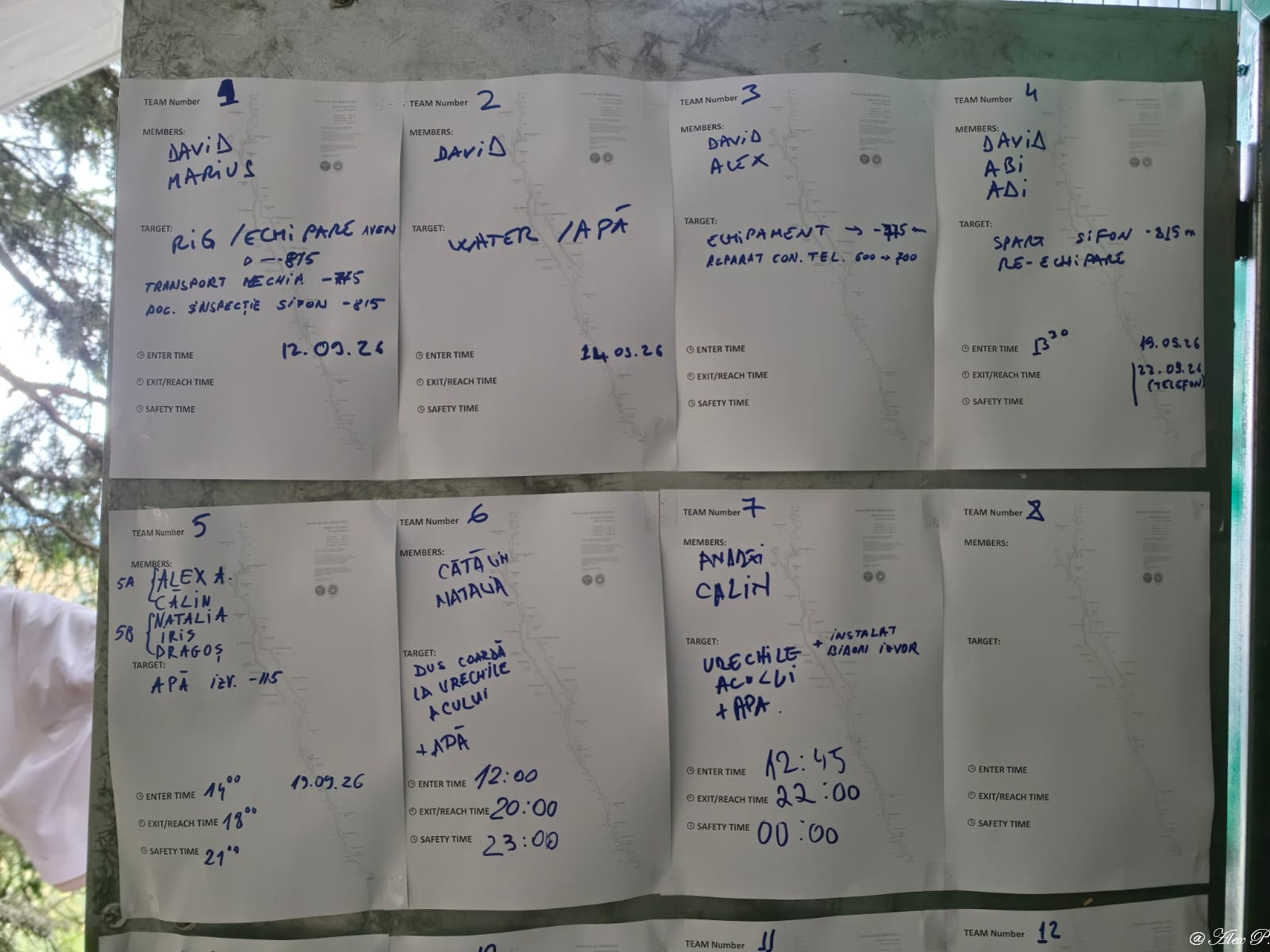
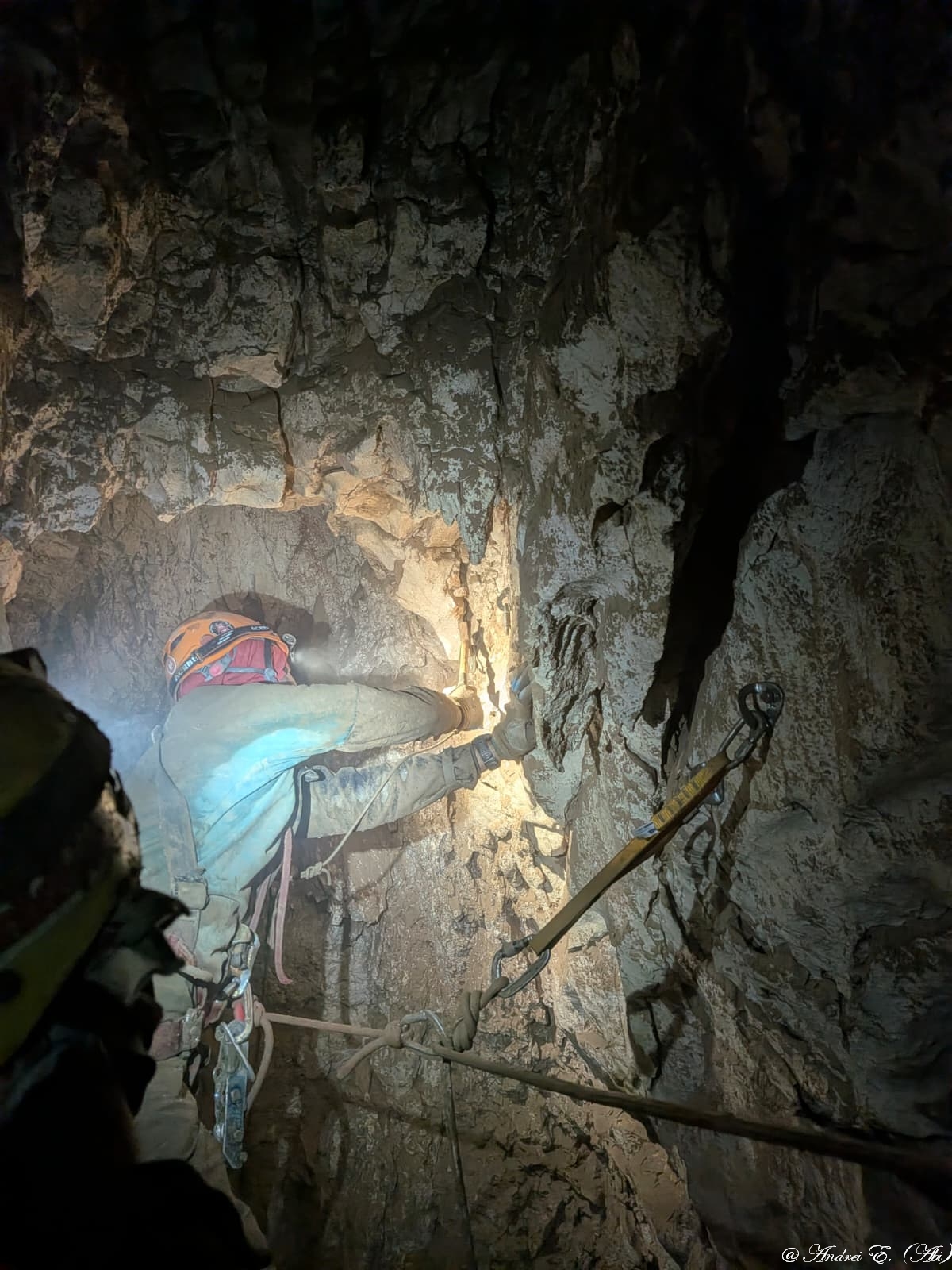
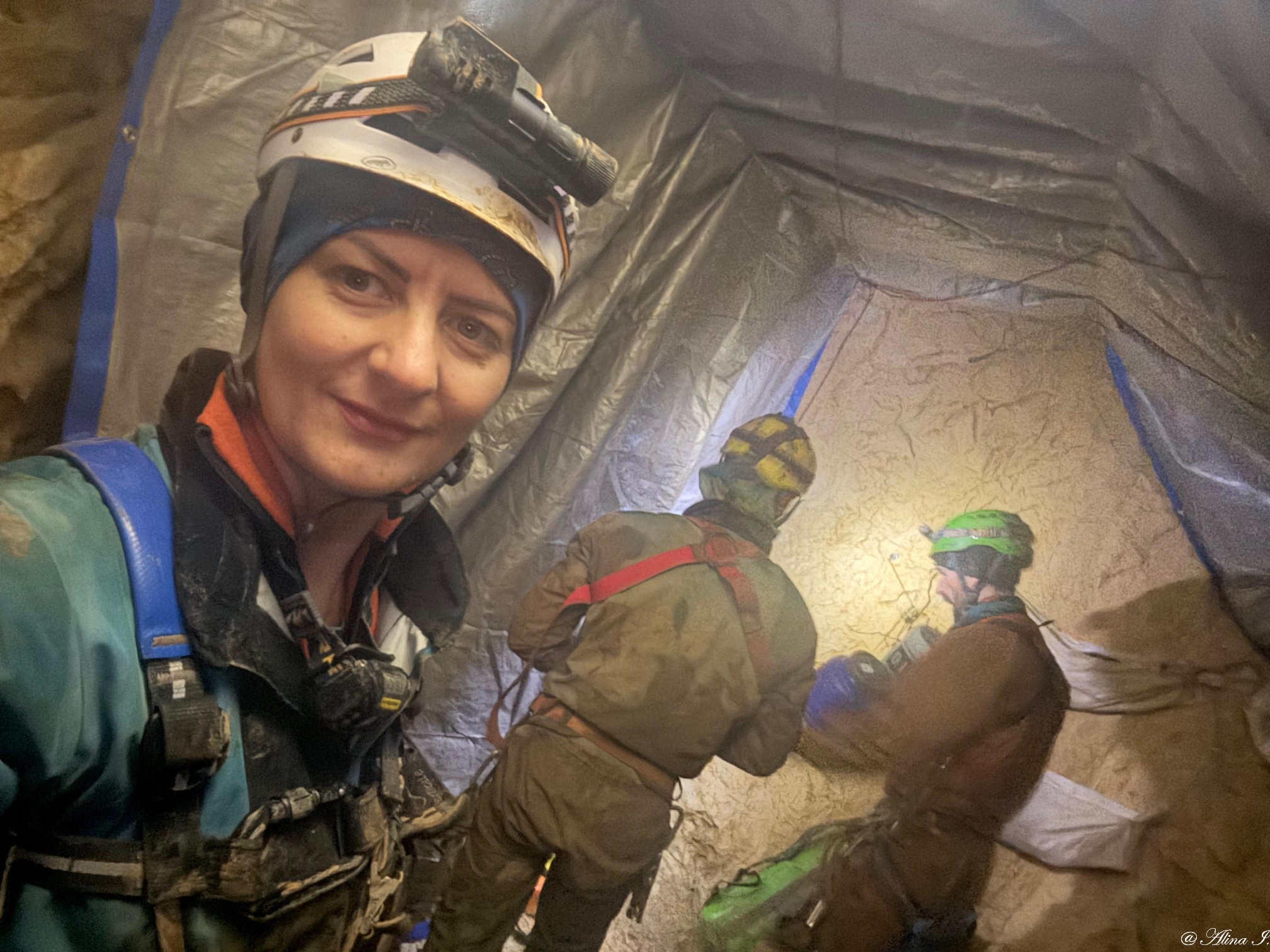
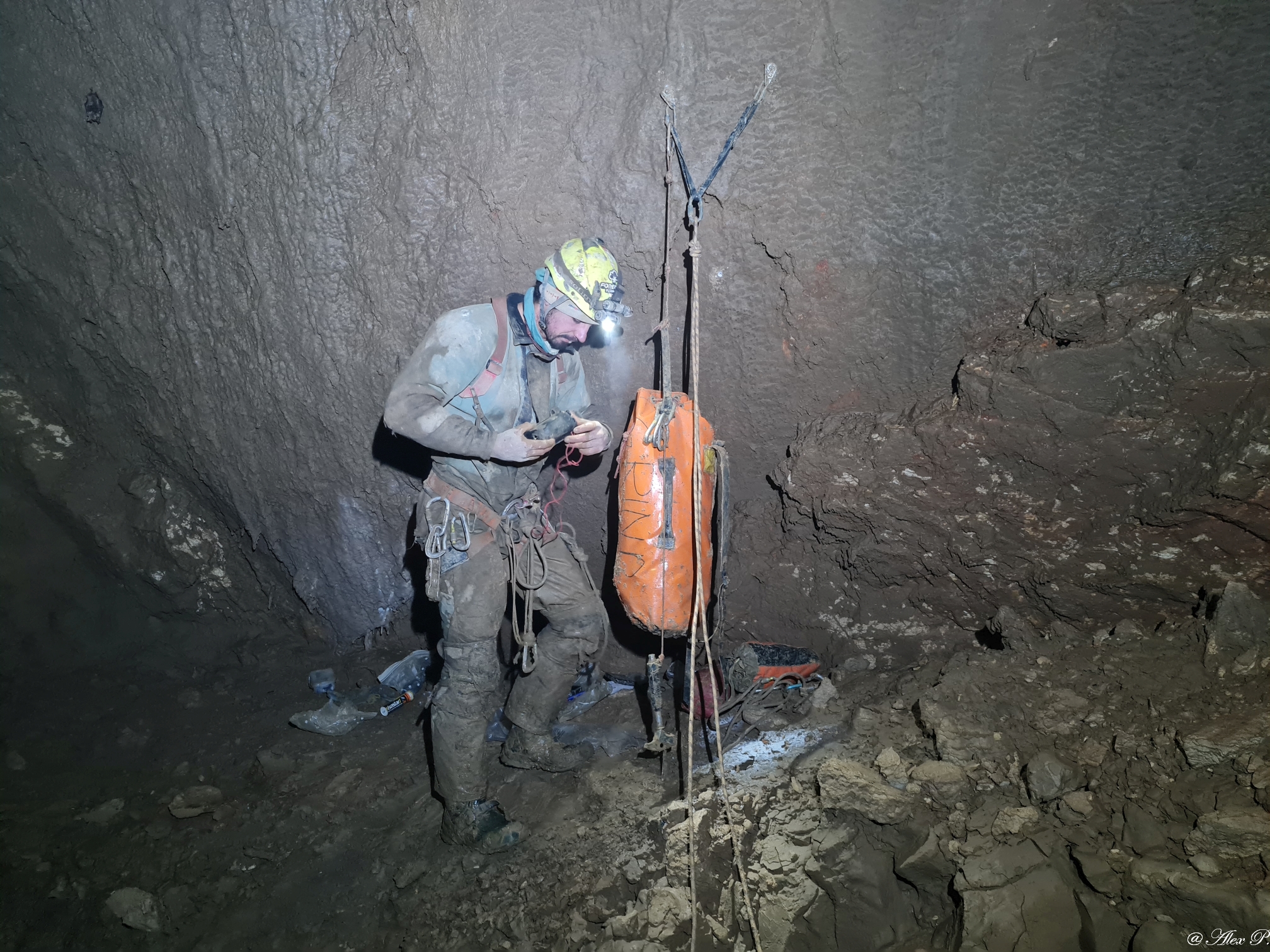
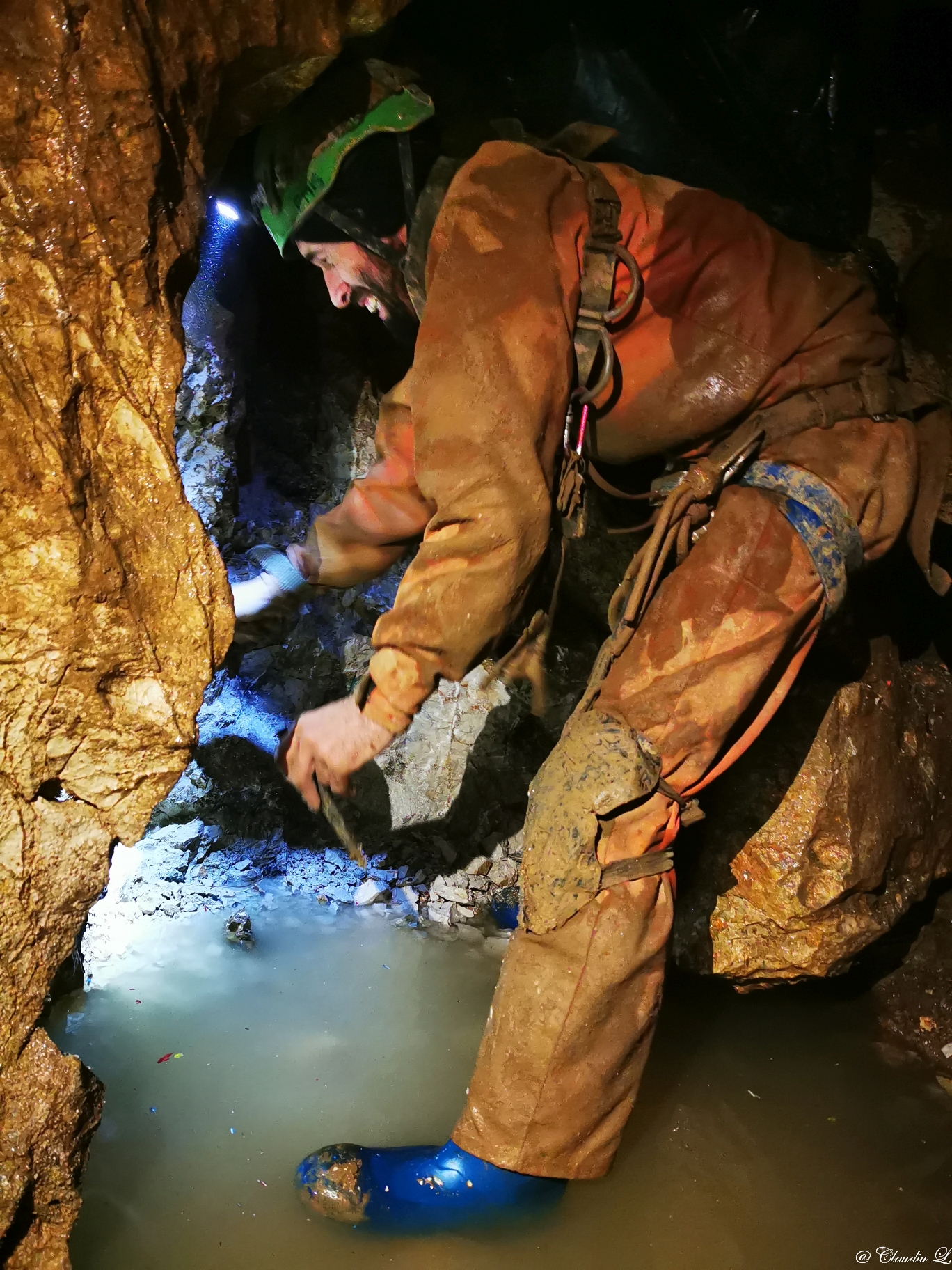
Digging and passage-widening work continued almost daily until the final days of the expedition. Successive teams descended to −815 m, removed blocks, and broke away rock above the submerged passage to enlarge the constriction. The work required numerous multi-day underground trips and a continuous supply chain between the surface, the −540 m bivouac, the advanced bivouac at −775 m, and the terminus — an operation typical of deep alpine caving projects.
By the end of Grind Explo 2026, the sump remained impassable, but the digging undertaken at the terminus has improved the prospects for a future attempt. This remains one of the main leads for gaining further depth in the Piatra Craiului massif.
Alongside the work at −815 m, the teams pursued other objectives: climbing into previously inaccessible passages, pushing and surveying new leads (including a significant extension of an ascending branch in the middle of the cave), re-rigging and improving existing rope routes, extending communications and safety provisions, and carrying out experimental temperature measurements.
Exploration on Multiple Fronts
The length of the expedition allowed several leads at different depths to be explored while work continued at the terminus.
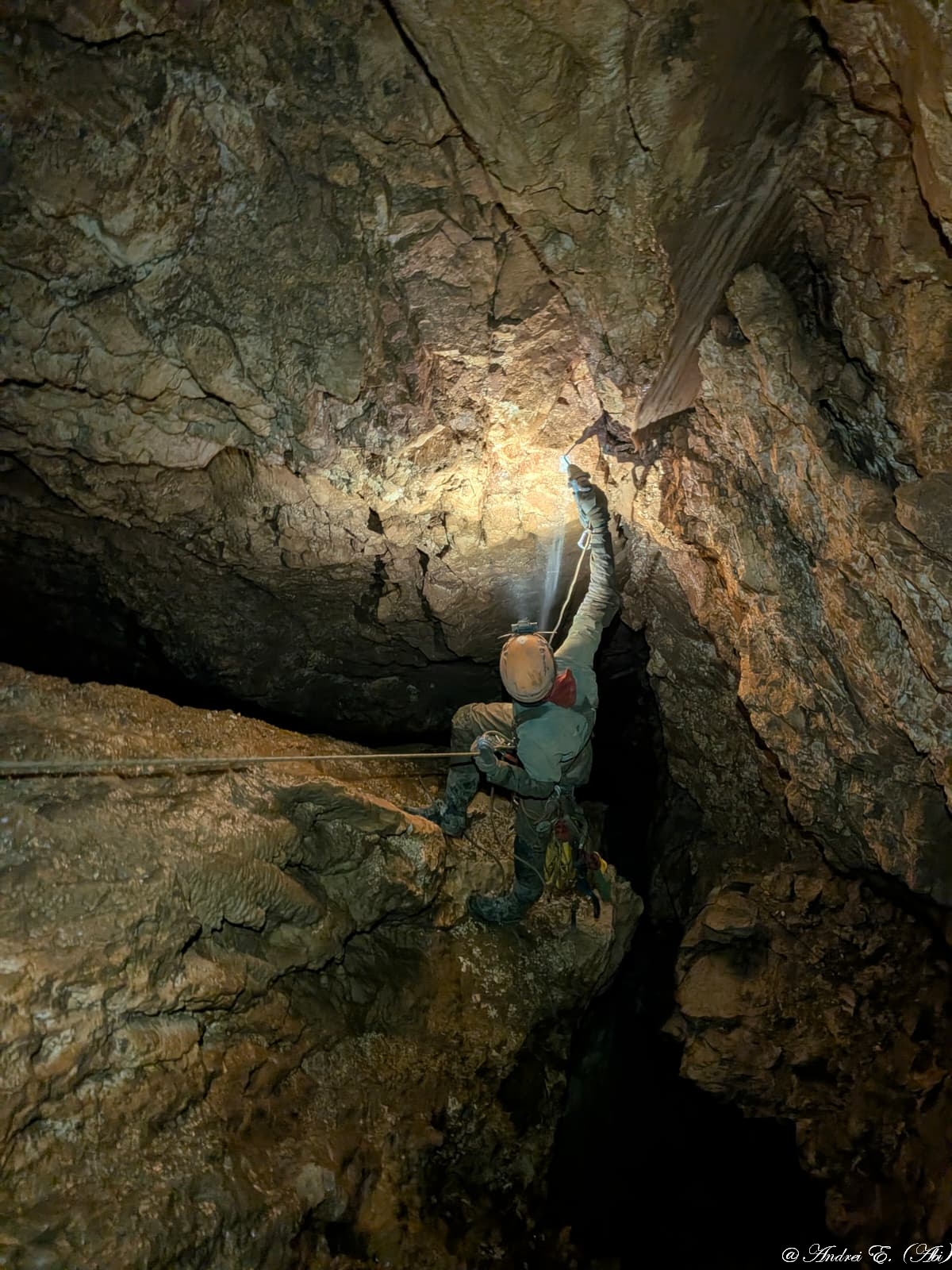
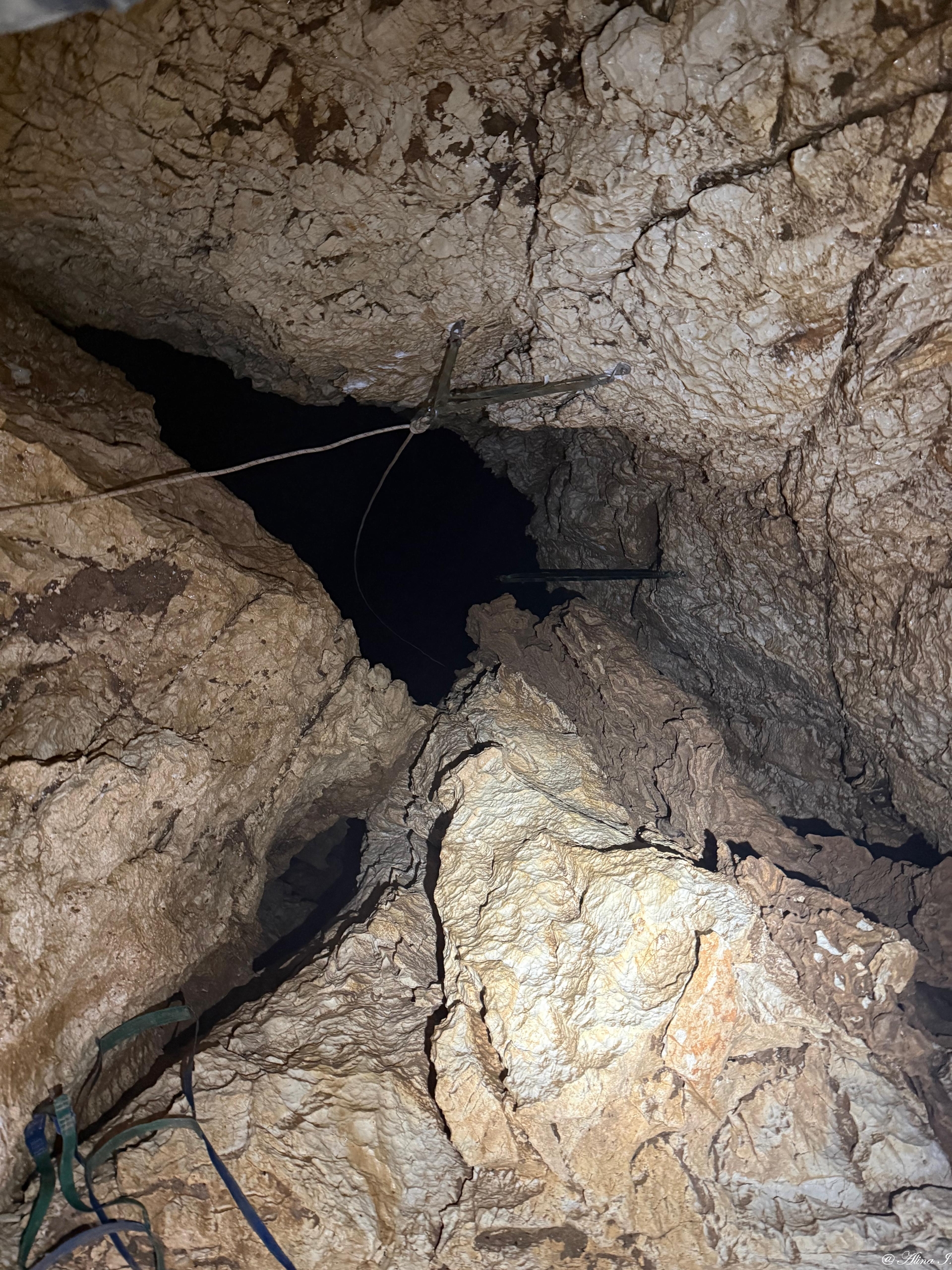
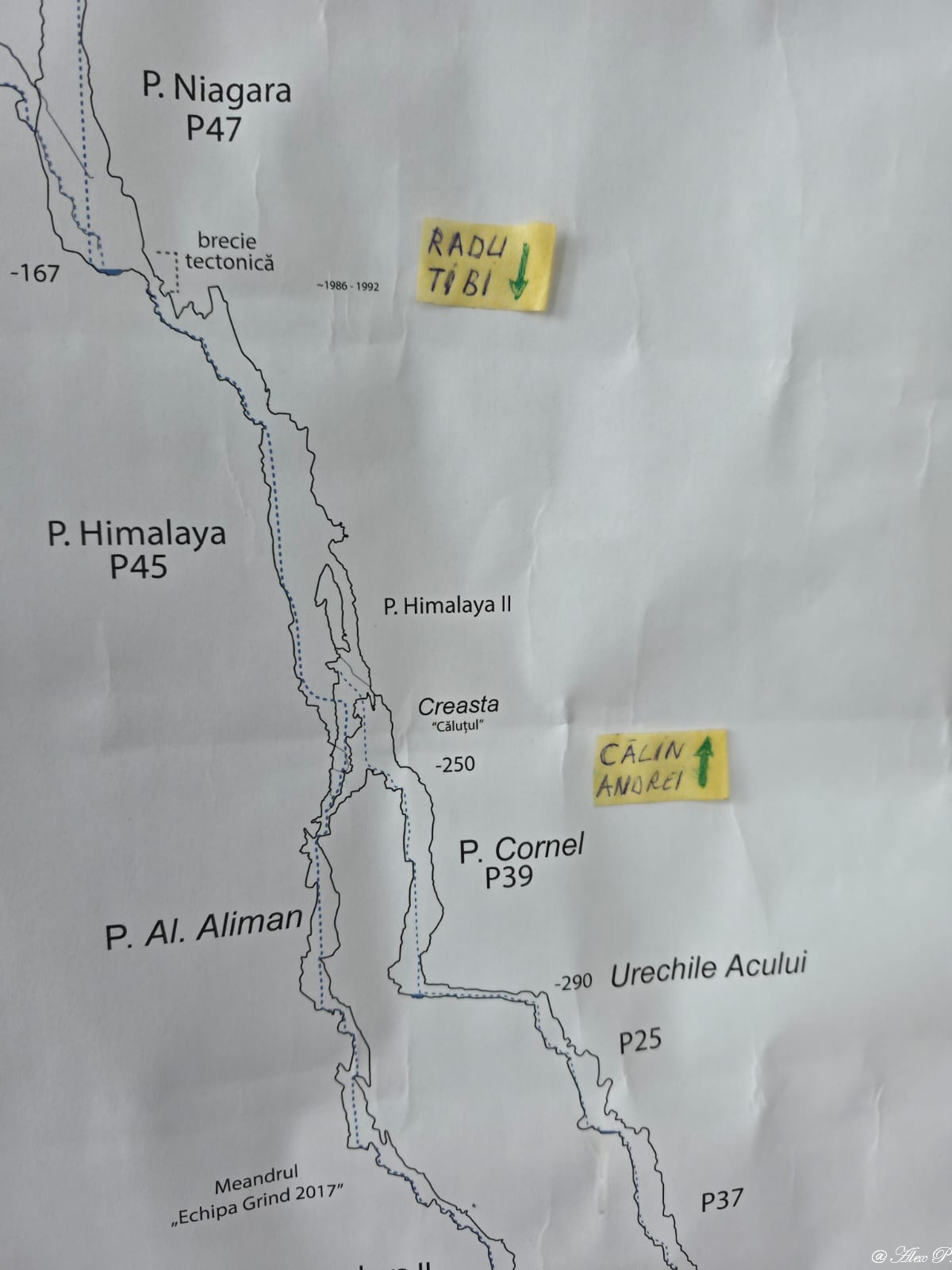
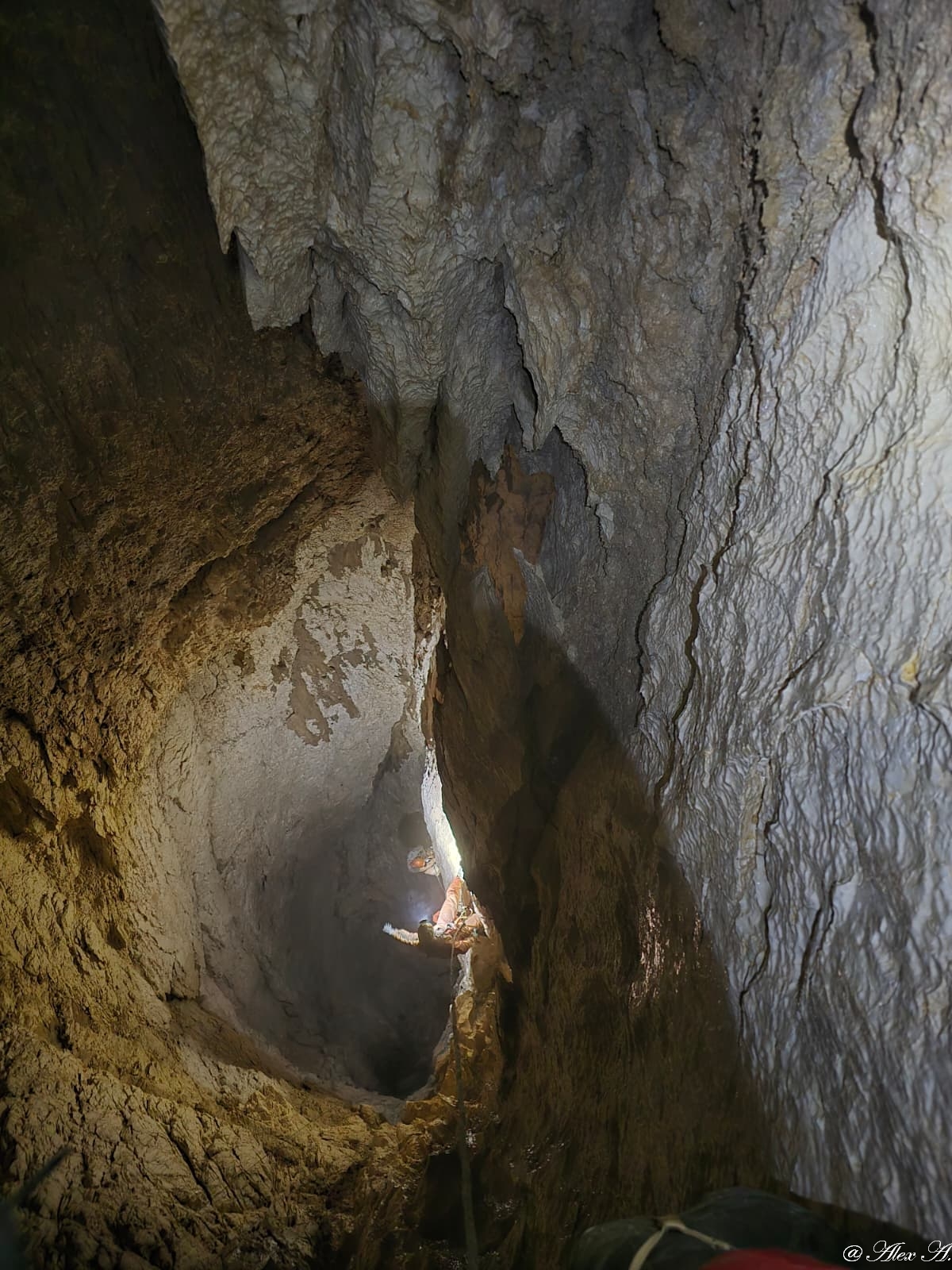
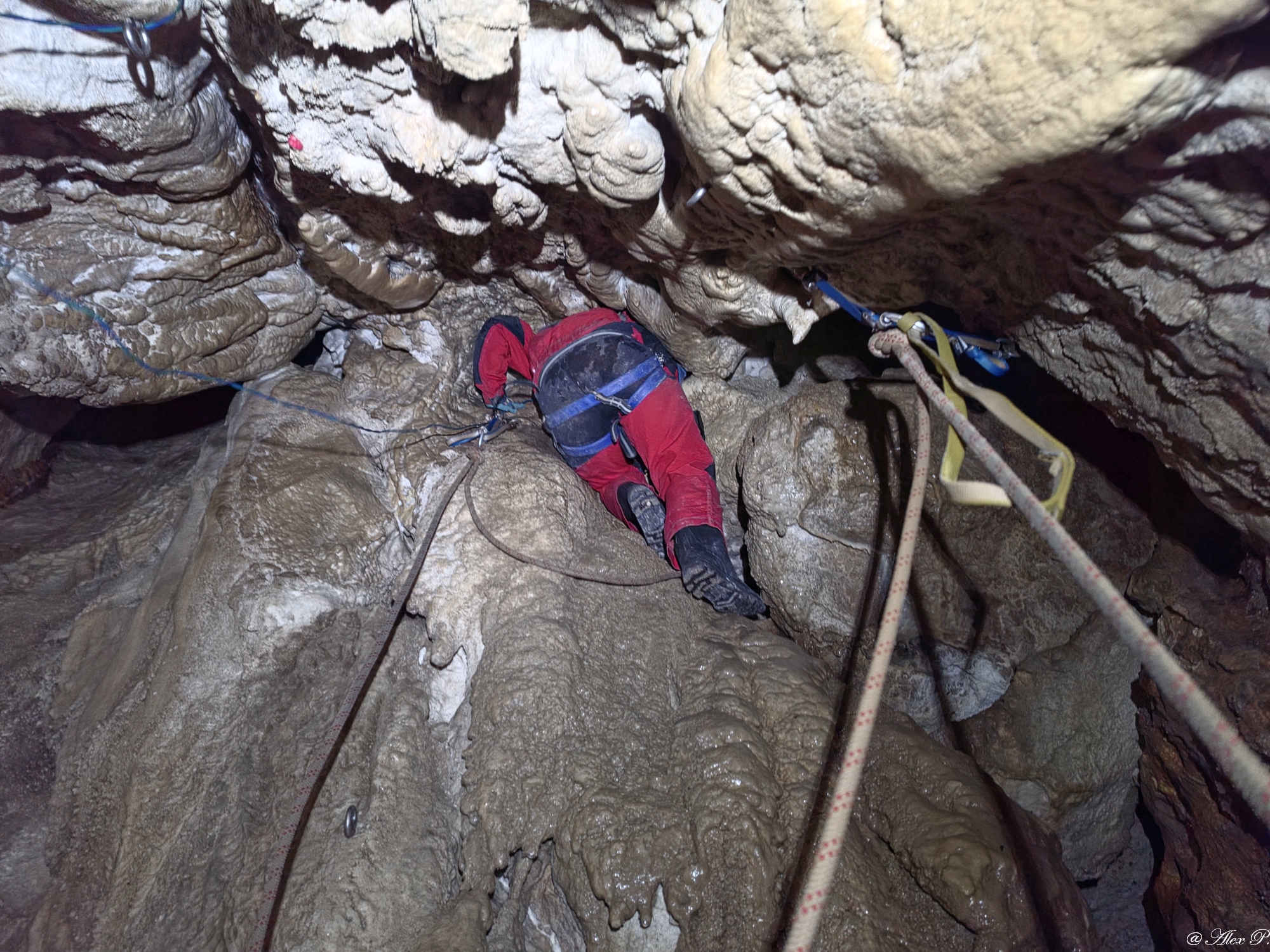
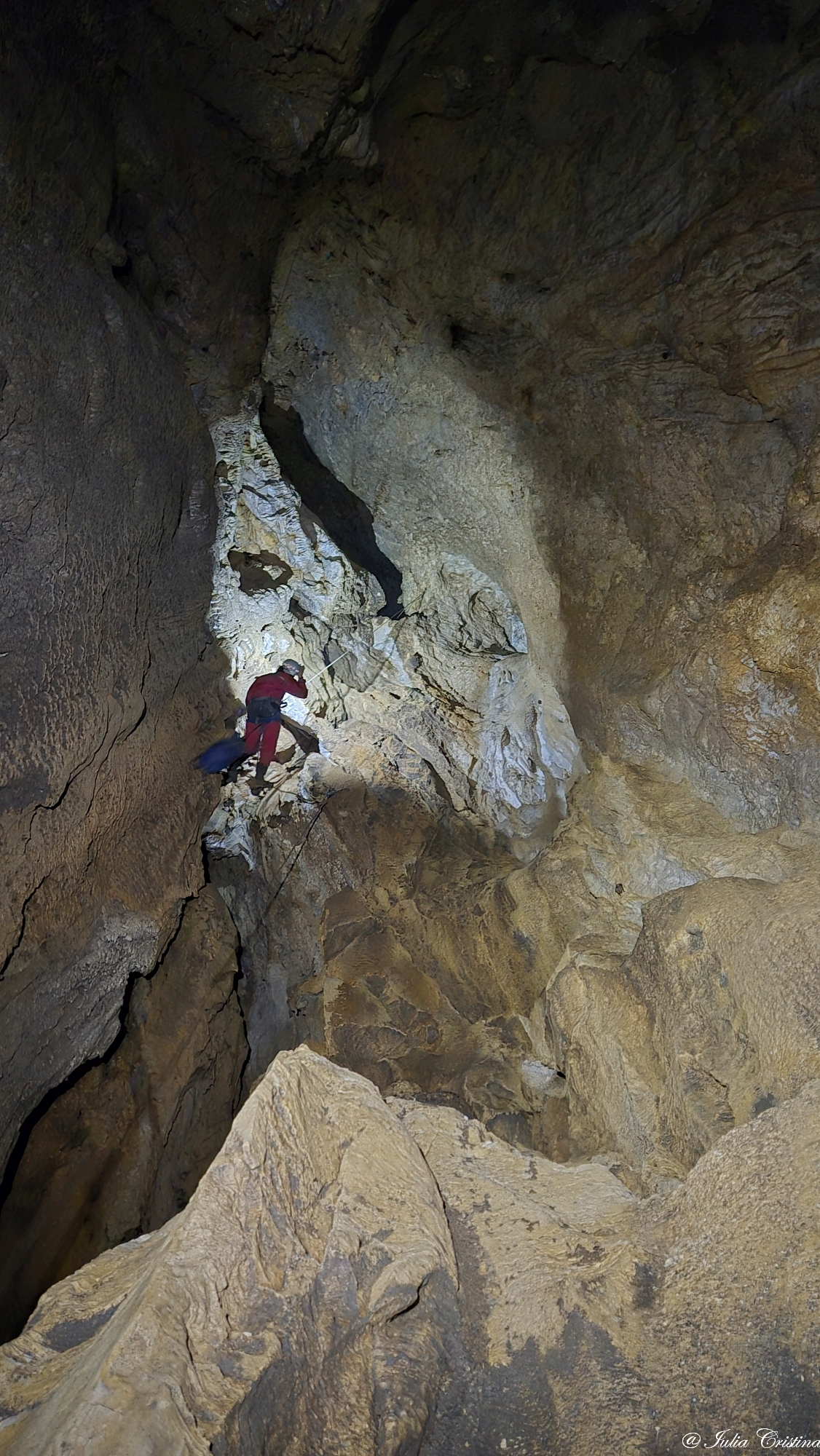
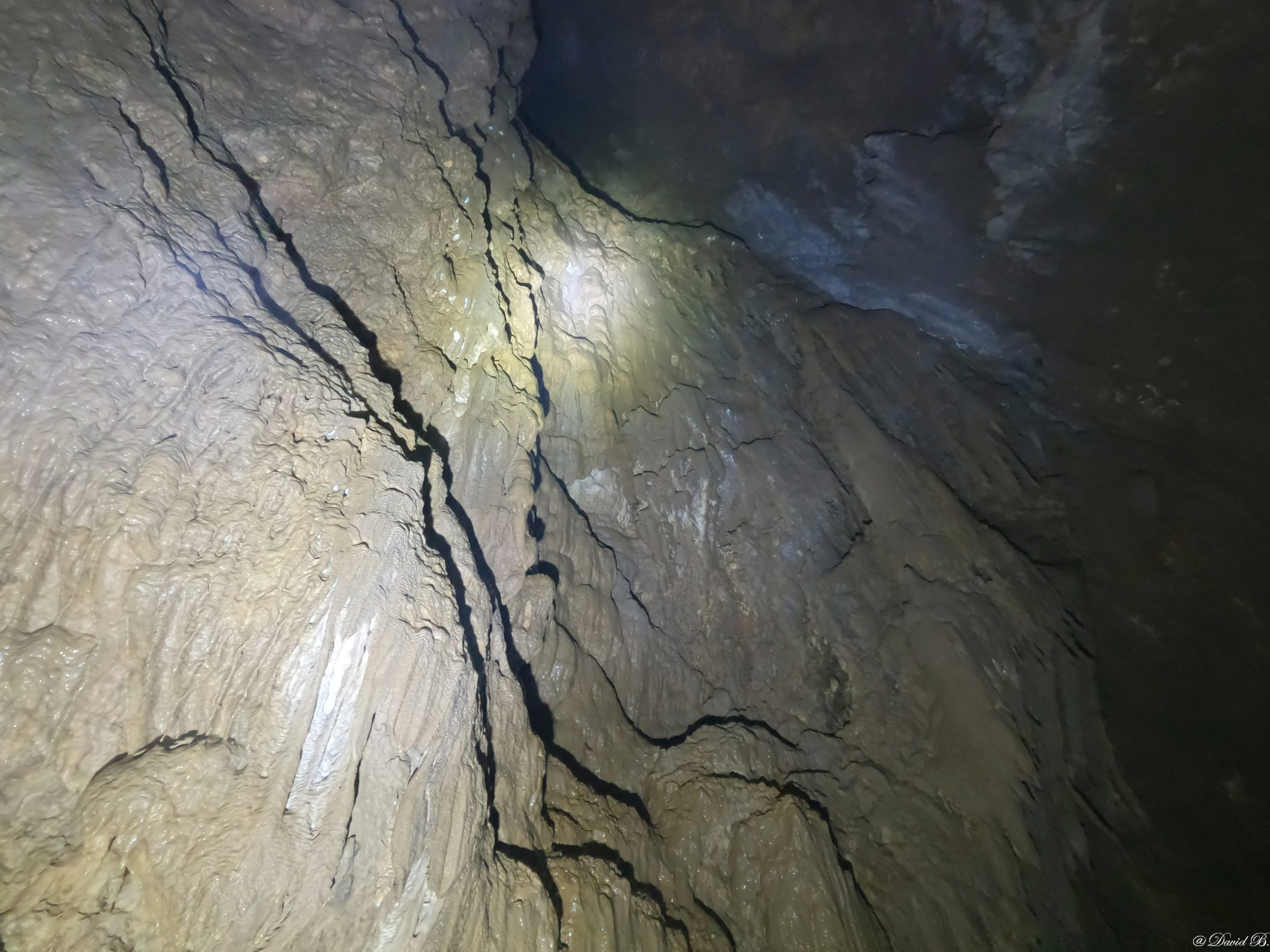
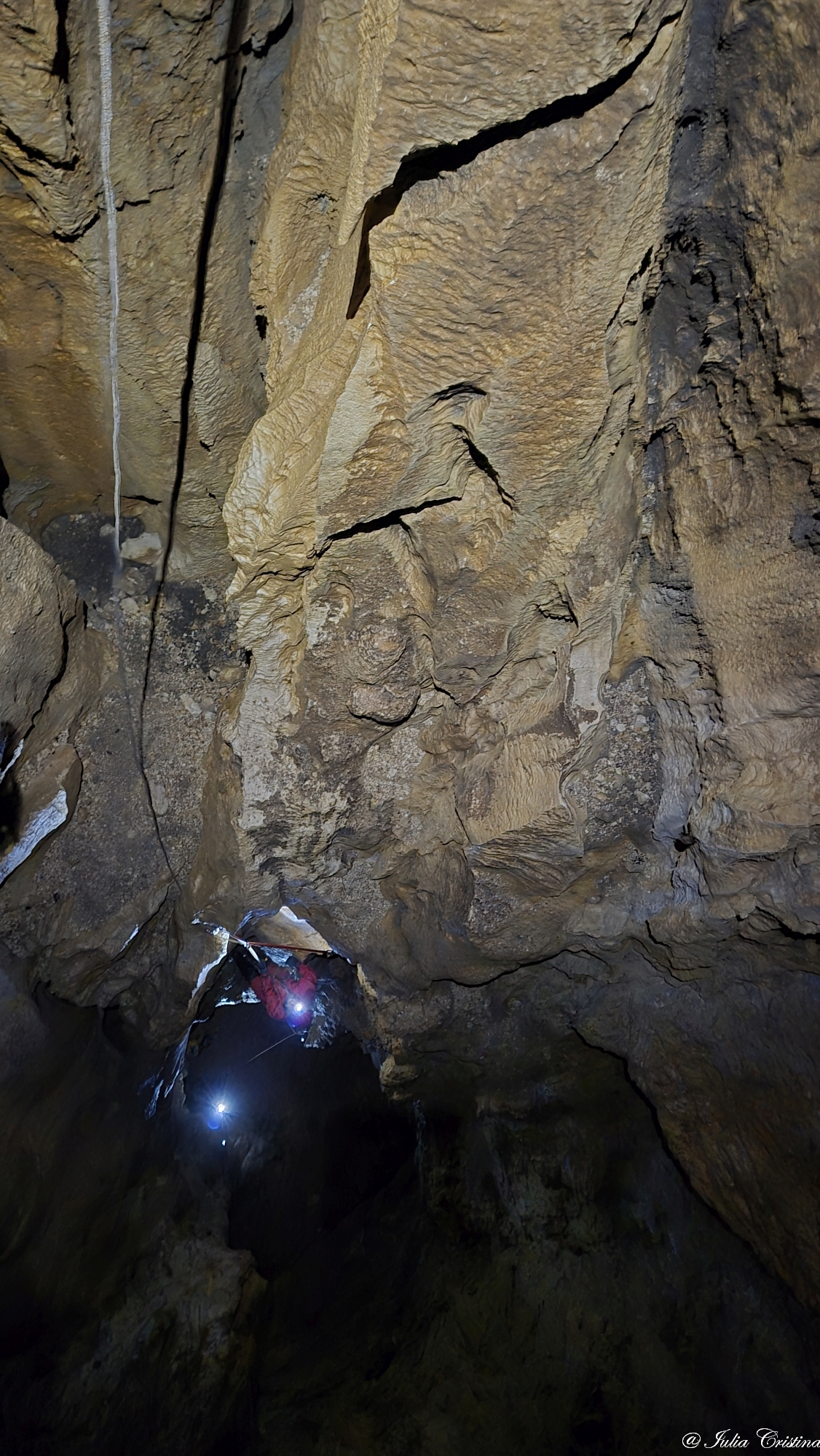
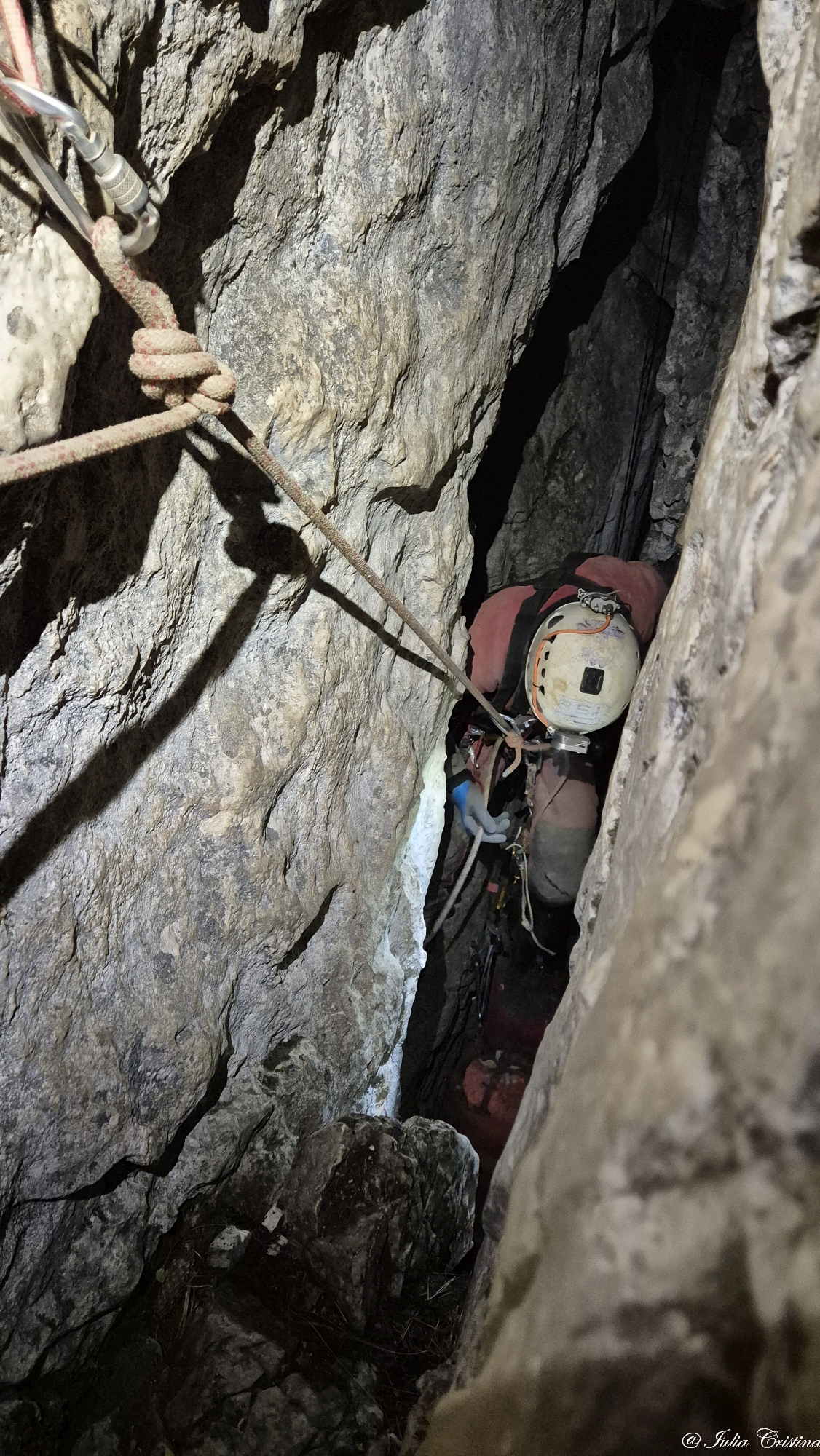
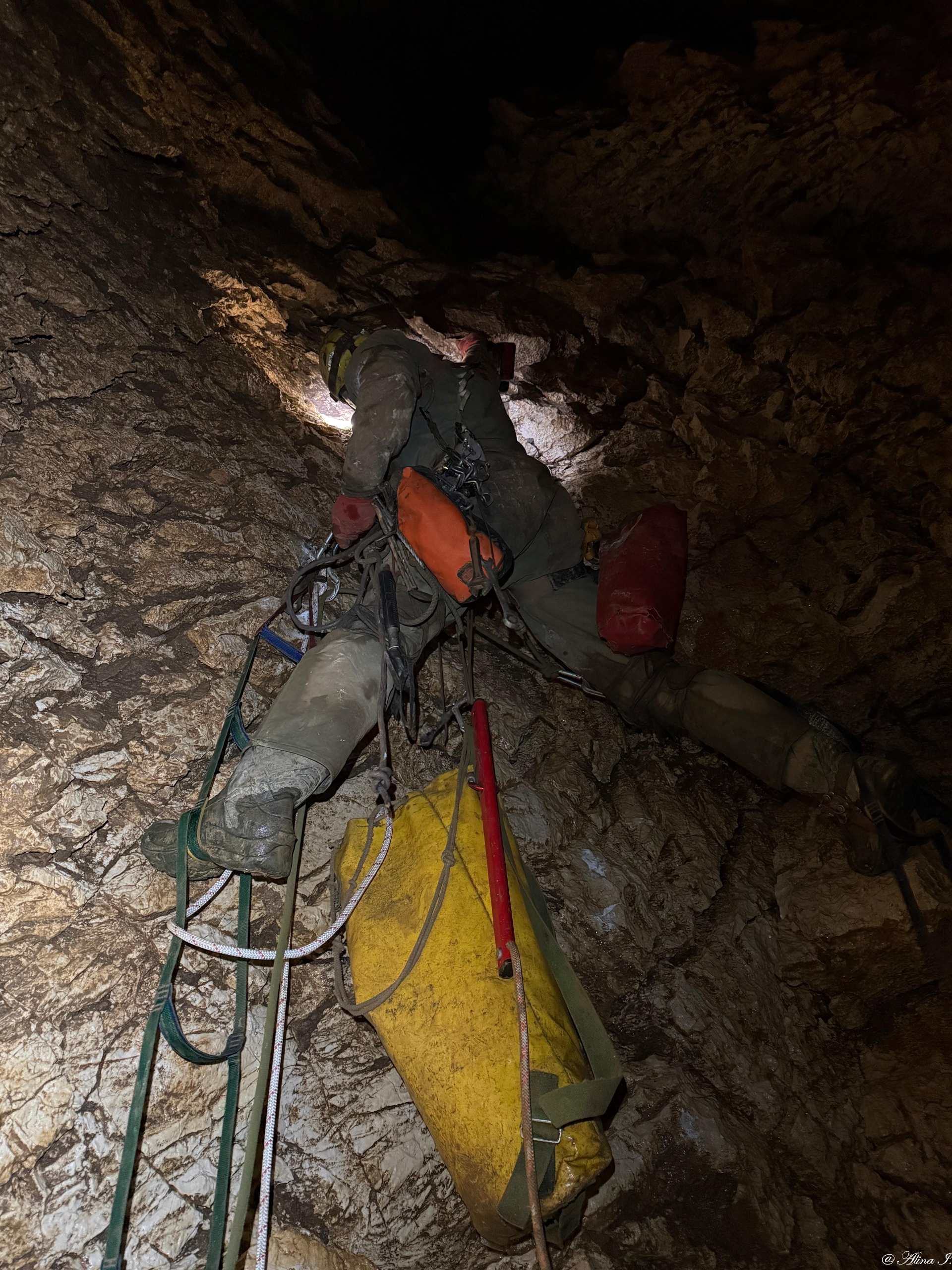
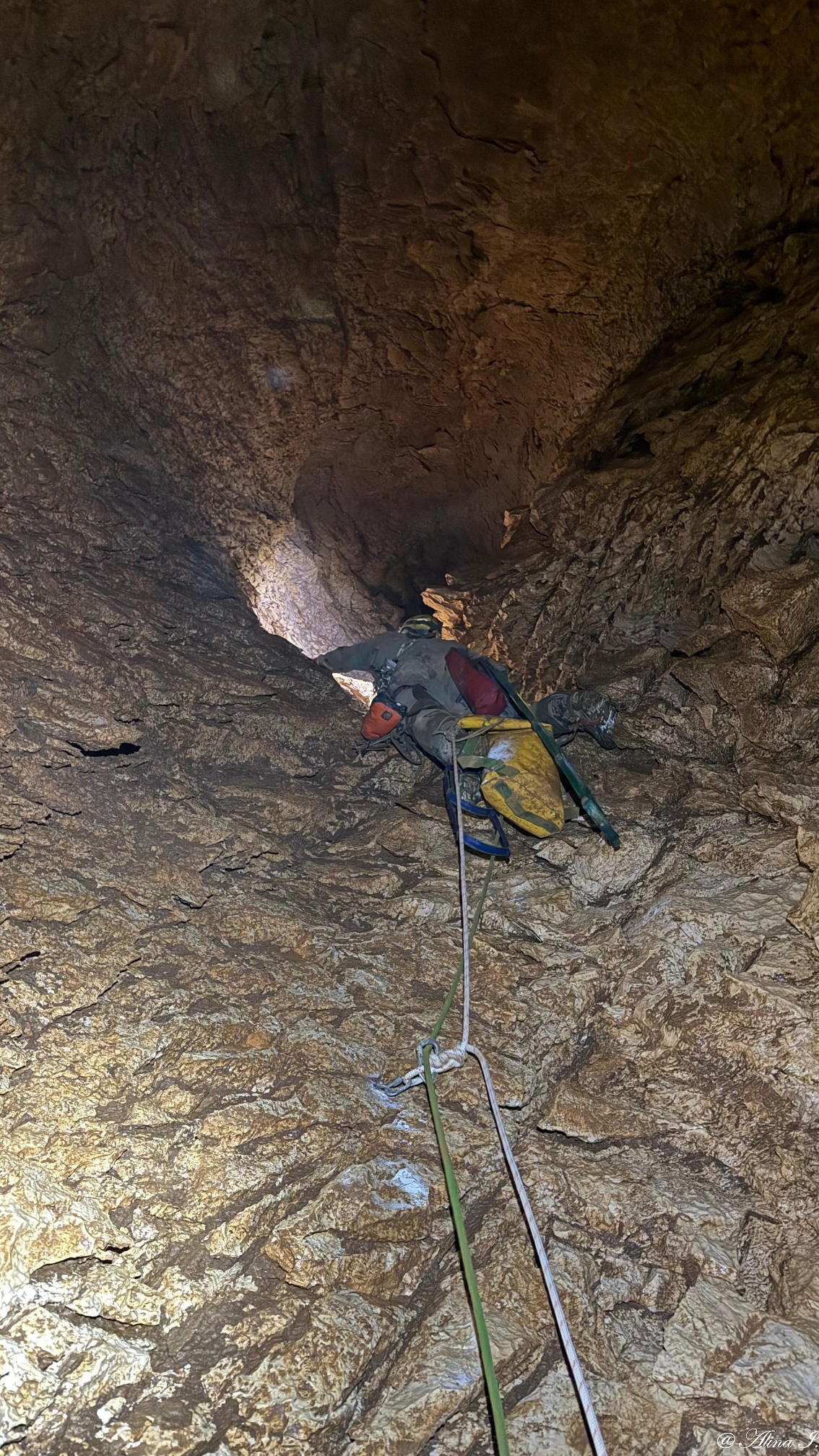
In the Walter Gutt Shaft area, at approximately −450 m, David Bouffard and support teams completed two demanding underground climbing trips. These involved climbing high in the shaft and making exposed traverses across loose rock to investigate possible continuations. The climbs reached two short, narrow passages, allowing further exploration and surveying of the upper part of the shaft. Over three days, approximately 25 m of new passage was discovered and surveyed, with further leads and a possible connection to the parallel Himalaya II branch.
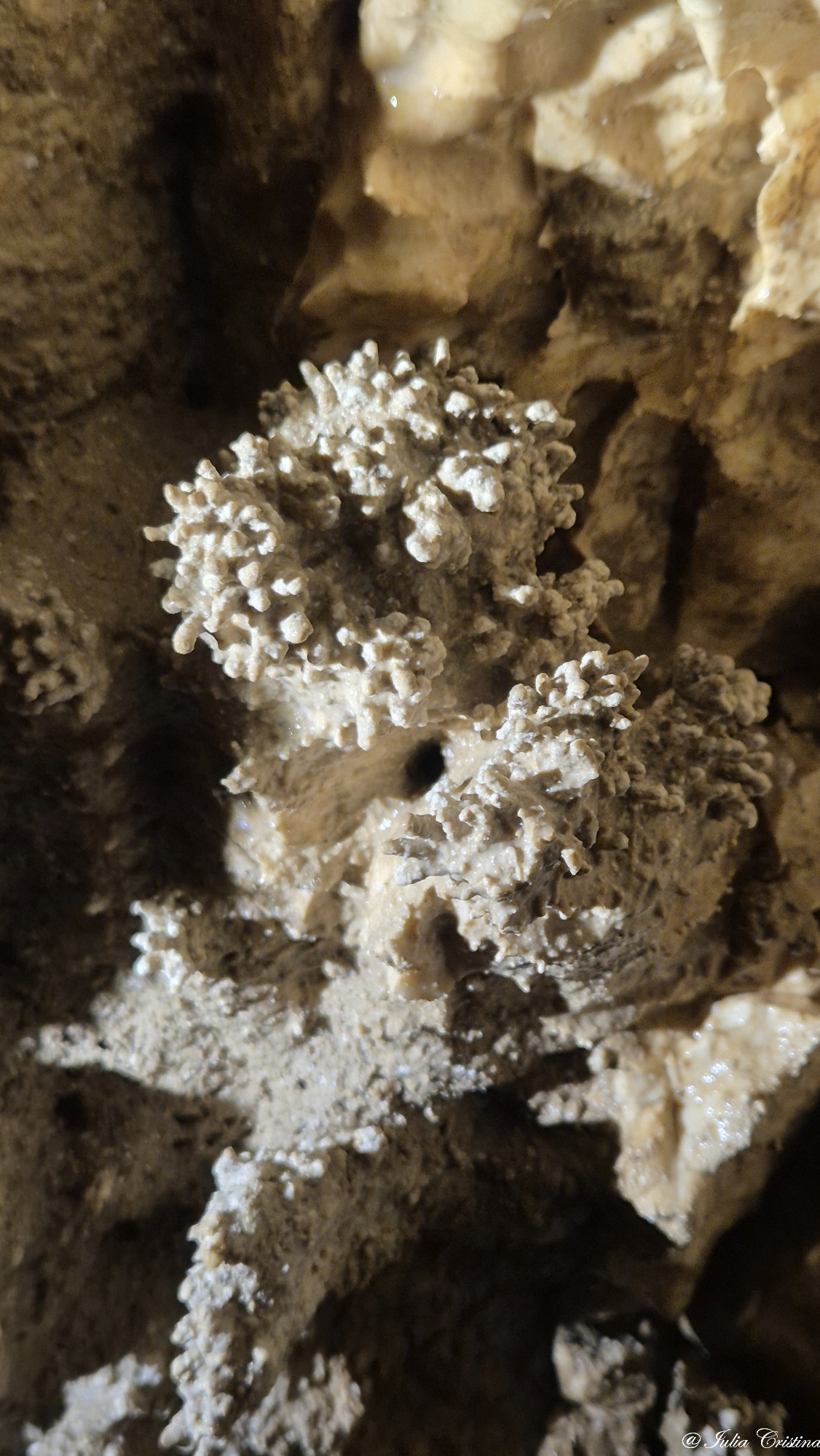
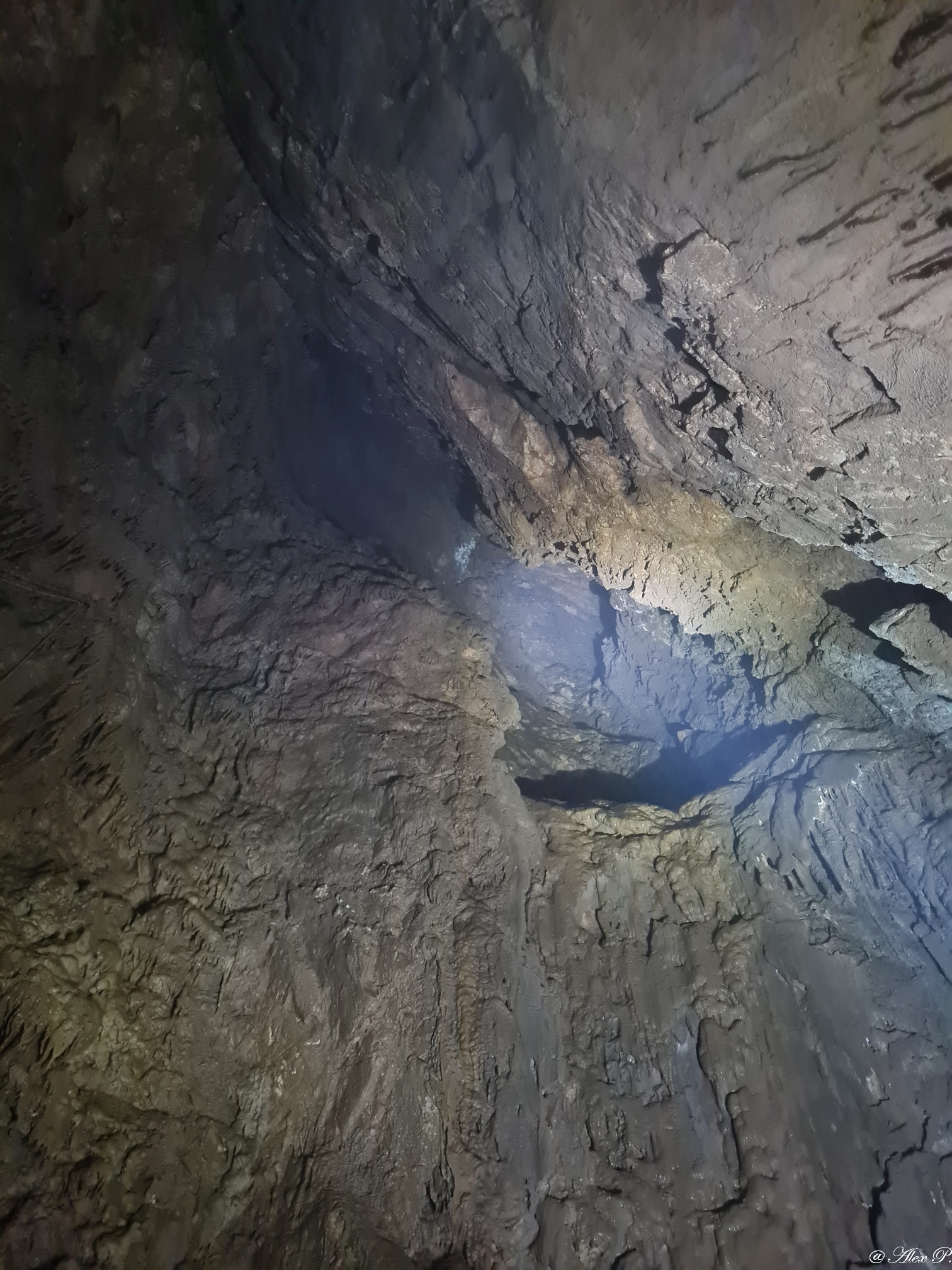
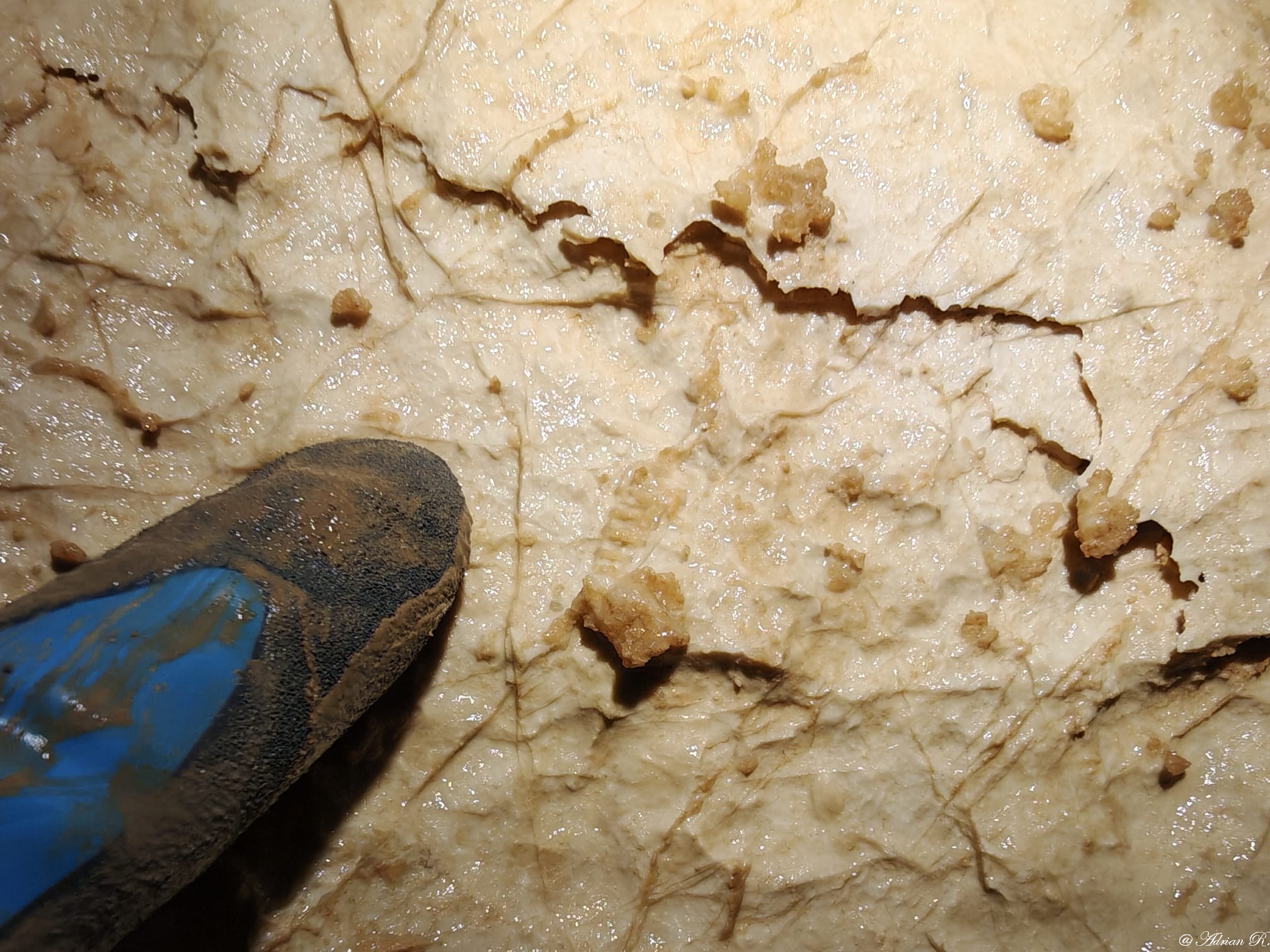
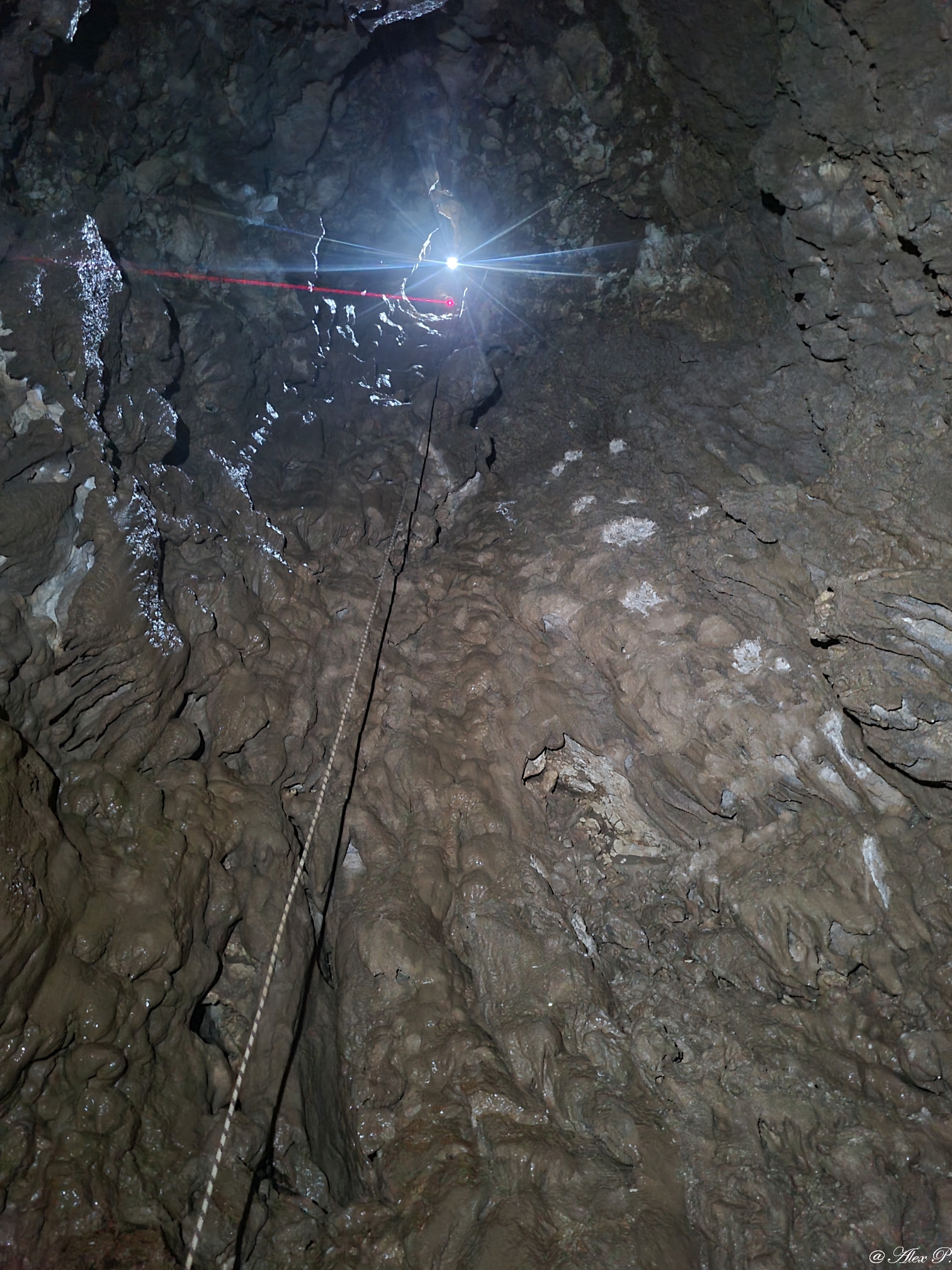
Another major lead was an ascending inlet at approximately −400 m. In the final days of the expedition, the team made a difficult climb, hampered by water running down the pitch and a thick coating of moonmilk. After 11 m of climbing, a window gave access to the base of a large new shaft, at least 30 m high. A further approximately 10 m was climbed on one wall, but the top of the shaft remained out of sight.
The newly explored section was surveyed during the final exit. The discovery supports the possibility of another substantial parallel branch. The size of the passages and the active water flow make this a particularly promising lead for future trips.
A small inlet near −790 m was also pushed, but closed down after a further 10 m of ascending narrow vertical passage.
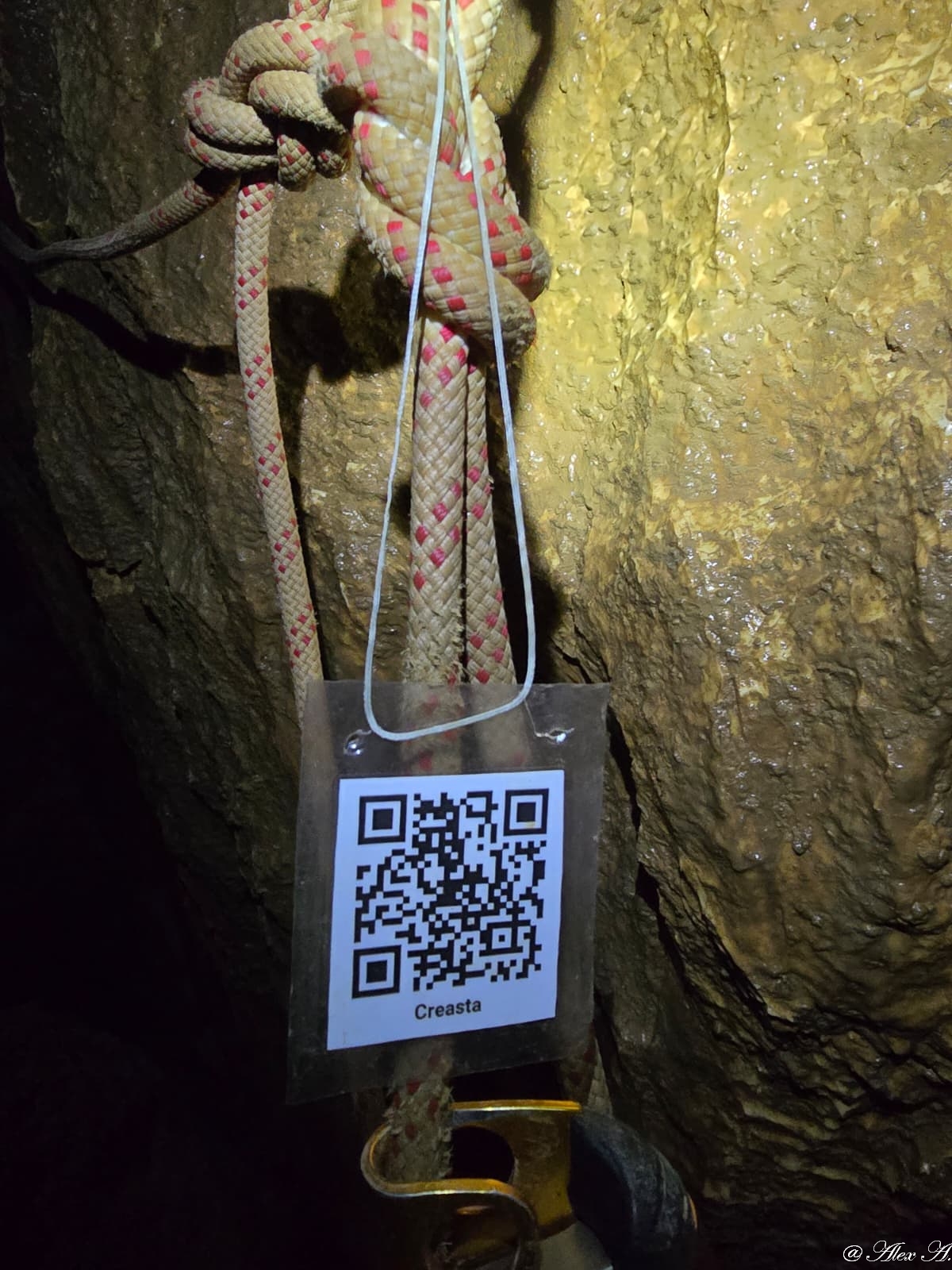
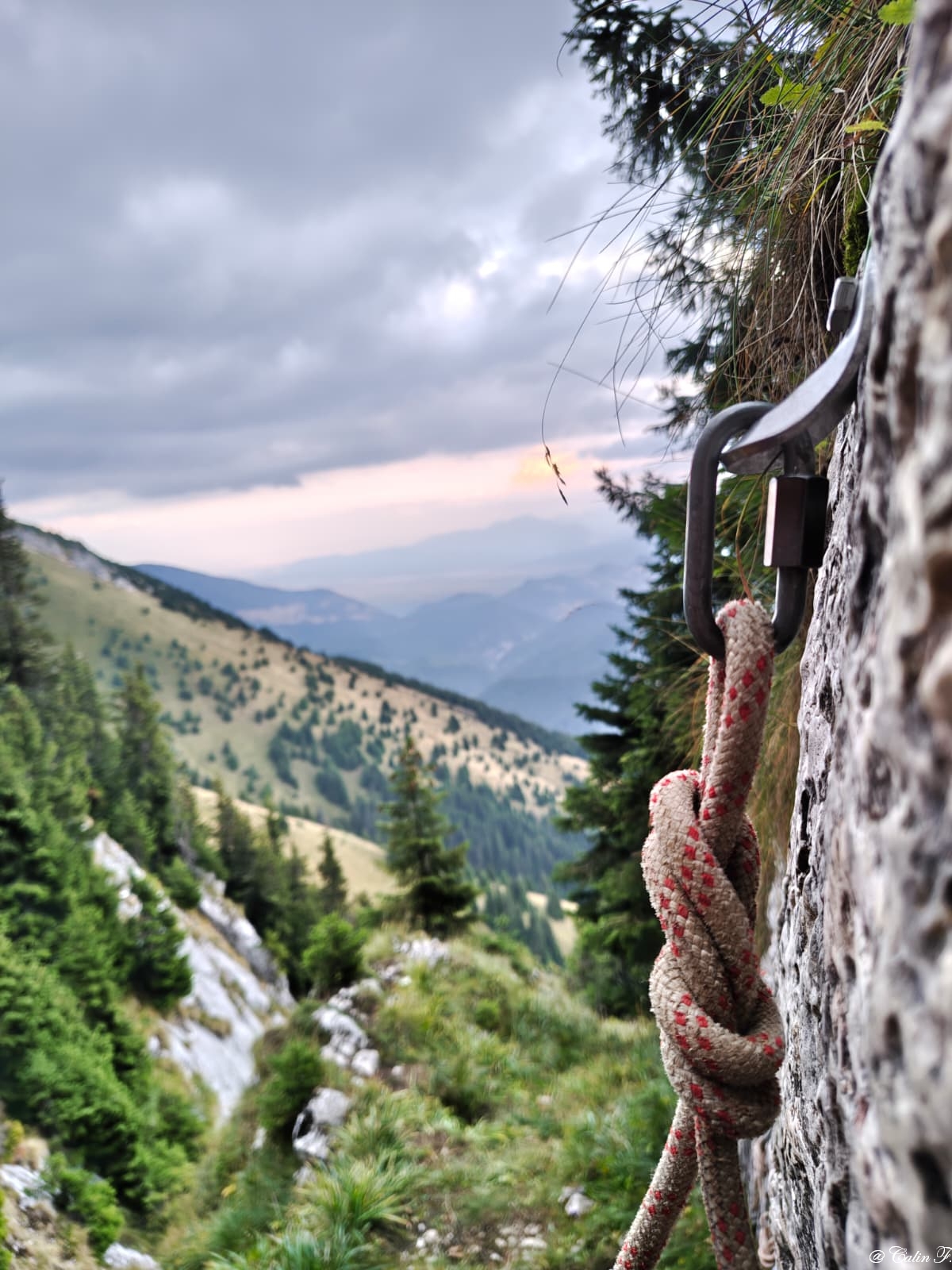
Digging was carried out below the −540 m bivouac. Rigging was also renewed or improved in several parts of the cave, including around −35 m, in the Himalaya Shaft, and in the Walter Gutt Shaft.
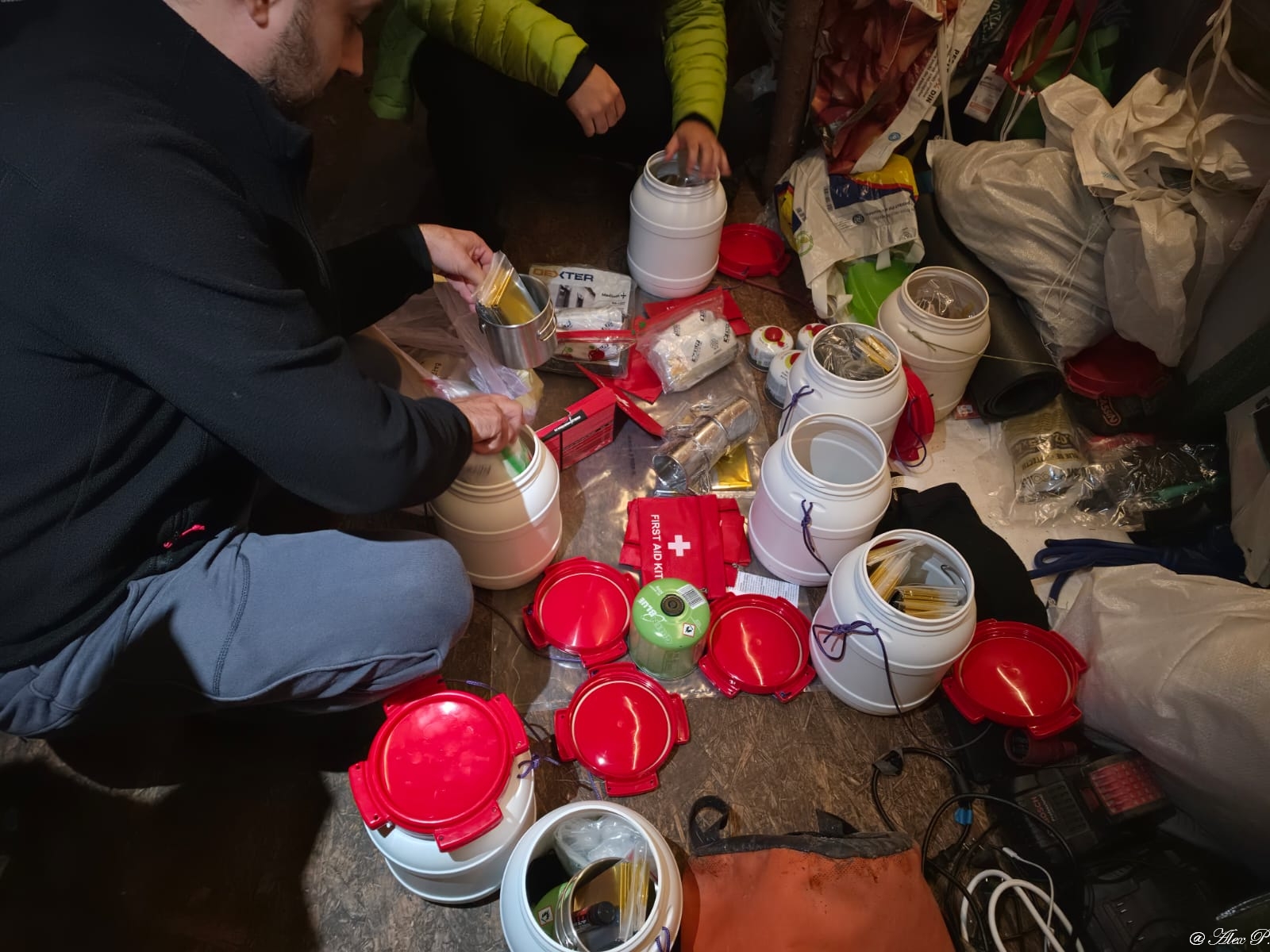
Emergency and first-aid caches were set up at different levels, and the underground bivouacs were maintained. The cave telephone line was repaired and extended to the terminal sump at −815 m, enabling communication between the surface, the bivouacs, and the deep teams.
Experimental temperature logging was carried out over several days at different levels using data loggers, and permanent temperature sensors were installed at two locations. Communication tests and observations of underground conditions were also made; the temperature records may help characterise the cave’s microclimate and inform future exploration.
An Expedition Spanning the Mountain’s Full Vertical Range
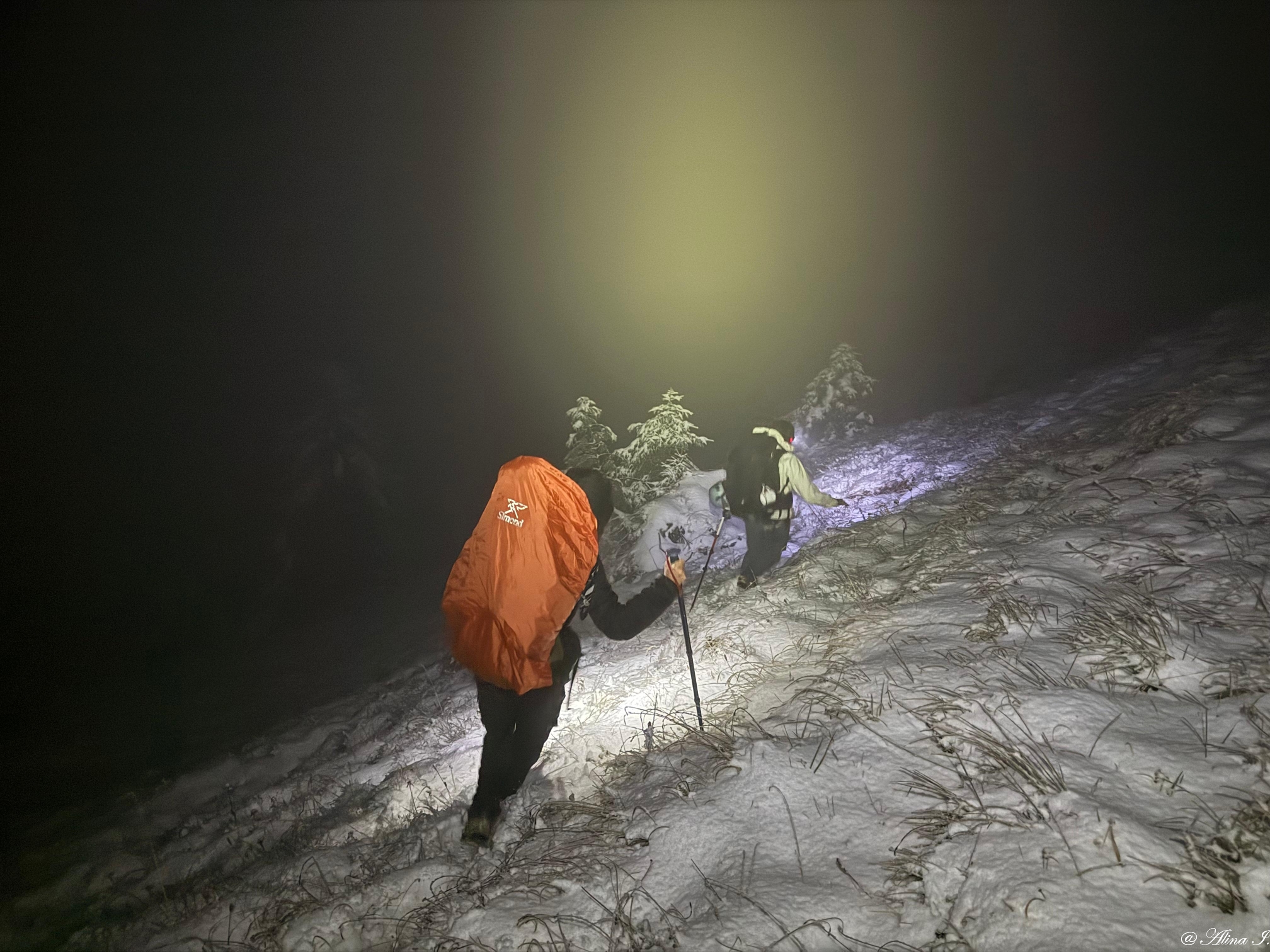
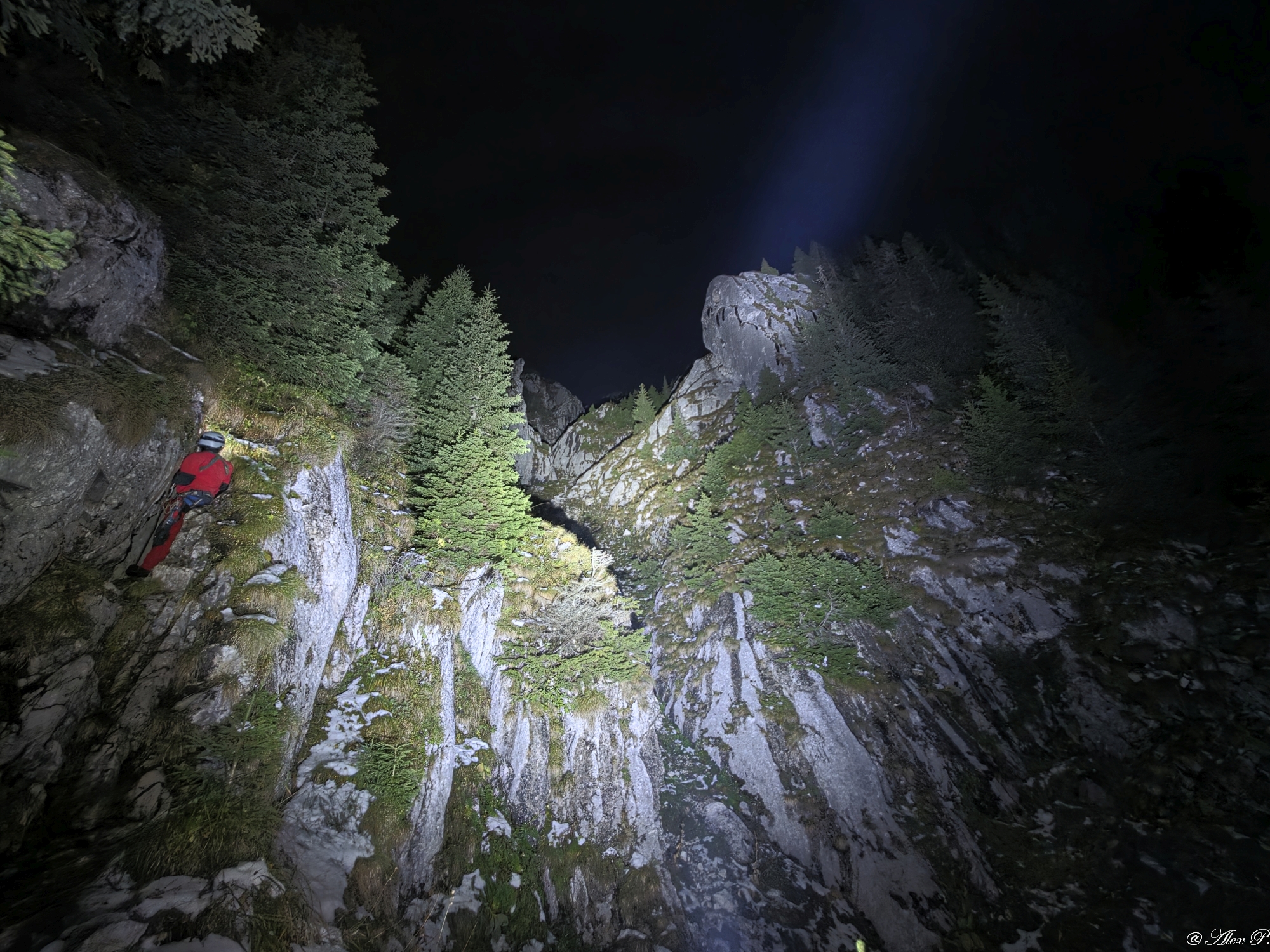
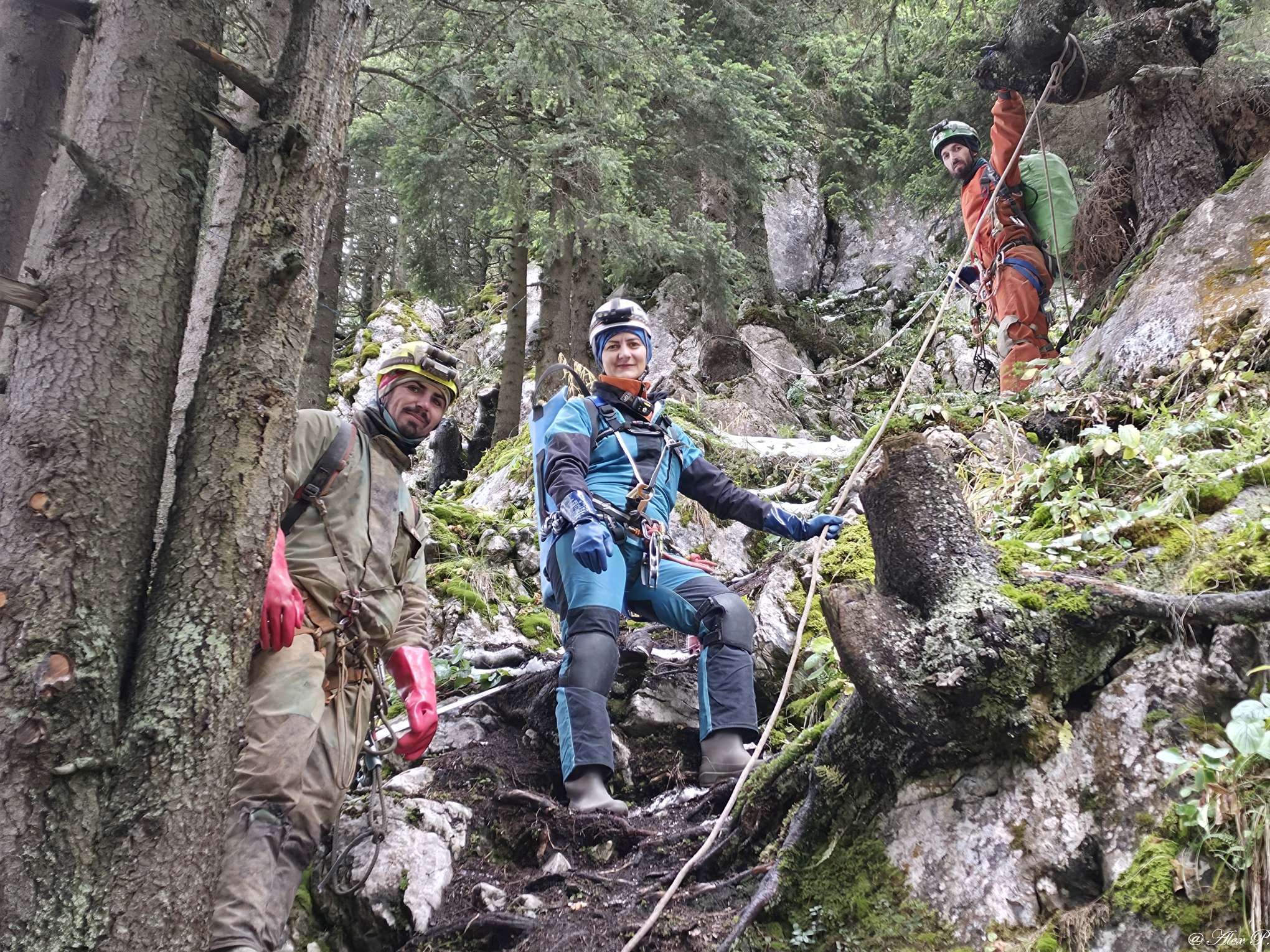
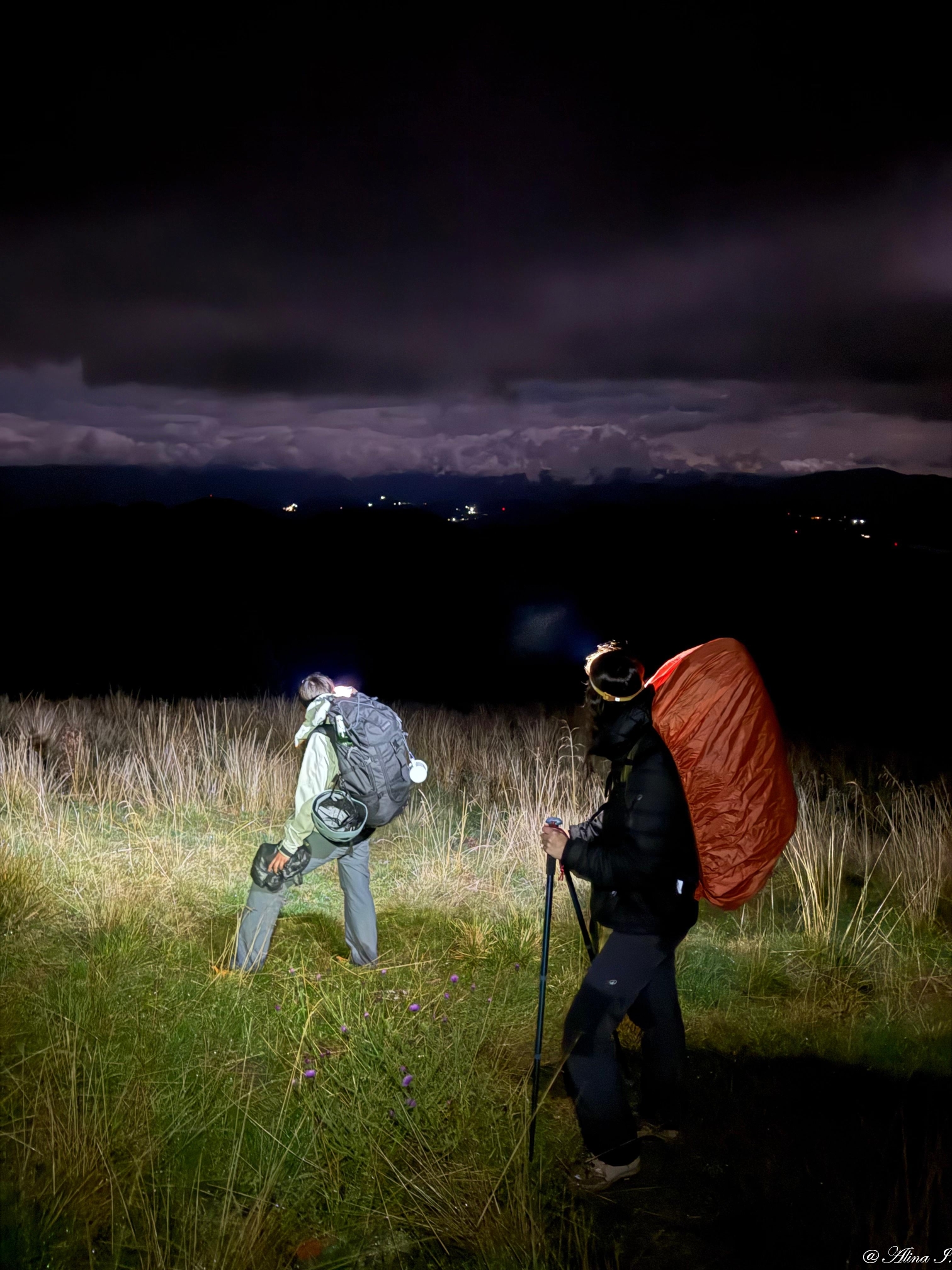
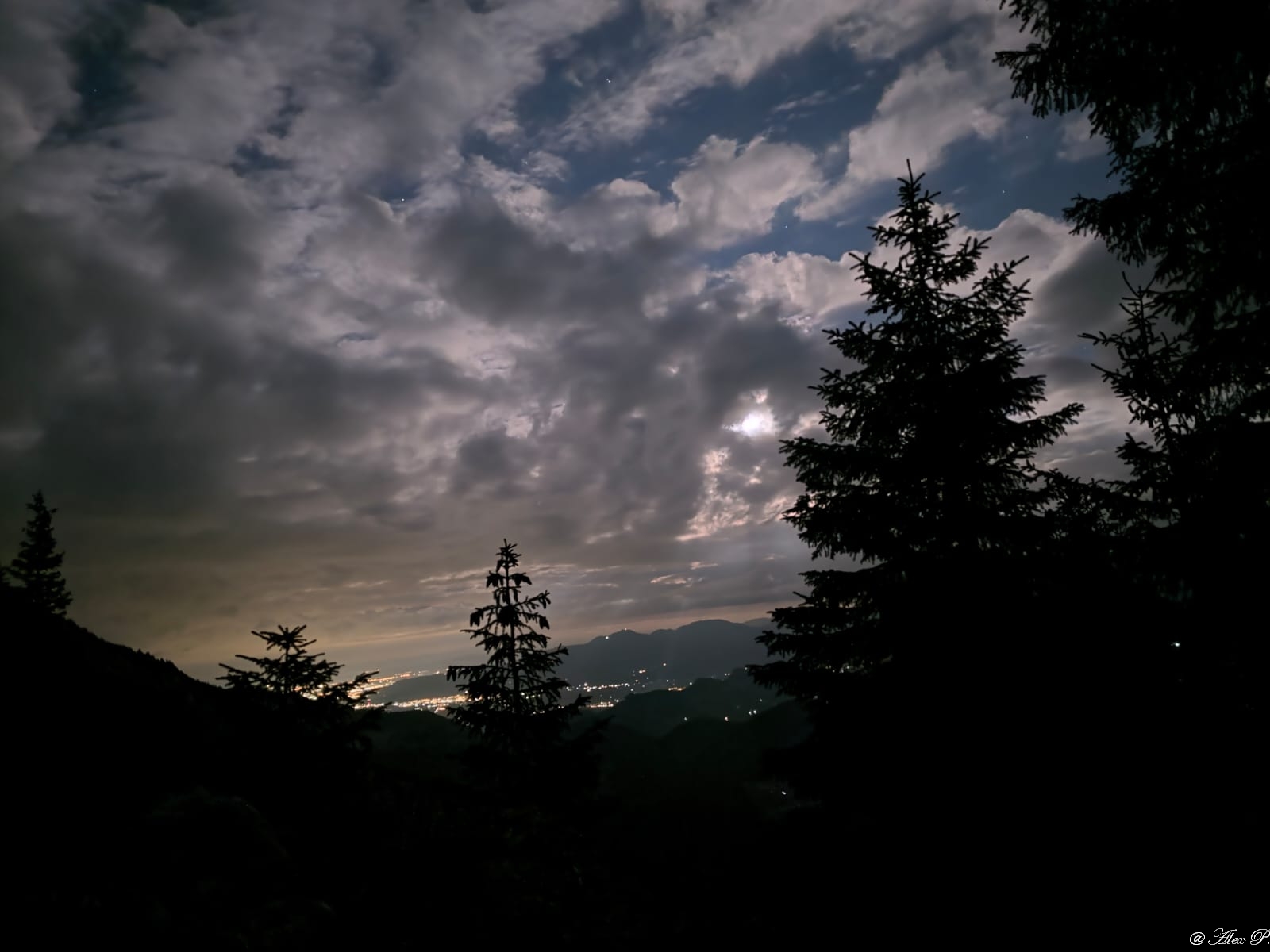
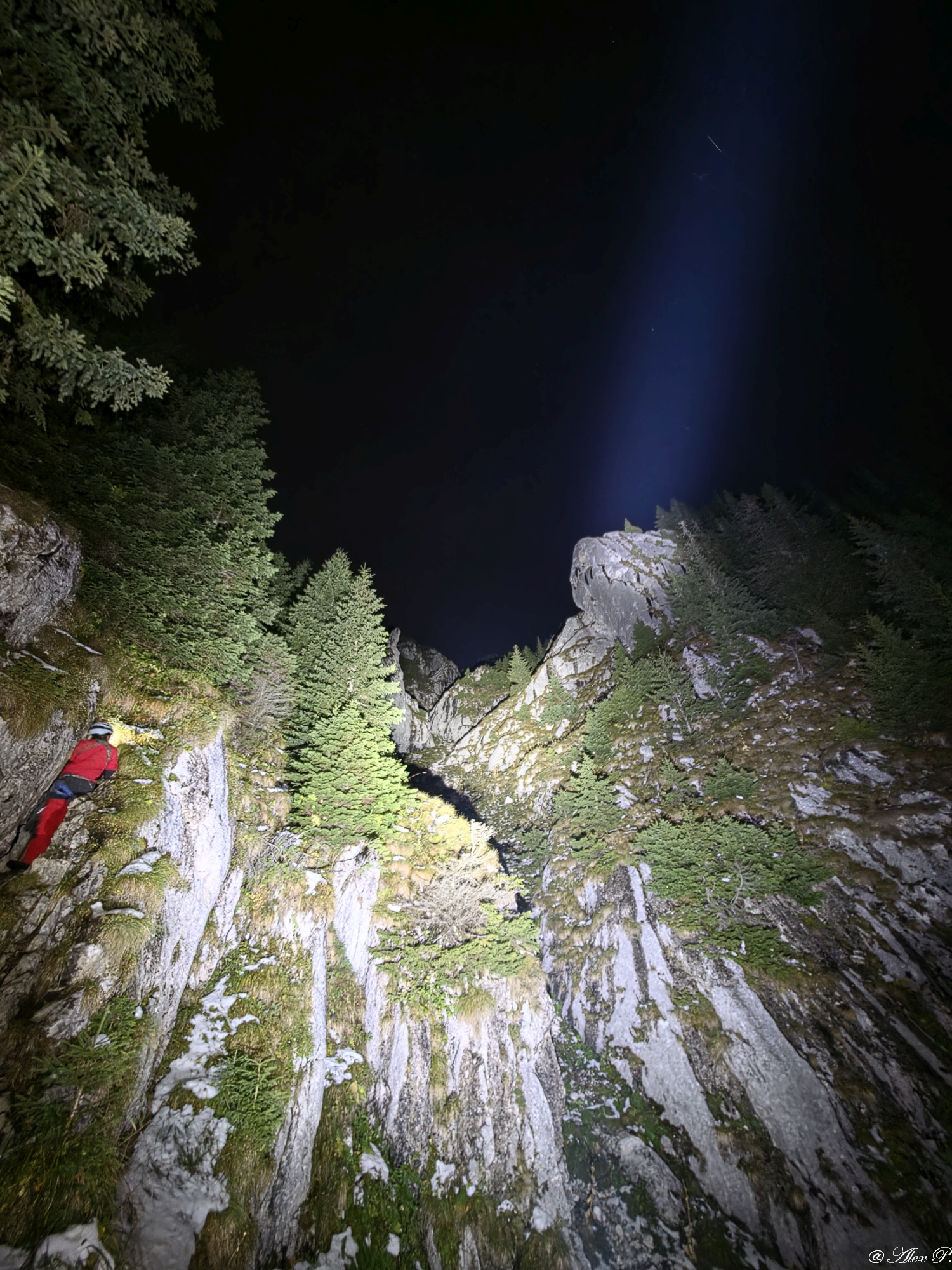
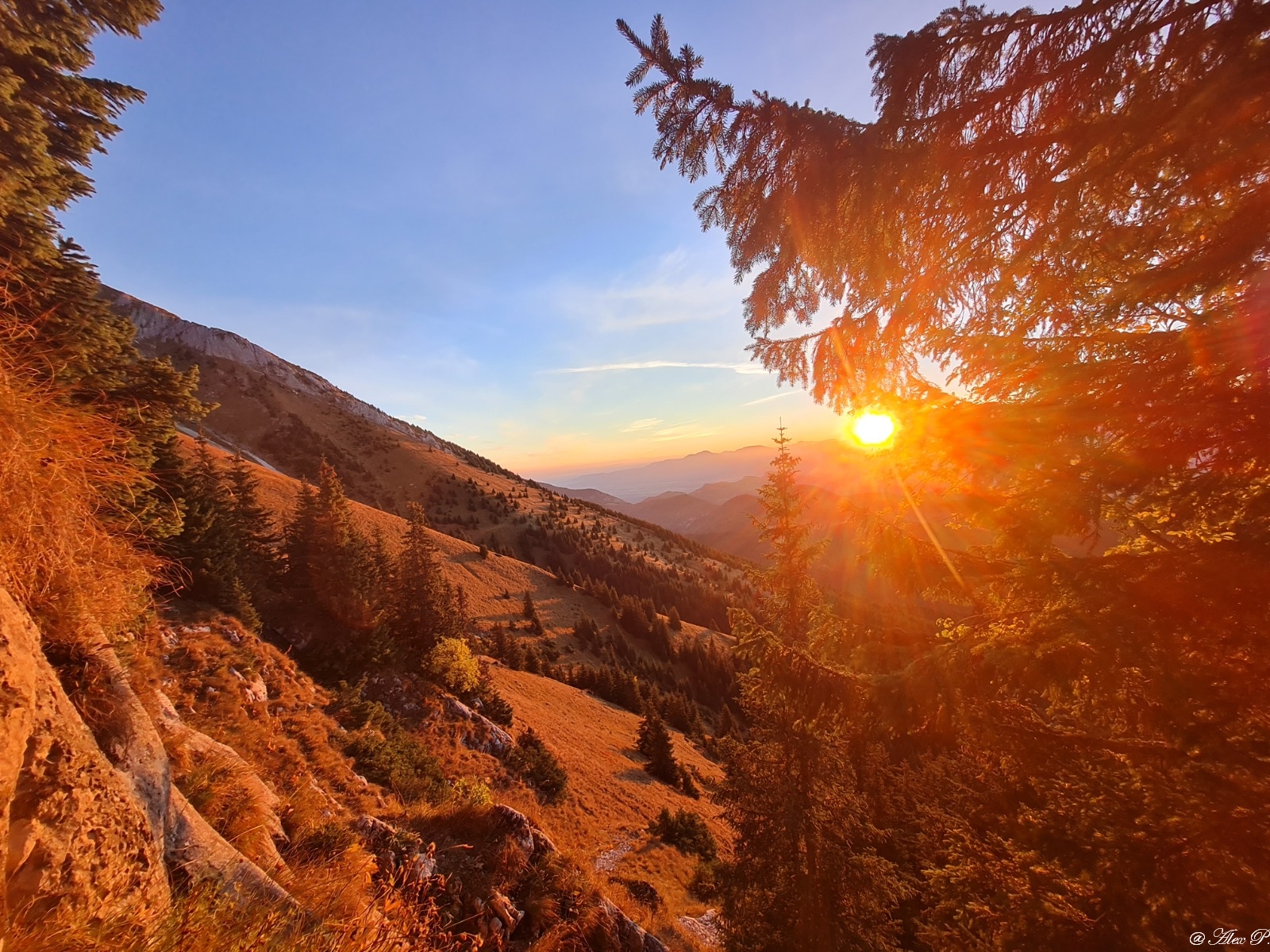
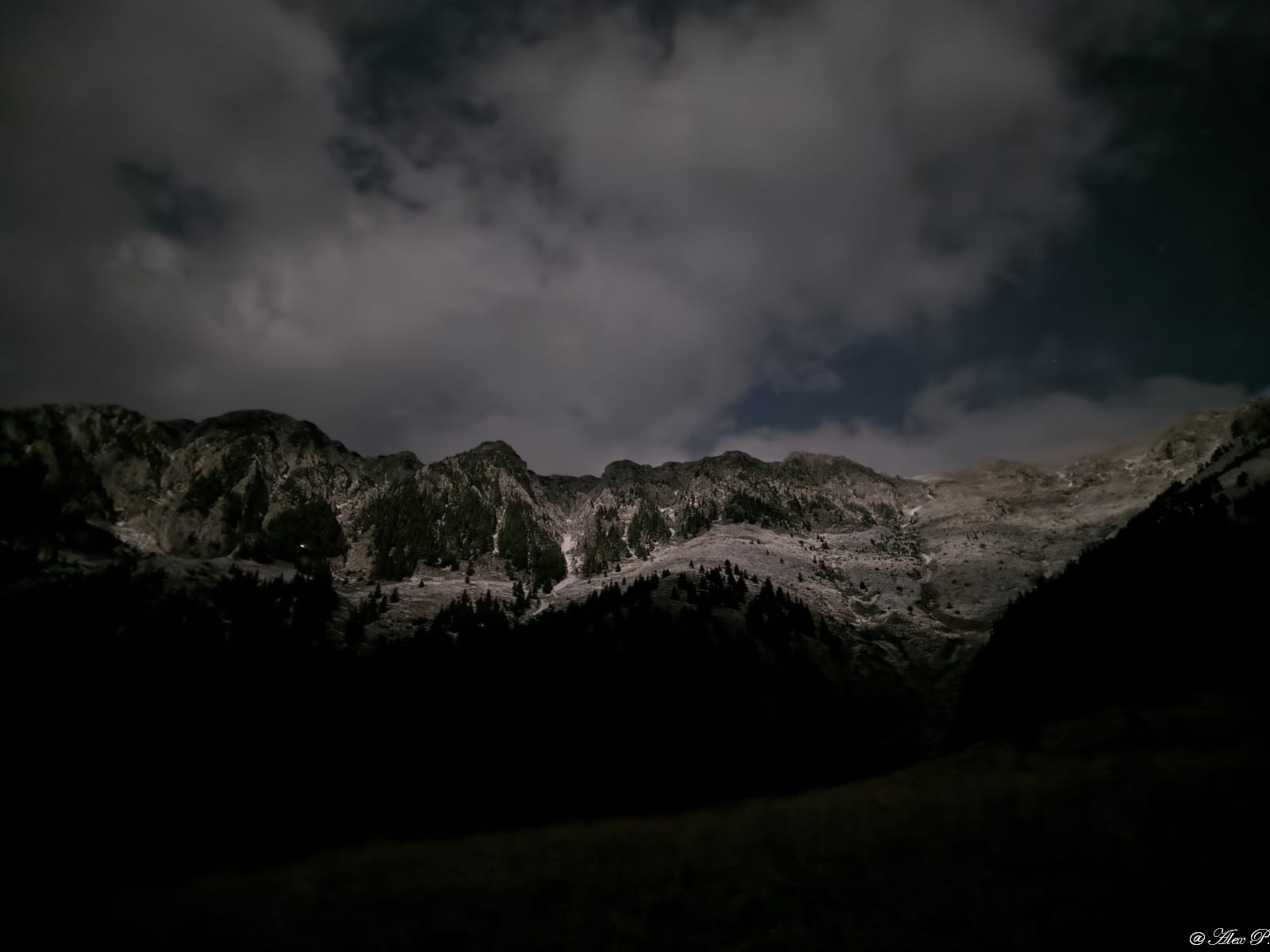
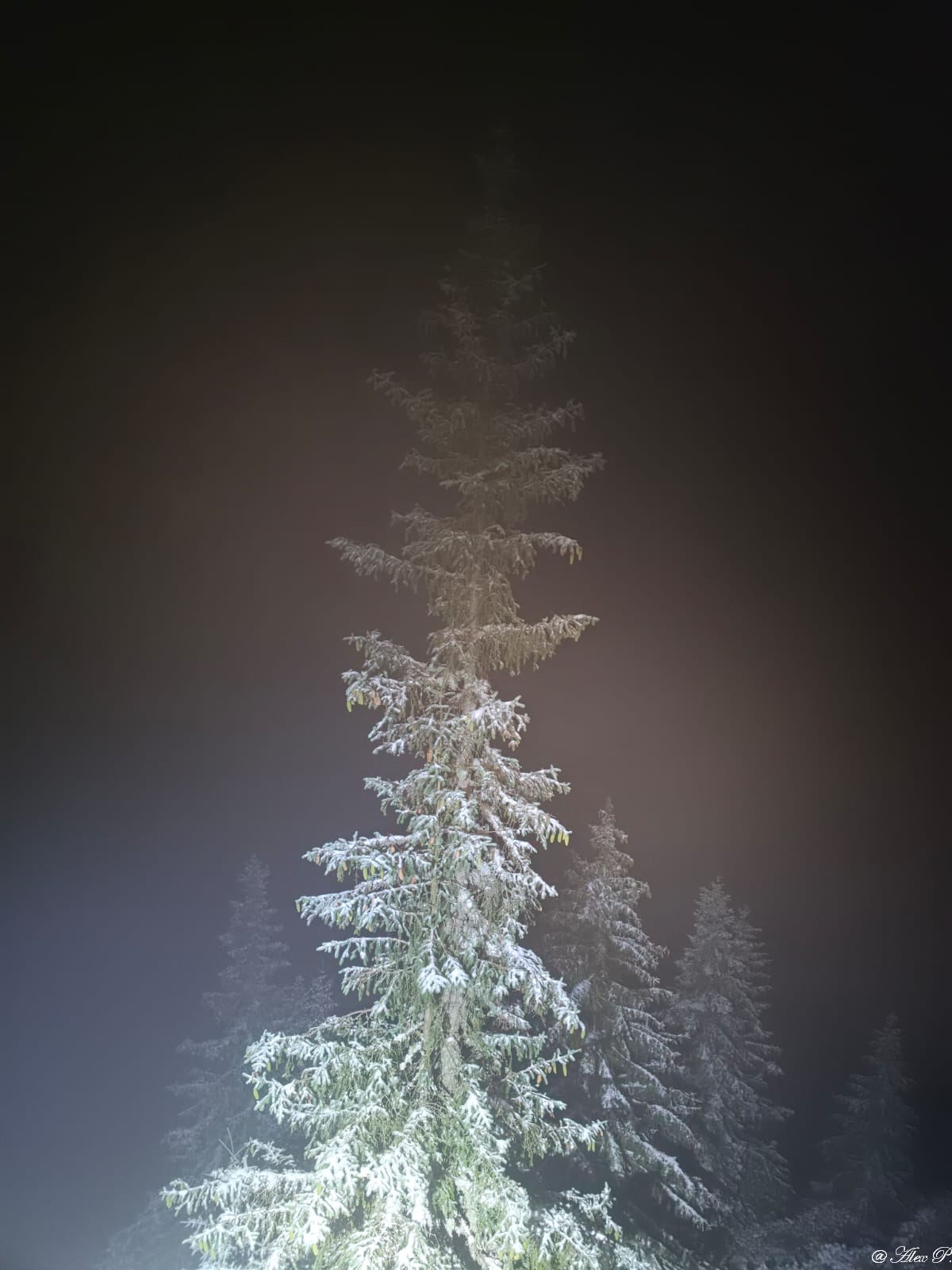
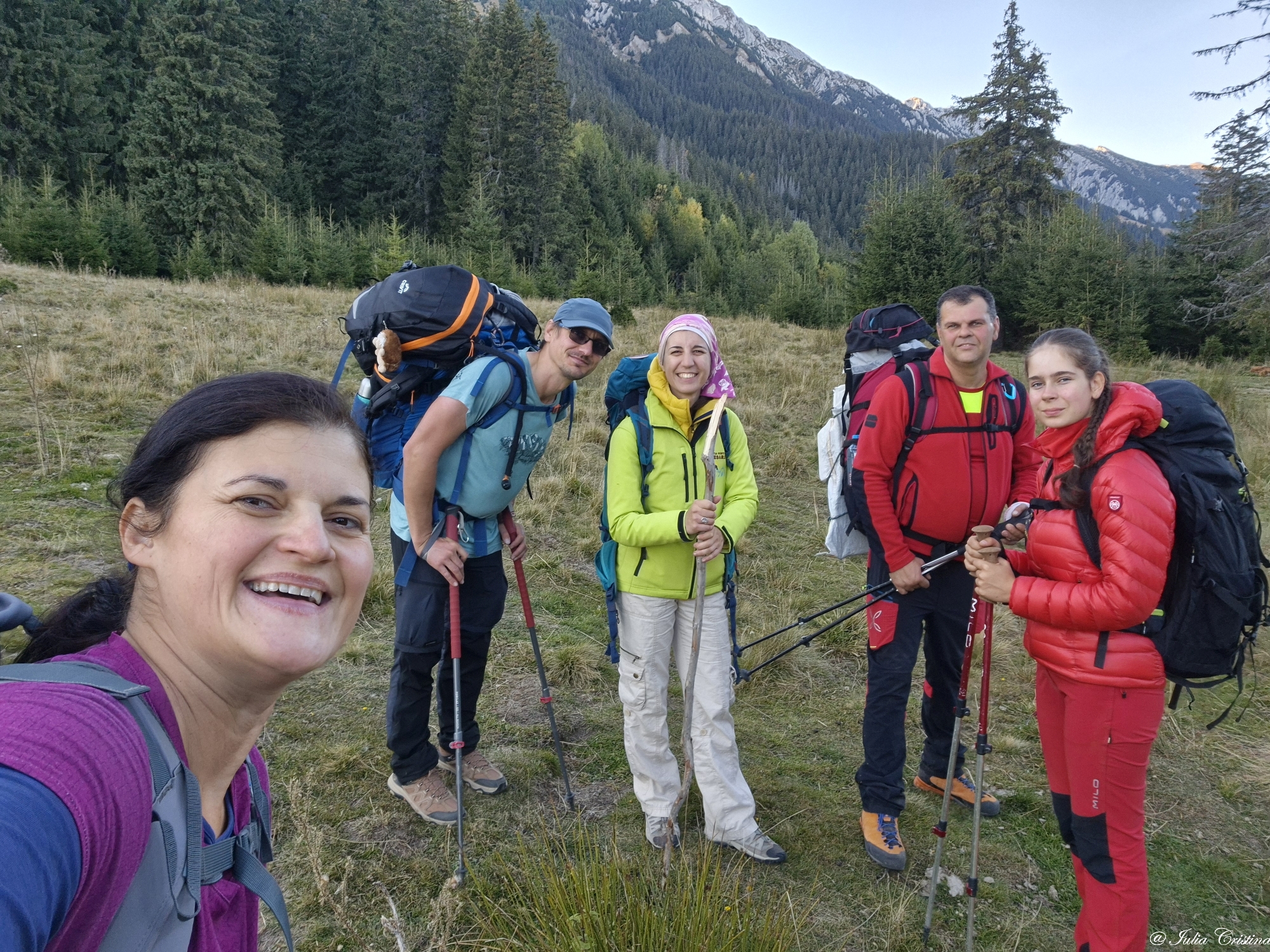
The cave entrance lies at 1,922 m above sea level, on the steep karst escarpment of the Piatra Craiului massif eastern side. All expedition equipment first had to be carried from the foot of the mountain to the Speleological Refuge area and then to the entrance. From there, tackle and supplies were transported down to the exploration sites and the cave terminus.
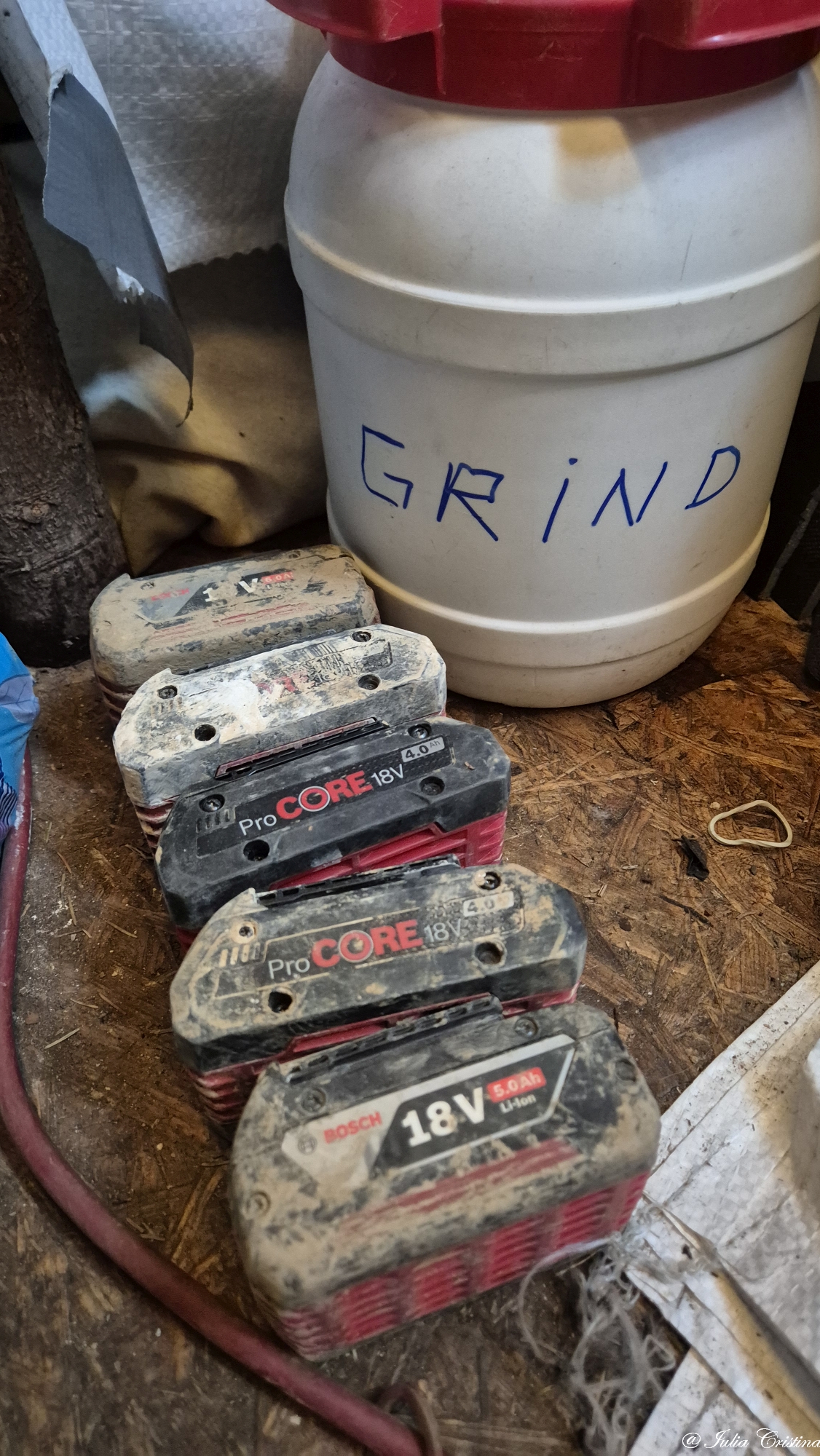
Ropes, anchors, batteries, climbing and diving gear, digging equipment, first-aid kits, food, and other supplies were repeatedly carried between the surface and the underground work sites.
Water for the surface camp had to be carried up from the foot of the mountain. Some water for underground activities and bivouacs was carried down from the −115 m level, while underground water sources were also used, with water collected and transported where needed.
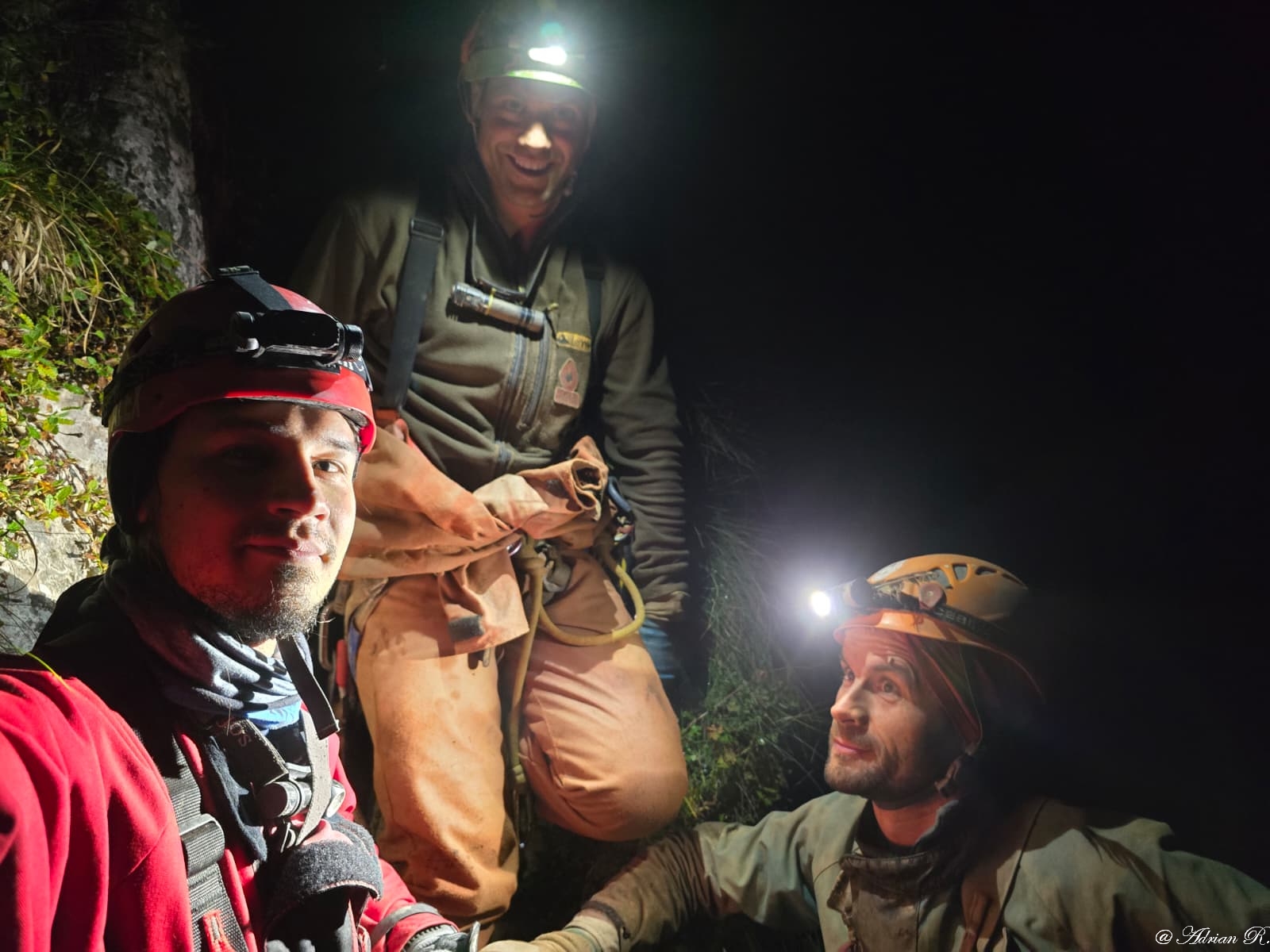
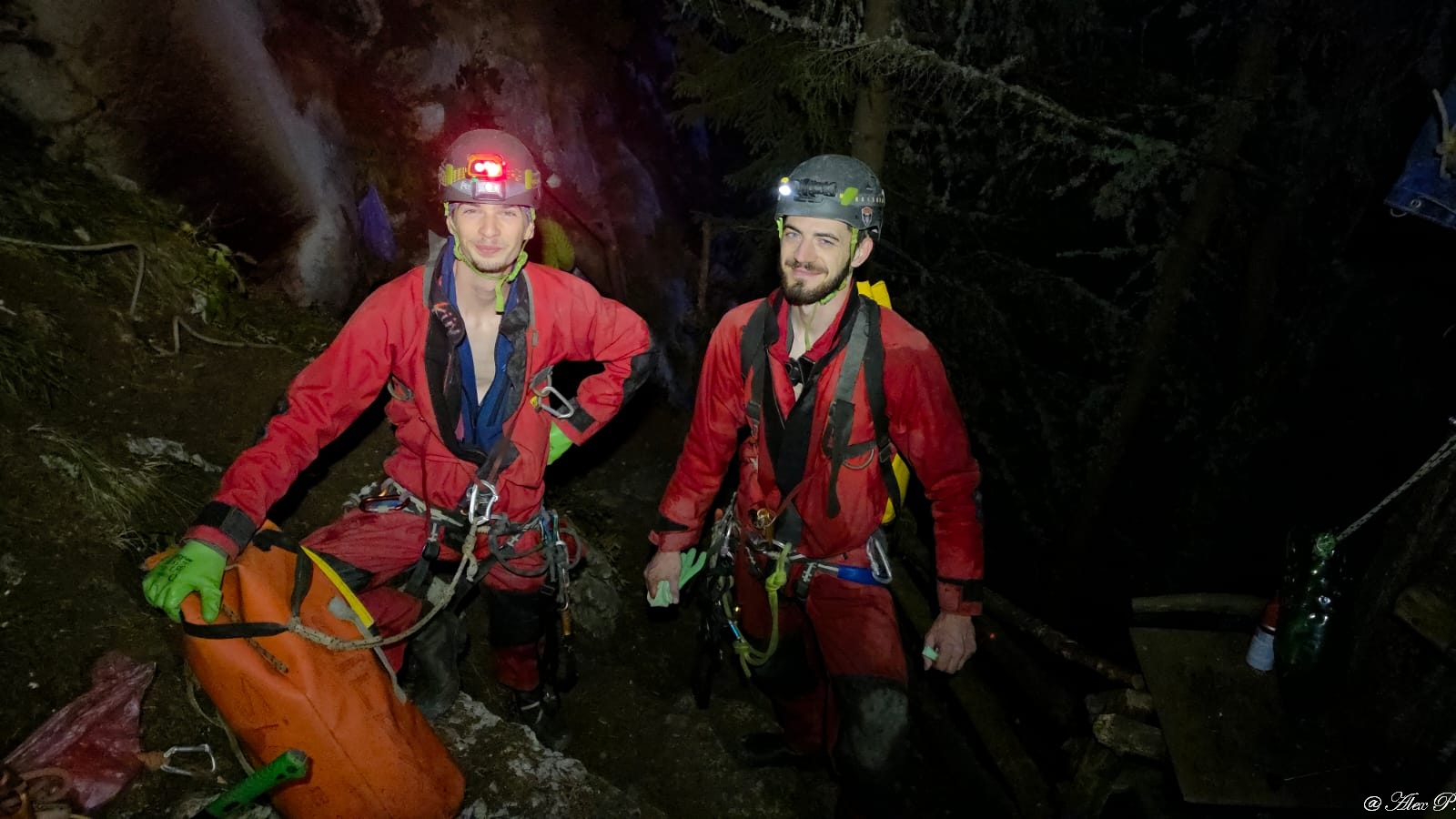
During the final days, the logistics ran in reverse as teams hauled out equipment accumulated underground over almost a month of activity. The main expedition’s withdrawal was completed on October 5, followed by further activity over the weekend of October 10–11.
The cave is demanding not only because of its long series of pitches, but also because of the cold, wet conditions. Temperatures range from approximately 3–3.5 °C near the entrance to 5.5–6 °C near the terminus, and some pitches carry running water.
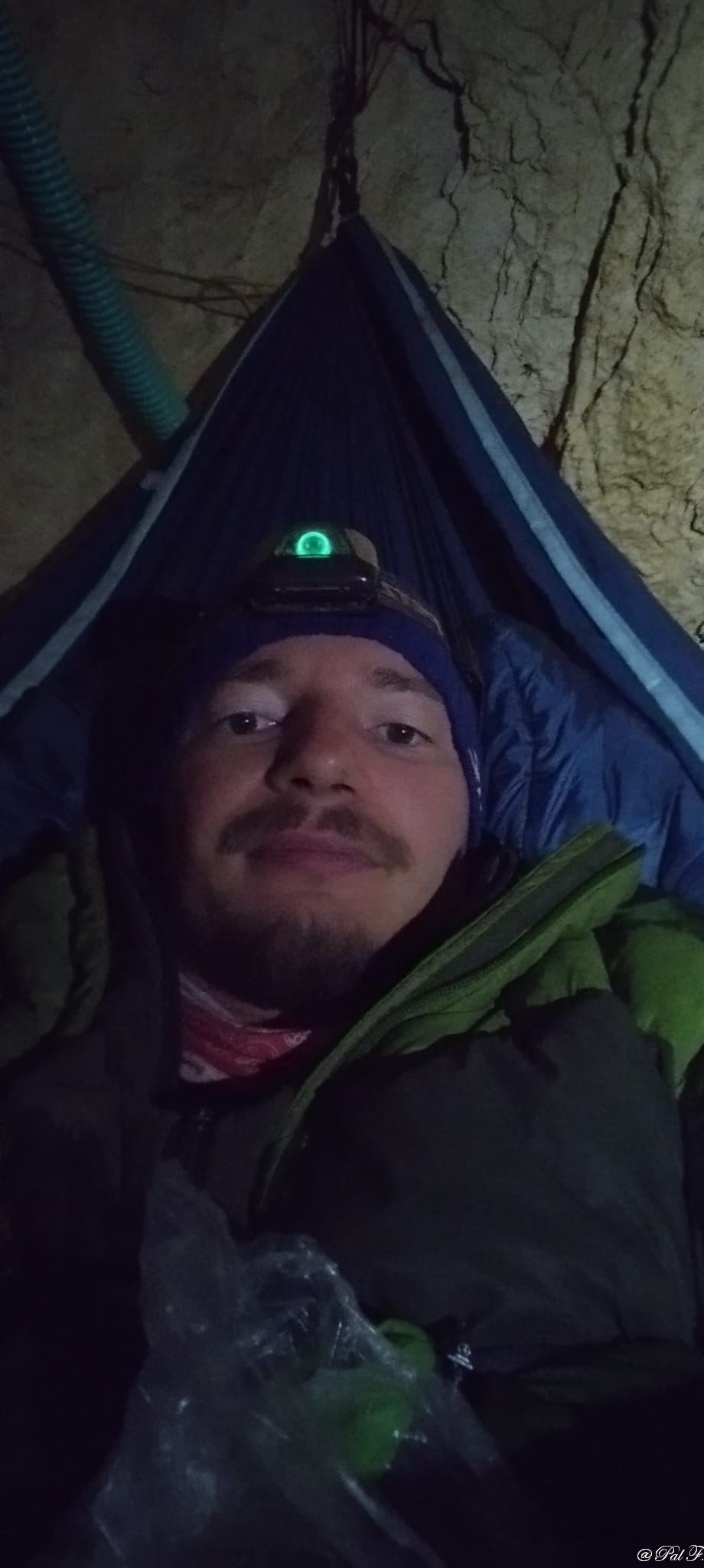
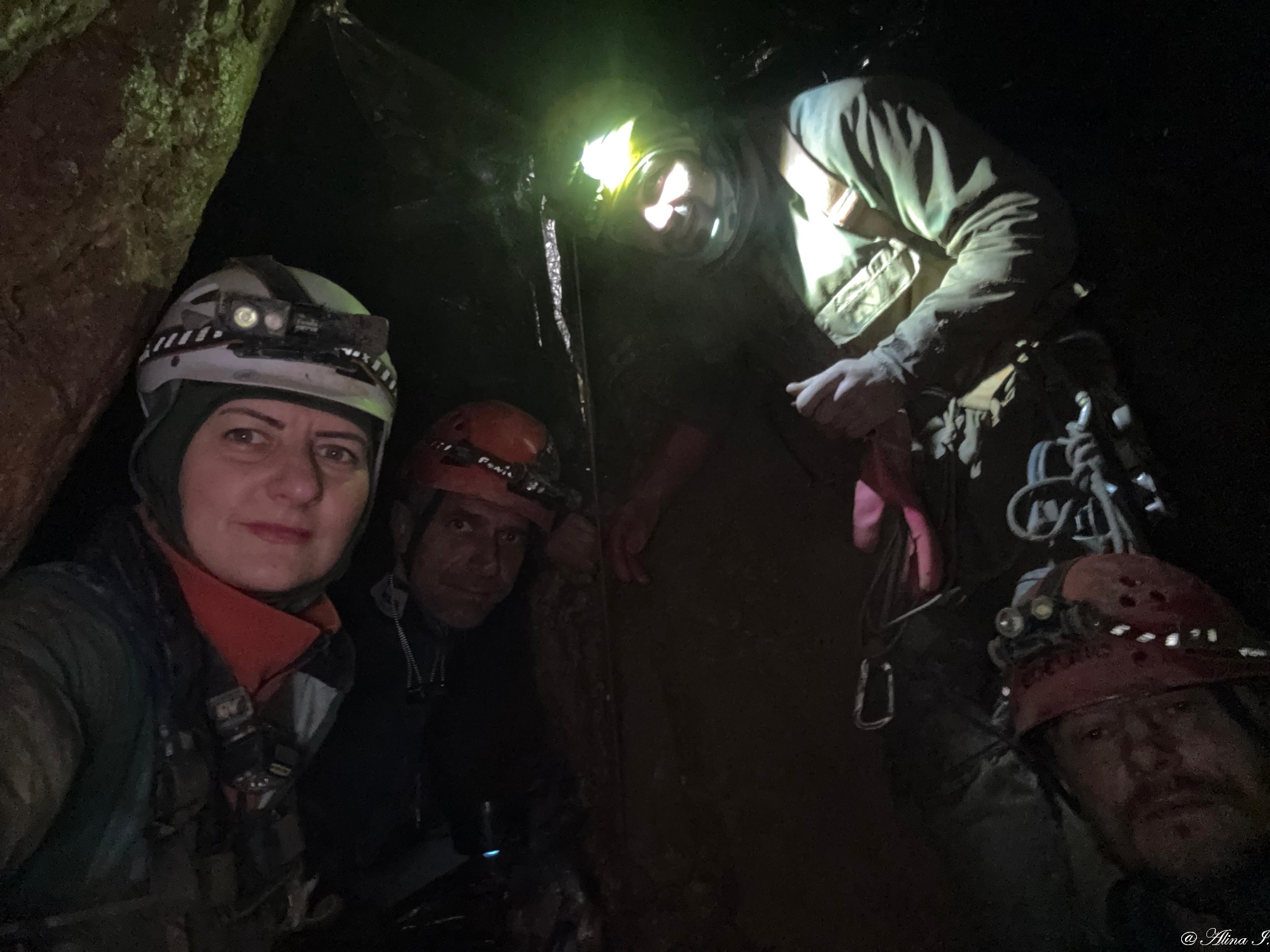
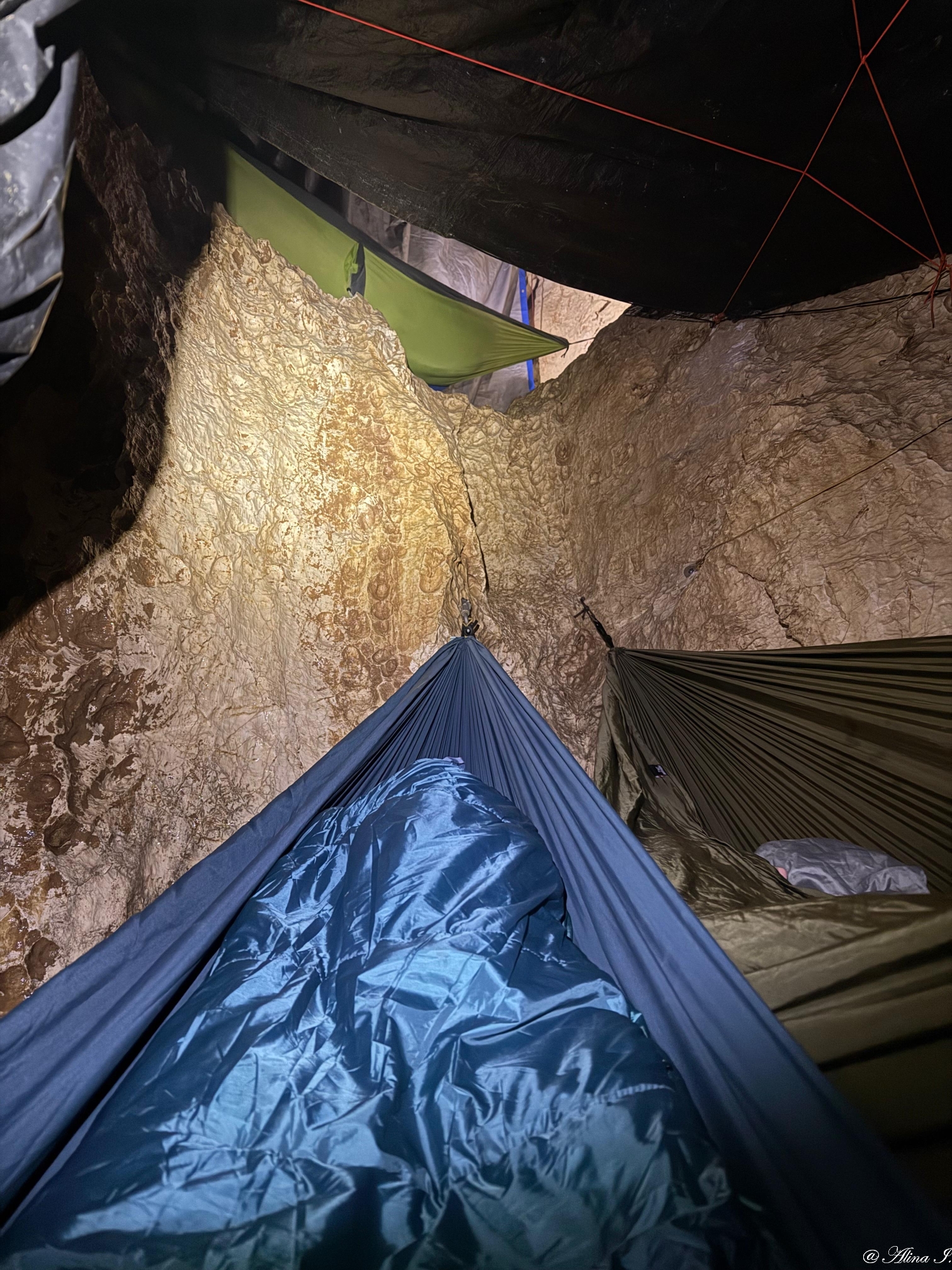
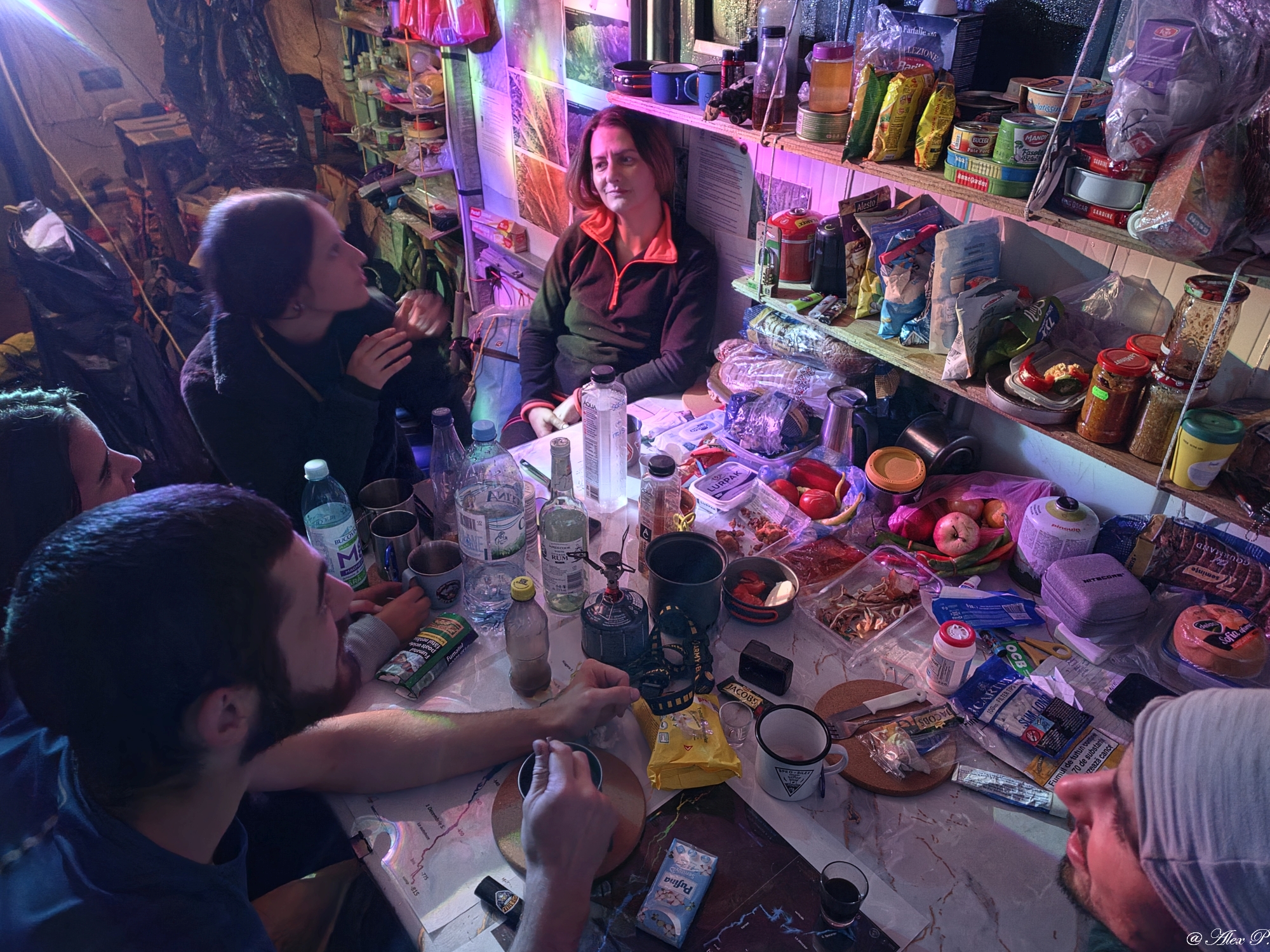
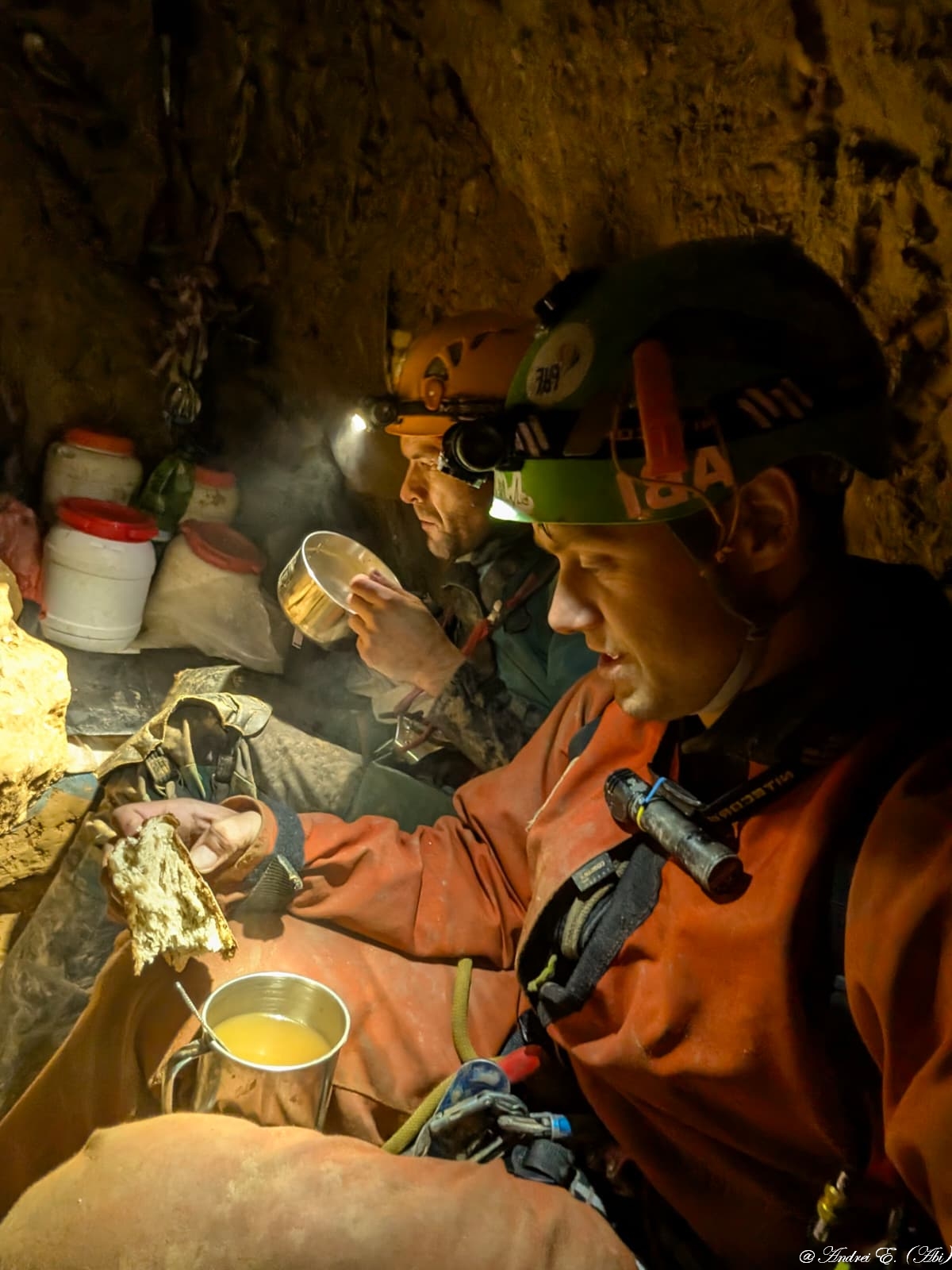
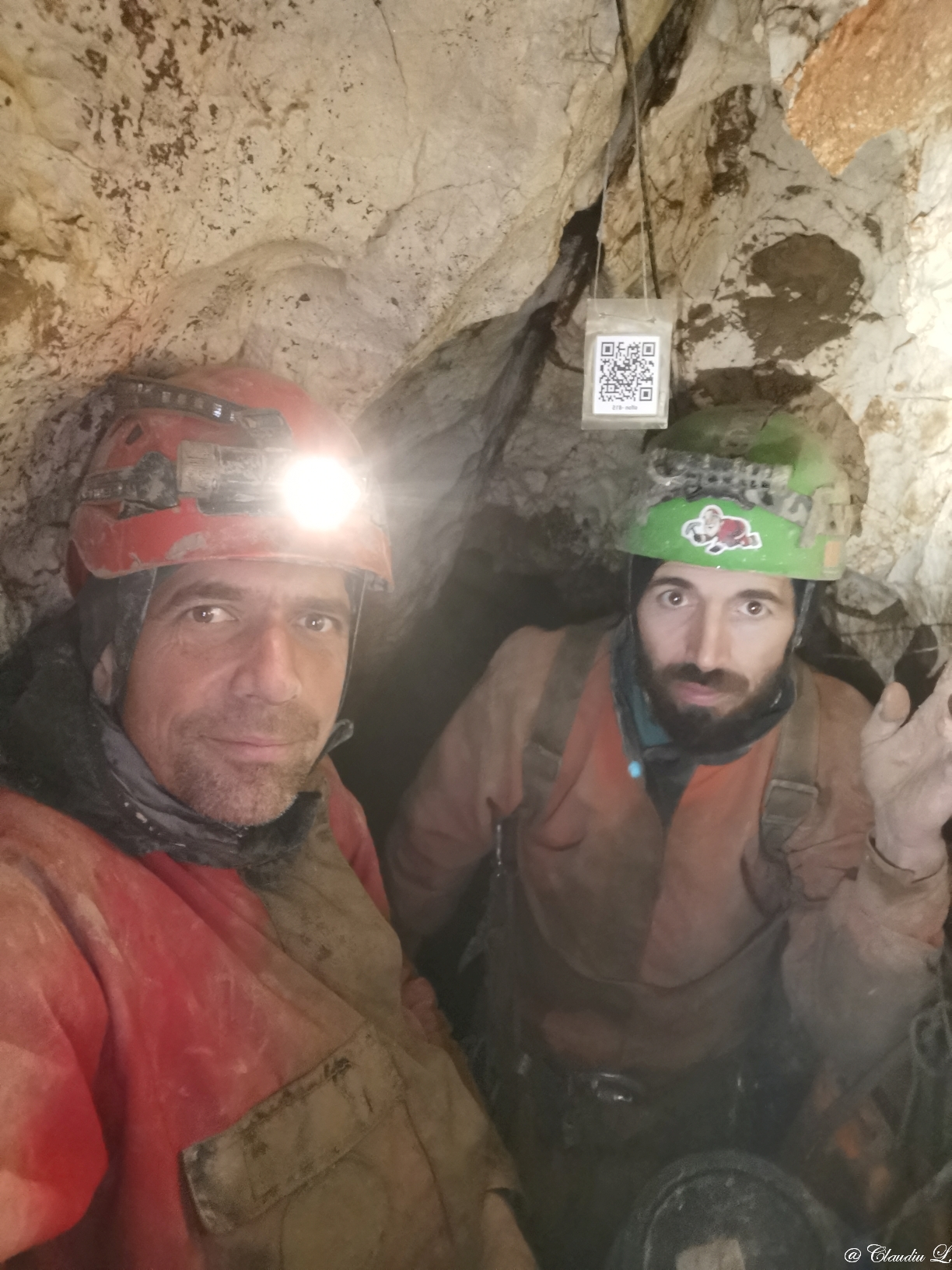
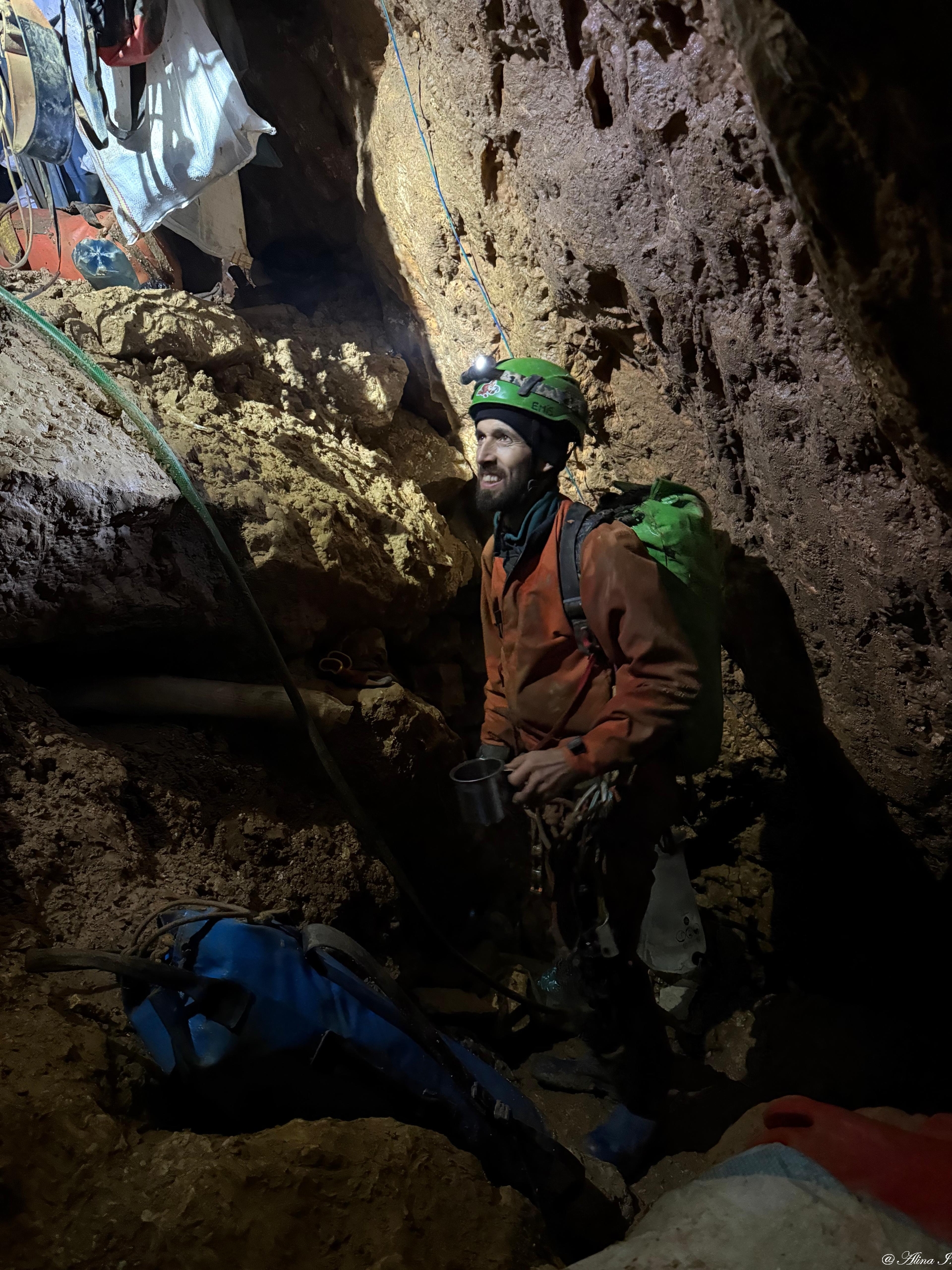
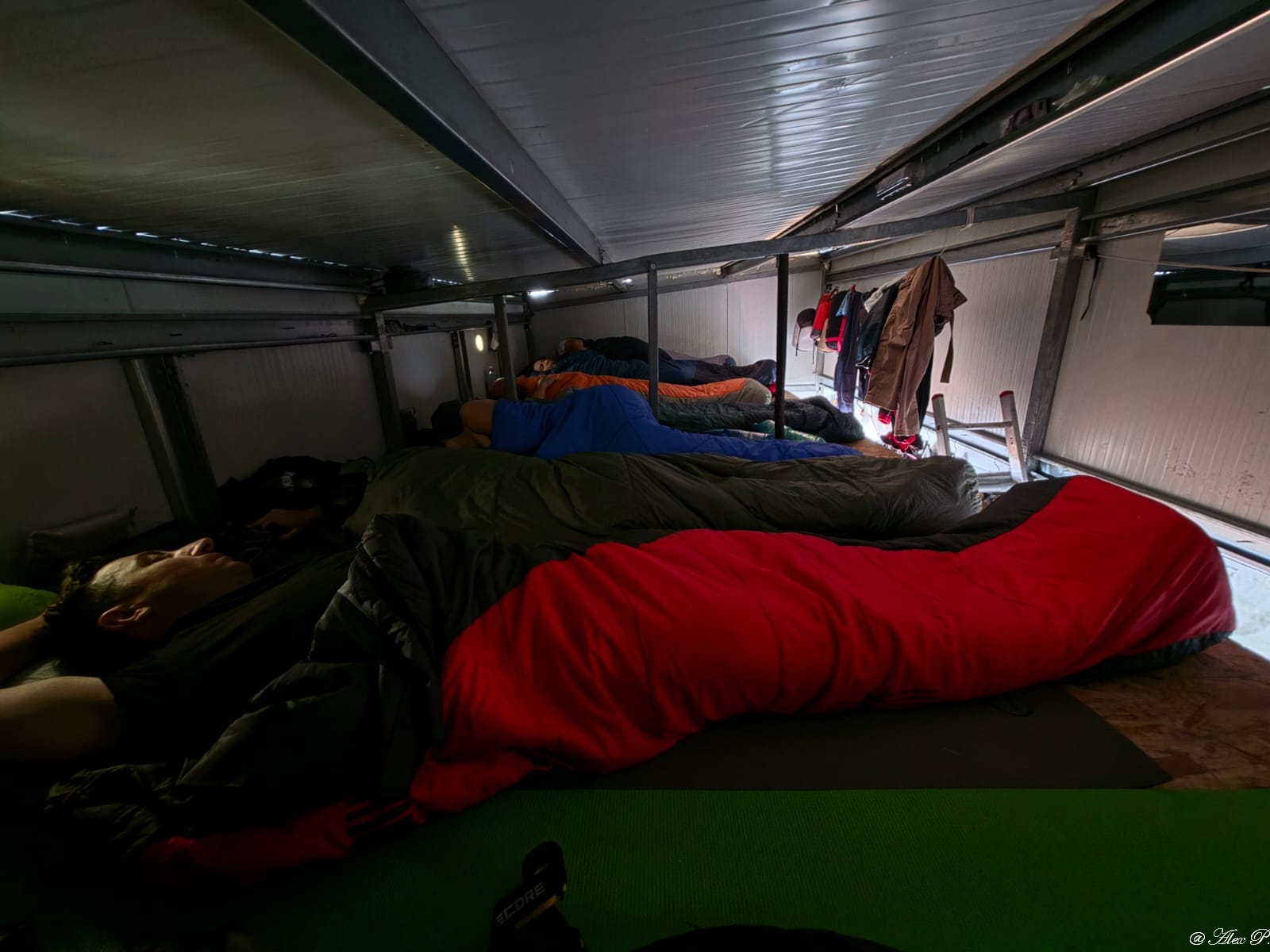
Teams spent several days at a time underground, sleeping in the bivouacs at −540 m and −775 m. One caver spent nine consecutive days underground and 17 days underground in total during the expedition.
Romania’s Deepest Cave
Avenul de sub Vârful Grind, also known as Avenul din Colții Grindului, is currently Romania’s deepest known cave, with a surveyed depth of 815 m.
Discovered in 1985, the cave lies in an area of the Piatra Craiului massif with some of the country’s greatest potential for further depth. Exploration is ongoing.
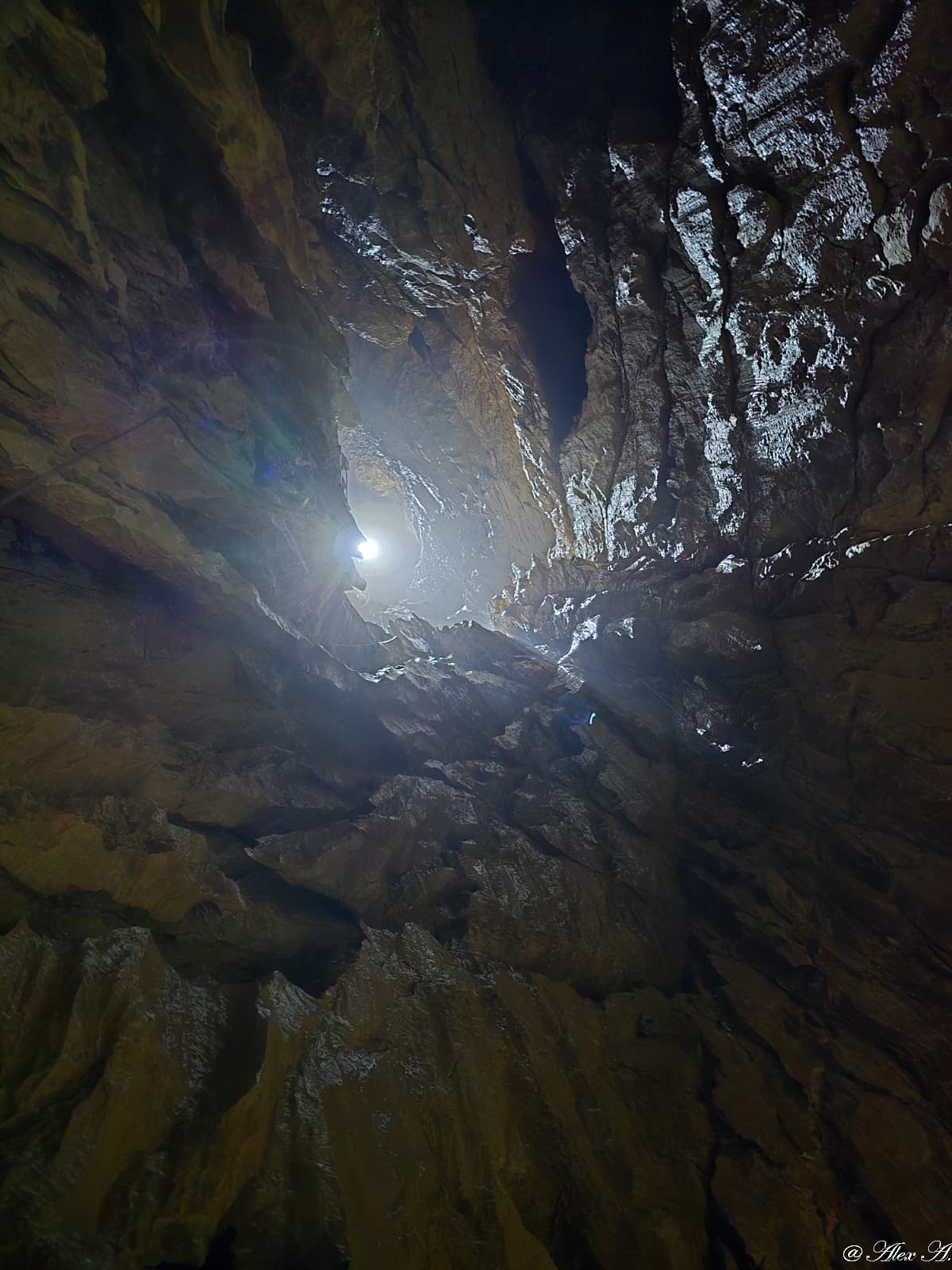
The cave consists mainly of pitches, with very few horizontal sections. Recent exploration has progressively overcome a series of obstacles. After the sump at approximately −775 m was passed and the pitches beyond were explored, a new branch was discovered in 2025, leading to the present terminus at −815 m. In 2026, work entered a new phase with the first dive in the terminal sump and the start of digging to open a way through.
Beyond the technical challenges, exploration provides new observations on the cave’s passage development, geomorphology, and underground drainage. Information collected in previously inaccessible sections may help improve our understanding of the Piatra Craiului karst system.
37 Cavers Involved in Grind Explo 2026
The expedition was organised by Silex Brașov Caving Club and Focul Viu Bucharest Speleological Association. Cavers also took part from Cristal Oradea, C.S.A. Cluj, Prusik Timișoara, Avenul Brașov caving clubs, and the Romanian Association for Speleological Education.
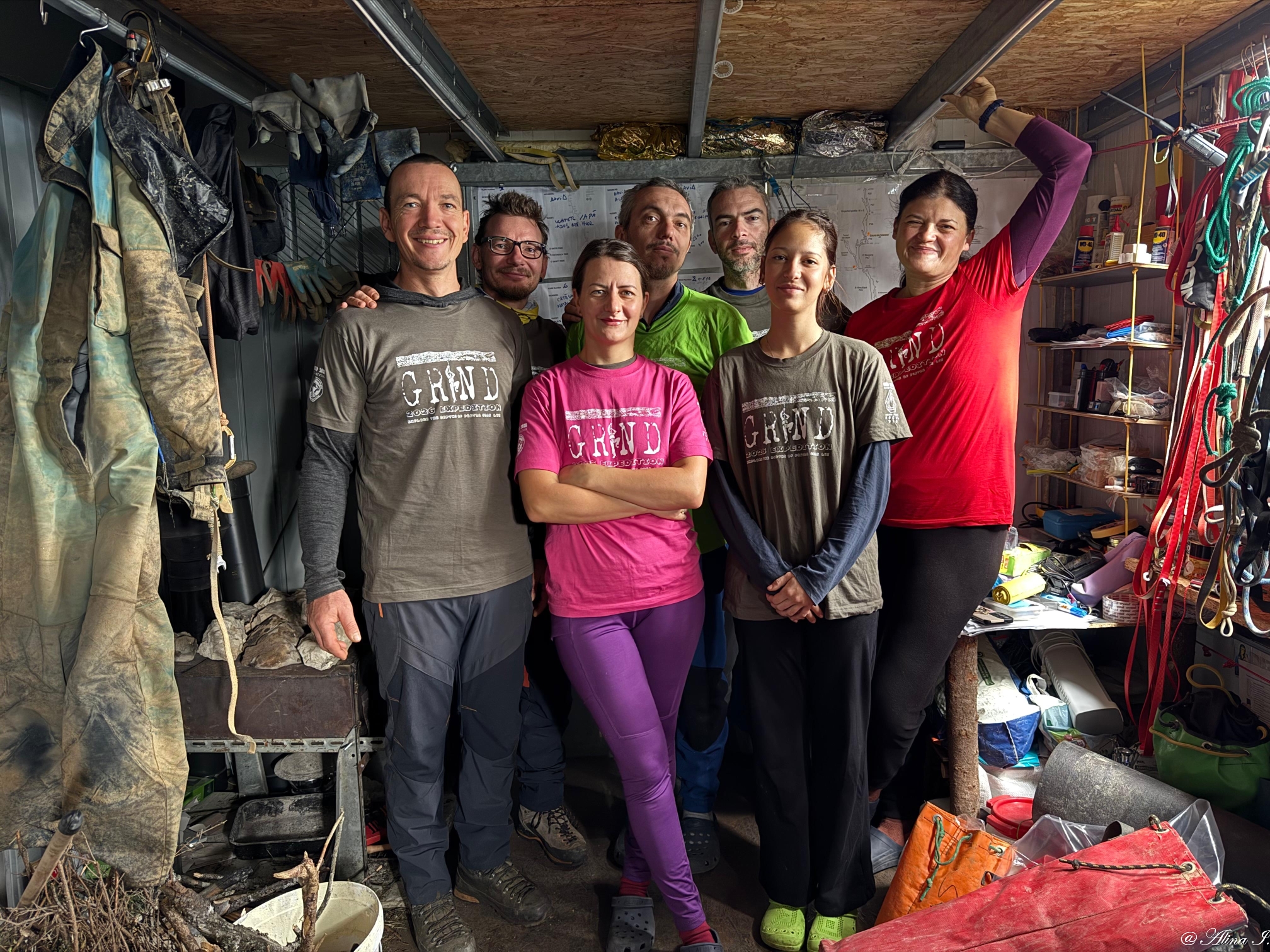
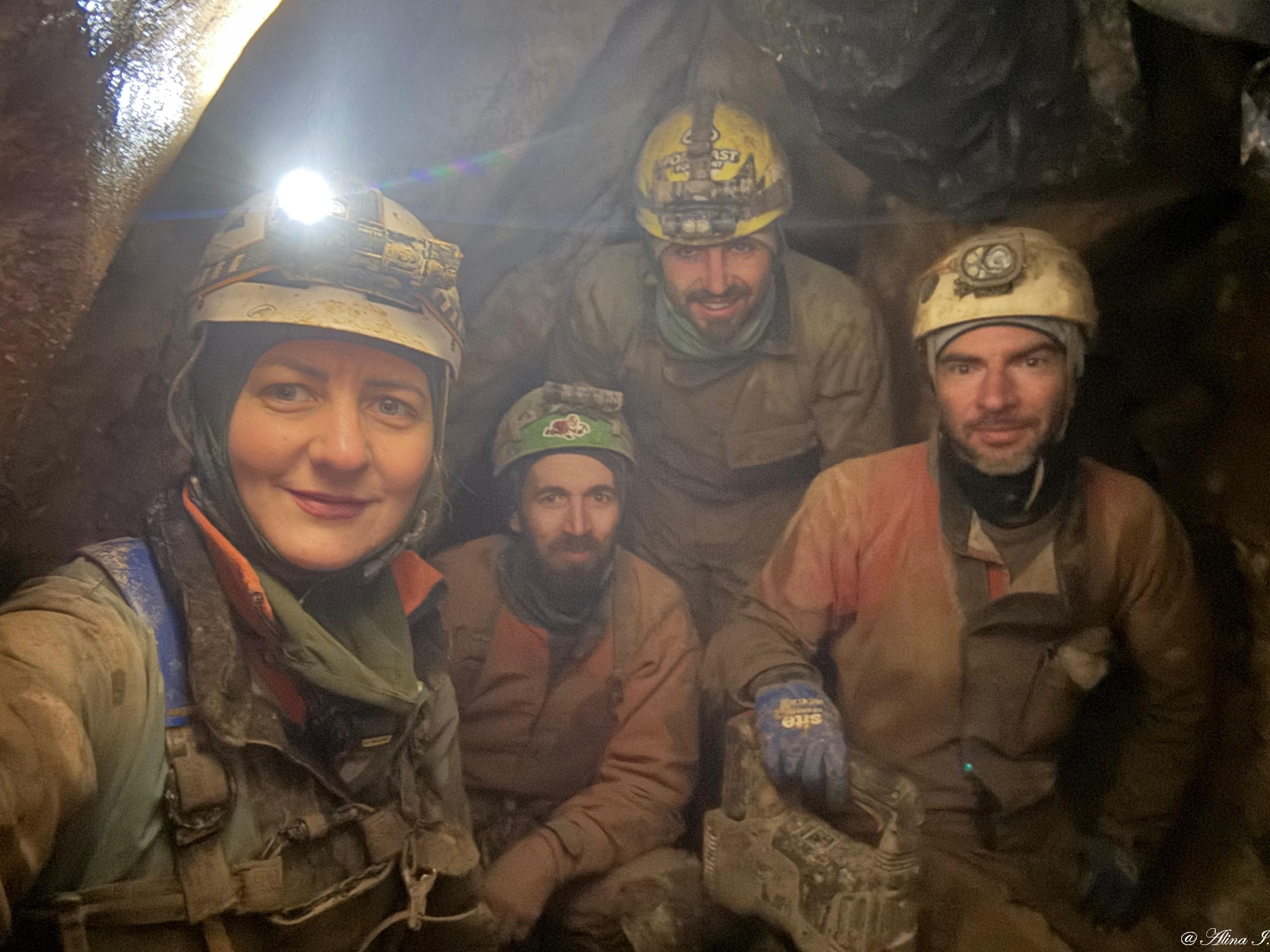
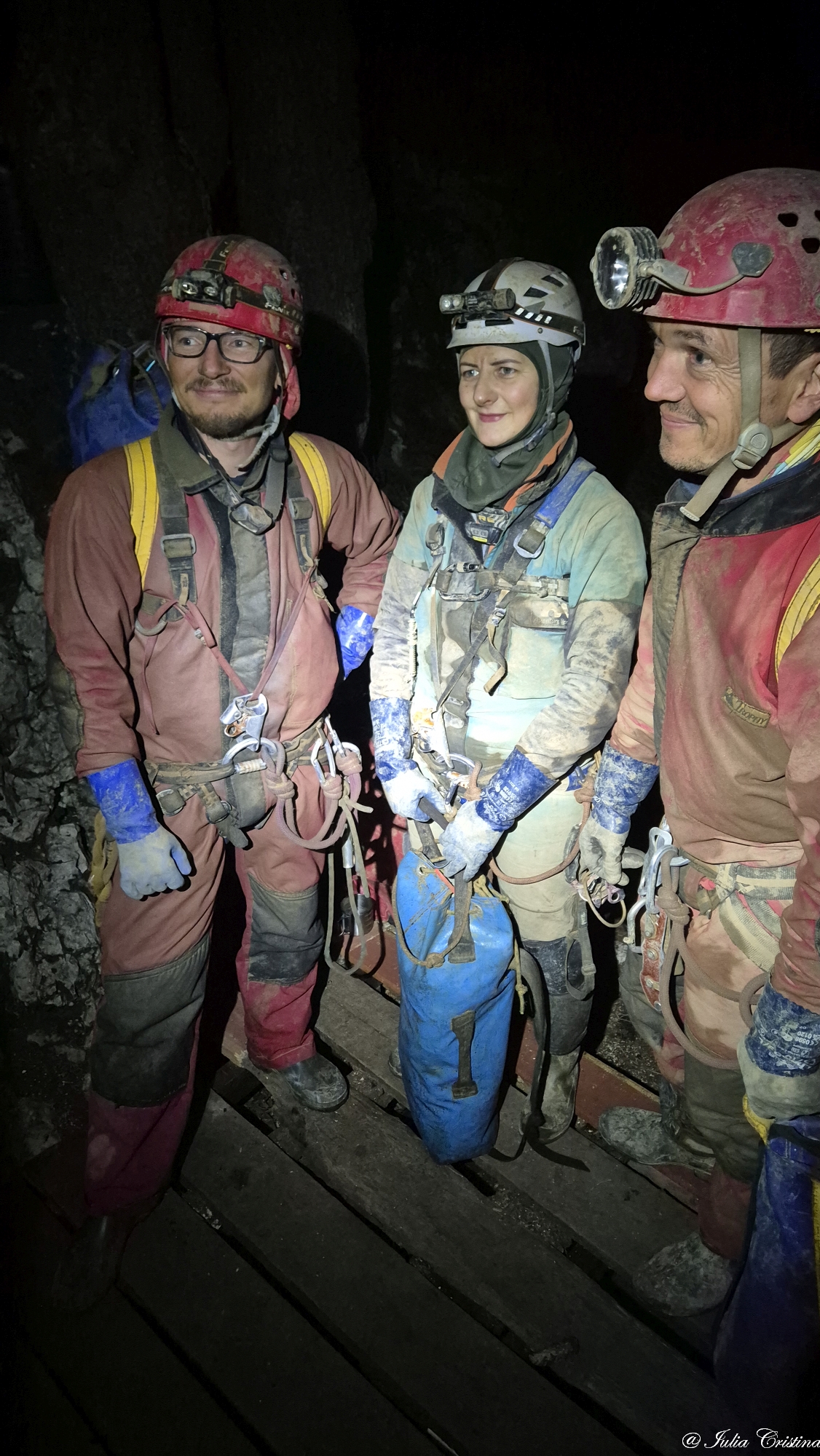
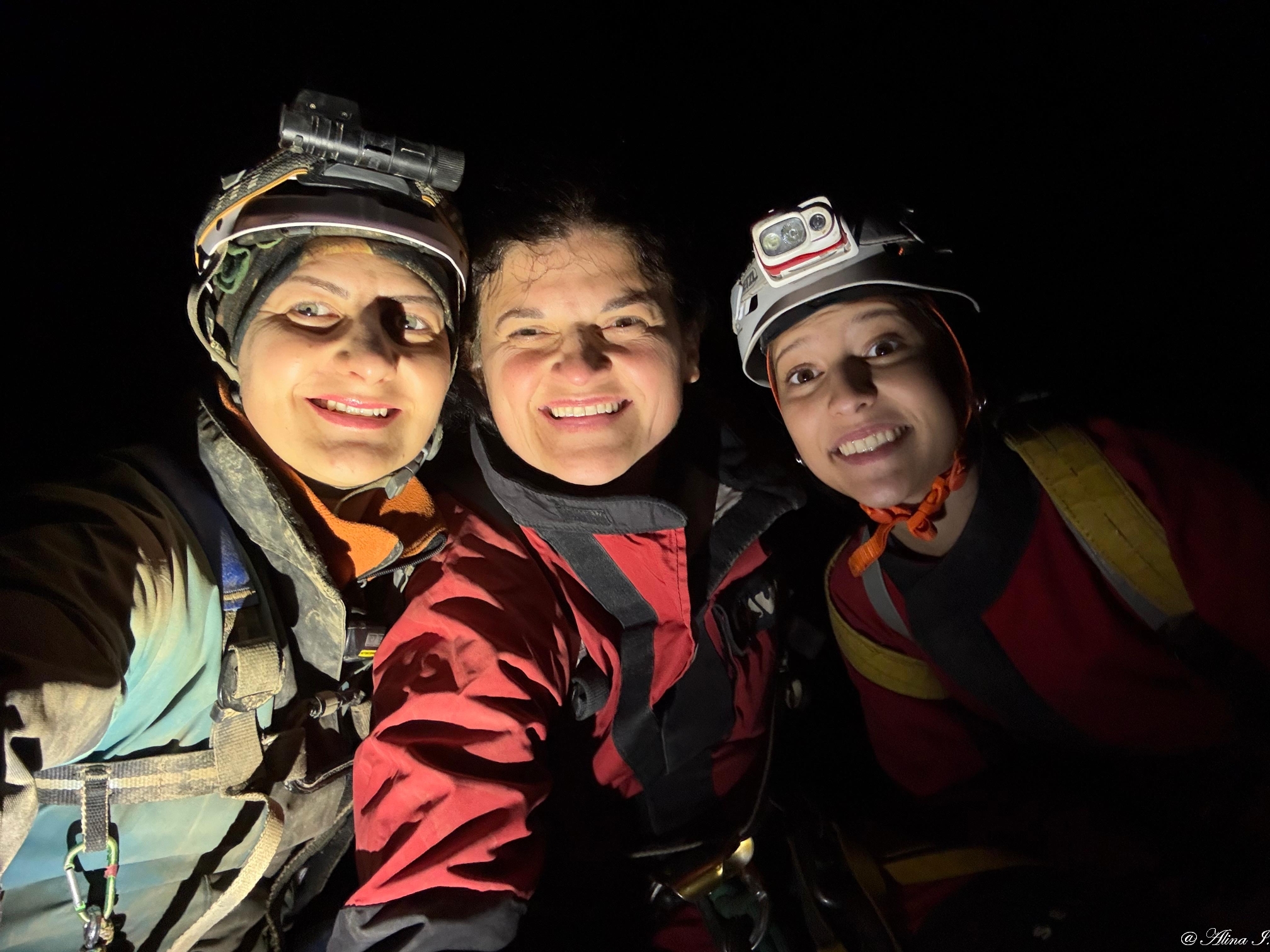
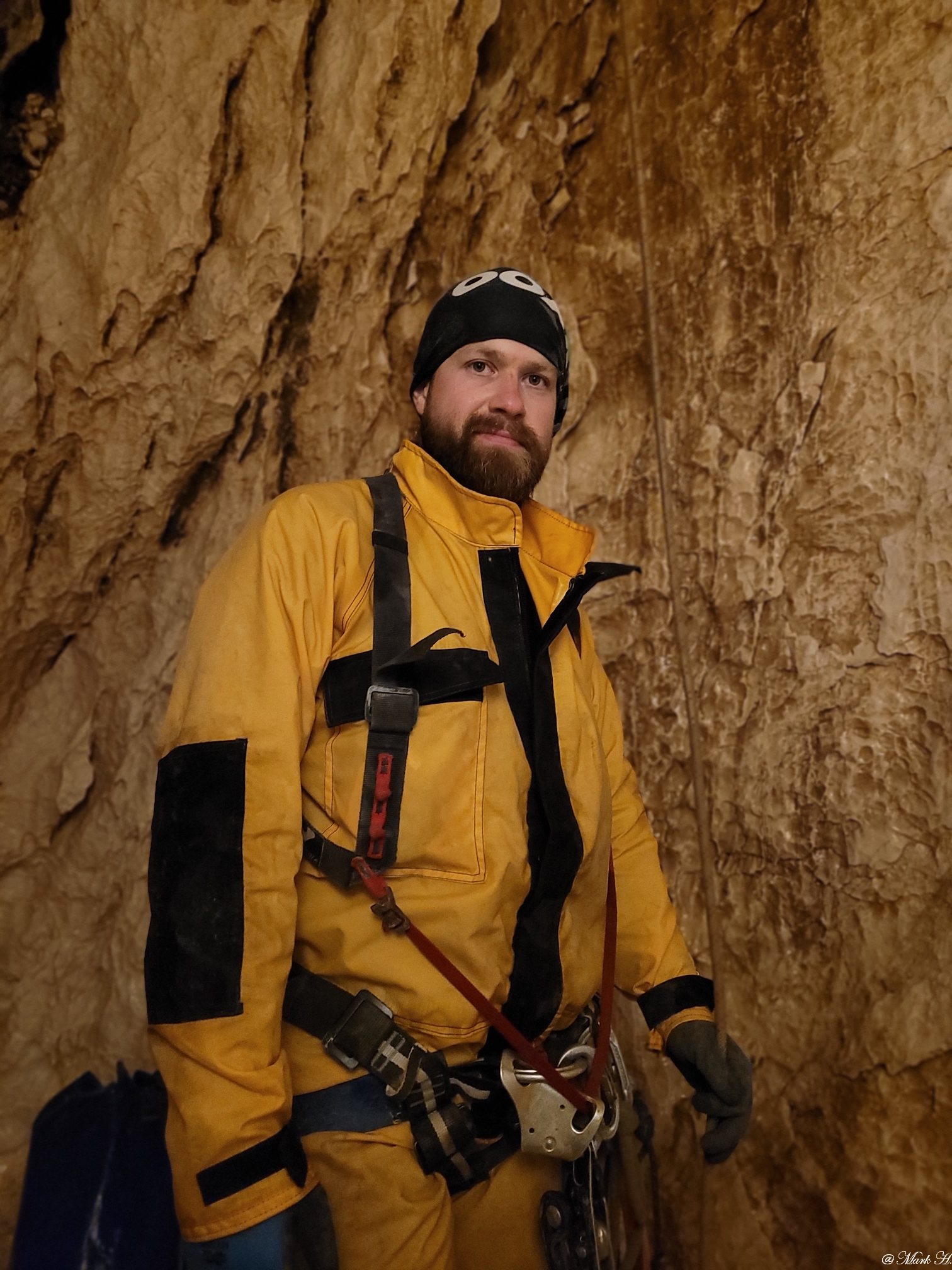
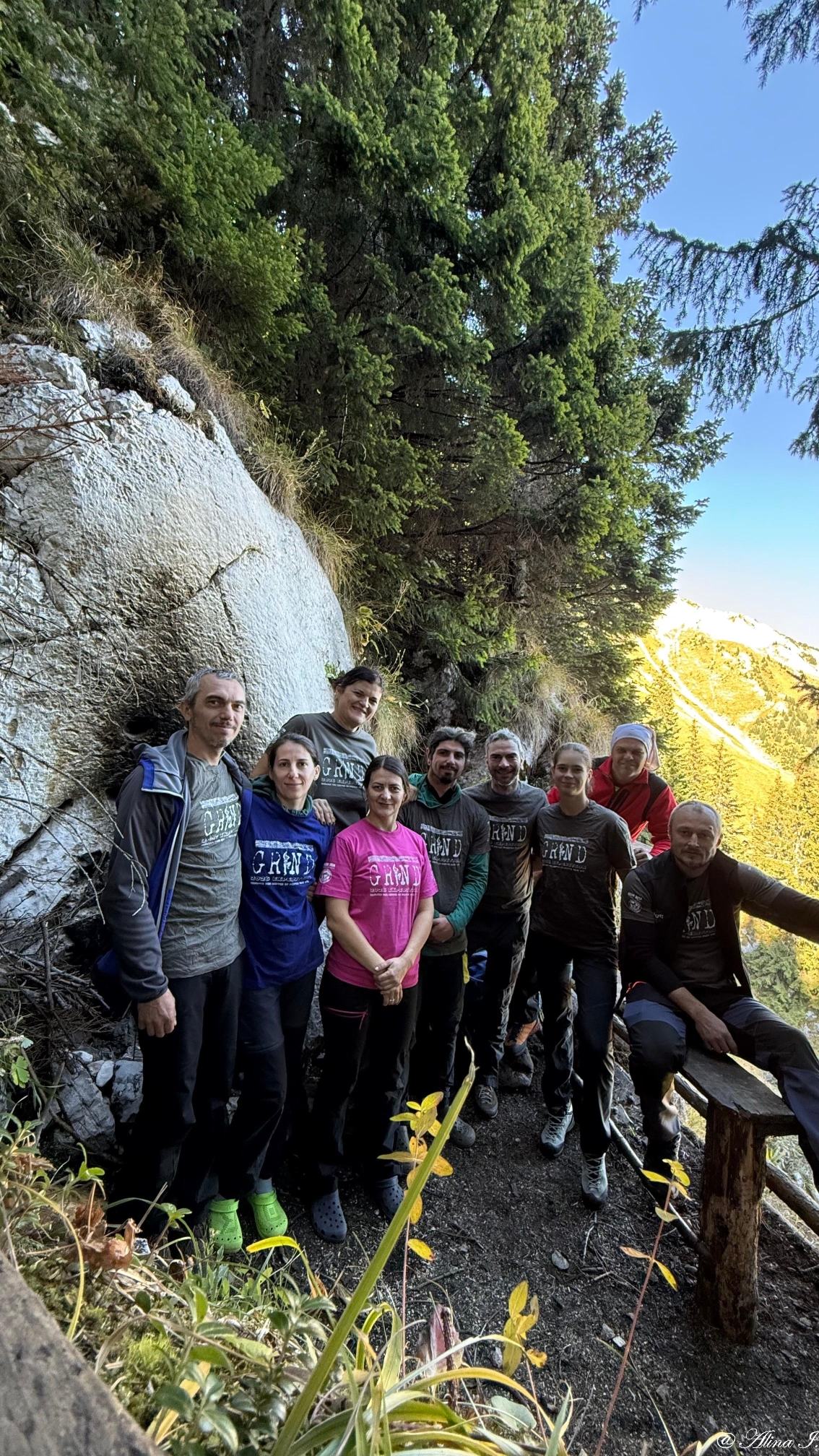
A total of 37 cavers contributed to Grind Explo 2026, both underground and on the surface — exploring, cave diving, climbing, digging, rigging, surveying, maintaining communications, carrying equipment, and providing logistical support.
Approximately one-third of the participants reached the terminus at −815 m and worked on the objectives there. Around half descended beyond −540 m, while other teams worked in the upper cave and on the surface.
From organising and moving equipment to pushing leads deep underground, the achievements of Grind Explo 2026 reflect a collective effort in which every role mattered.
The participants in Grind Explo 2026 were:
Andrei Alexandru, Ștefan Arsene, Maria Bodrea, Adrian Bodrea, Lucian Bolboroș, Fábián Botond, David Bouffard, Oana Harabagiu-Bouffard, Andrei Ene, Pál Ferenc, Călin Florea, Narcis Ghiță, Eliza Grigore, Lavinia Hansmann, Mark Herman, Alina Iordache, Andrei Kovats, Mihai Leu, Aura Linte, Claudiu Loghin, Iulian Mihai, Marius Milașcon, Iris Naicu, Alice Nemeș, Dragoș Netoi, Alexandru Pologea, Radu Pușcas, Cătălin Radu, Adrian Rădulescu, Iulia-Cristina Stika, Emilian Stoica, Gabriel Stroe, Natalia Ștefan, Tiberiu Trif, Sofia Tănase, Tim Vercauteren, and Diana Vlad.
Grind Explo 2026 took place within Piatra Craiului National Park and received the moral support of the Romanian Speleological Federation.
After 27 days of field activity, exploration remains open on several fronts. The sump at −815 m remains the main obstacle to gaining further depth, while the ascending inlet explored at approximately −400 m offers another promising lead for future trips.
Further Information
FSE Report — 2025 Expedition/Camps:
https://speosilex.ro/grind/doc/2025/fse_report/ESP_2025_04_Grind_Report.pdf
Grind Explo 2026 Expedition Journal (Romanian):
https://speosilex.ro/grind-2026-jurnal/
Grind Explo Facebook Page:
https://www.facebook.com/GrindExplo
About the Cave (Romanian):
https://speosilex.ro/avenul-de-sub-varful-grind/
Grind 2026